


Strategic Procurement Training for Teams
Get Your Procurement Team Out of the Fires.
Your team is capable, but the workload is relentless. Strategic work never gets started because the week is full before it begins. This program moves teams from tactical to strategic procurement.
This program is created for busy procurement teams
Results visible within 3 weeks
4.9 ★★★★★ 500+ reviews
Schedule your 30-min demo call







THE OPPORTUNITY
Busy work repeats. Strategic work compounds.
Every week your team processes the POs, chases the orders, puts out the fires. All of it necessary. And next Monday, all of it starts again from zero. Meanwhile the work that would change things keeps waiting for a quiet week that never comes.

“We used to operate in a reactive mode, focused on short-term issues instead of long-term value. Now we drive strategy and value creation, and we anticipate what the business needs instead of just responding to it.”

THE REALITY
Recognize any of these in your procurement team?

The business decides first, procurement does the paperwork
Suppliers get picked and contracts get signed before your team even hears about it. The first question your people get is 'why did you sign?', on a contract they never had the chance to review. They add real value, but nobody upstairs sees it.

Results depend on who runs the work
The processes exist. The templates exist. And still, the outcome of a sourcing project depends on which person happens to run it. When your best buyer is out for two weeks, the quality leaves with them.

Nobody actually taught anyone procurement
Most of your buyers grew into the role from engineering, admin or operations. Capable people, learning the fundamentals on the job, mid-flight. Which is why handing over the real work never quite feels safe.
OUR SOLUTION
How we help procurement teams to close the gap to the next phase
Structure that buys back the hours
Strategic work never starts in a week that is already full.
The program starts by giving your team one shared way of working: standard processes for sourcing, tendering and negotiation, shared templates, and the procurement fundamentals trained across the whole team. That is what frees the first hours and makes real work delegable.
One shared way of working is the key that buys back the first hours.
Value that is measured, not assumed
A seat at the table is earned in numbers the business trusts.
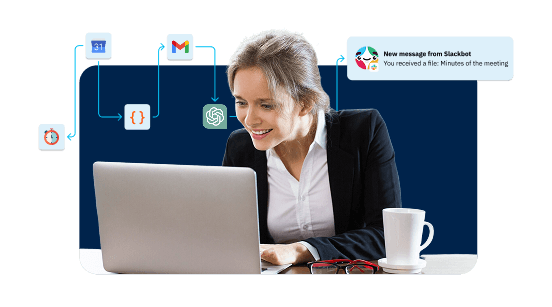
The freed-up hours then go into category strategies, early stakeholder involvement, and savings and supplier performance reported upward in numbers. That is what changes procurement's reputation from “the paperwork department” to a partner worth involving early.
Time shifts from busy work that repeats to strategic work that compounds.
CURRICULUM
The four phases from tactical to strategic procurement
Phase 1: Firefighting
Out of the fires: free the first hours before anyone is asked to think strategically.
What You'll Learn
- Name where your team's week actually goes and spot the three tasks eating the most hours
- Standardise those three tasks first, a small change your team can make in a week
- Prompting that produces the same quality every time on supplier email, purchase orders, and contract summaries
- Win back the first hours, without asking for headcount
After This Phase
You'll have named the loop your team is stuck in, and started freeing the hours that fund every phase after this one.
Phase 2: Foundations & Structure
One way of working, and the fundamentals to back it up.
What You'll Learn
- The seven-step process: sourcing, RFI and RFP, negotiation, contracts, and supplier management
- One shared way of working across the whole team, so results stop depending on who happens to be doing it
- The fundamentals many buyers were never taught, whether they came from engineering, admin, or operations
- Where to point the hours freed up in Phase 1
After This Phase
Your team shares one language, and real procurement work finally becomes safe to hand off.
Phase 3: Strategic Work
Turn the freed-up hours into strategy and numbers the business trusts.
What You'll Learn
- Collect and categorise spend data, then build the KPIs that turn it into a report the executive team actually reads
- Build category strategies that go deeper than a repeat purchase order, with stakeholders and risk mapped up front
- Get involved with the business early, before decisions are made instead of after
- Make a strategy survive an operational spike instead of collapsing under one
After This Phase
Value stops being assumed and starts being measured, in numbers the business trusts. That is what gets procurement invited in before decisions are made.
Phase 4: Strategic Leadership
Make strategic work survive without you in the room.
What You'll Learn
- Setting direction, driving cultural change, and acting as a credible activist inside your organisation
- Navigating power dynamics across decentralized, virtual, and global procurement teams
- Applying lean, kaizen, and agile principles to design a self-managed team
- Separating rule-based work from judgement work with AI agents, and setting the control points that keep quality when you're not in the room
After This Phase
Strategic topics get handled without landing back on your desk, and your team leads change instead of just executing it.
Source: Tactical to Strategic Procurement Playbook (Procurement Tactics), based on 284 conversations with procurement leaders between January 2025 and June 2026.
Client Success Stories


Meet your instructors

Marijn Overvest
Founder & CEO,
Procurement Tactics
Author,
Artificial Intelligence in Procurement 2026
Career leading procurement in the field. Creator of the Tactical to Strategic Framework. Trained over 200 procurement teams worldwide.


Joost Renirie
Partner & Director of Product,
Procurement Tactics
14 years in procurement
from junior buyer to senior leadership at Lidl
Led strategic buying at one of Europe's largest retailers, with over $1B in supplier contracts negotiated. Built and scaled procurement teams from the ground up.
How much time will this take from my team?
Honestly, less than most managers fear.
The program is self-paced at its core and fits around a full workload: about 5-7 hours of self-paced learning across the four phases, plus 2 live sessions of max 2 hours.
Most people do it in a few short sessions a week, and with 12-month access, there is no pressure to finish it in one go.
We don't have time for training right now, we're too busy firefighting. Won't this just add to the load?
That is the most common objection we hear, and it is usually backwards. The workload is not the obstacle to training; it is the product of what was never taught. Busy teams actually gain the fastest, because they have the most repeated work to standardise: a few hours of learning, applied to the three tasks eating the most hours, buys back hours every week after. Waiting for it to ease keeps the system exactly as it is.
Is it self-paced, or is there a fixed schedule?
Both, and that is on purpose.
The core is fully self-paced, so nobody has to be online at a set time. Alongside that there are live sessions for Q&A and coaching for the moments where talking it through actually helps.
No fixed cohort, no rigid timetable. Your team does the self-paced work around their week and joins the live moments that are useful.
How do I enroll my team, and can I see what they are doing?
Enrolling takes minutes, and yes, you get a clear view.
You enroll your whole team at once. As the manager, you get a progress dashboard that shows who has started, how far they have come, and what they have completed.
So you can nudge the people who stall, and show the value of the investment internally without guessing.
My team is at very different levels. Will this work for everyone?
That mix is exactly who it is built for. Some buyers fell into the role from other departments, others are seasoned professionals. It starts at the fundamentals, one shared language for sourcing, negotiation and spend analysis, and builds up to category strategy and leadership. Beginners are never lost, and your experienced people are never bored.
My concern is adoption. How do I know this will actually stick?
Because your team practises on their own categories, not on abstract examples.
Skills that are not applied to real categories within weeks simply fade away, so every lesson lands on your team's real spend, suppliers and stakeholders, with templates they keep using afterwards.
And you are not left guessing: the progress dashboard shows exactly what your team is up to.
Can you tailor this to our organization?
We strongly believe the standard program is a strong foundation. By tailoring it to your team, we make it fit.
We start by understanding your team's setup, your categories, and the AI tools you already use, then shape the program and the live sessions around them. You keep the proven structure, applied to your real procurement context.
NEXT STEP
Get a Price Quote
Do you recognize where your team stands in the four phases and want to explore how Procurement Tactics helps you close the gap to the next one? Or do you have specific questions? Let's have a chat.
This program is created for busy procurement teams
Results visible within 3 weeks

Pim Herremans 