

CONSISTENT NEGOTIATION RESULTS
Build a Procurement Team That Delivers Consistent Negotiation Outcomes
We help procurement teams create a shared, practical way of preparing and running supplier negotiations, so results become reliable instead of personal.







Recognize any of these negotiation challenges?

1. Everyone prepares negotiations differently
There is no baseline for what “good preparation” looks like. Some people underprepare, and work often gets duplicated.
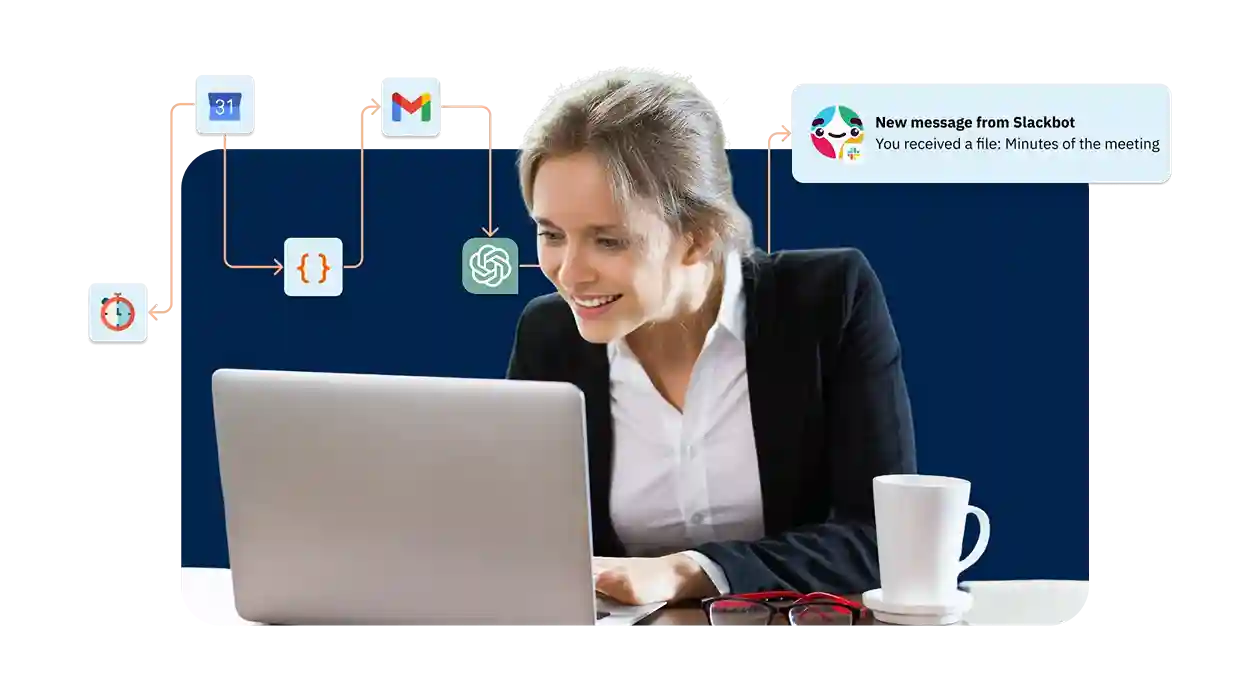
2. Lack of time leads to weak preparation
Your team is constantly firefighting. That leaves little time to think through strategy, scenarios, and next steps before the meeting.
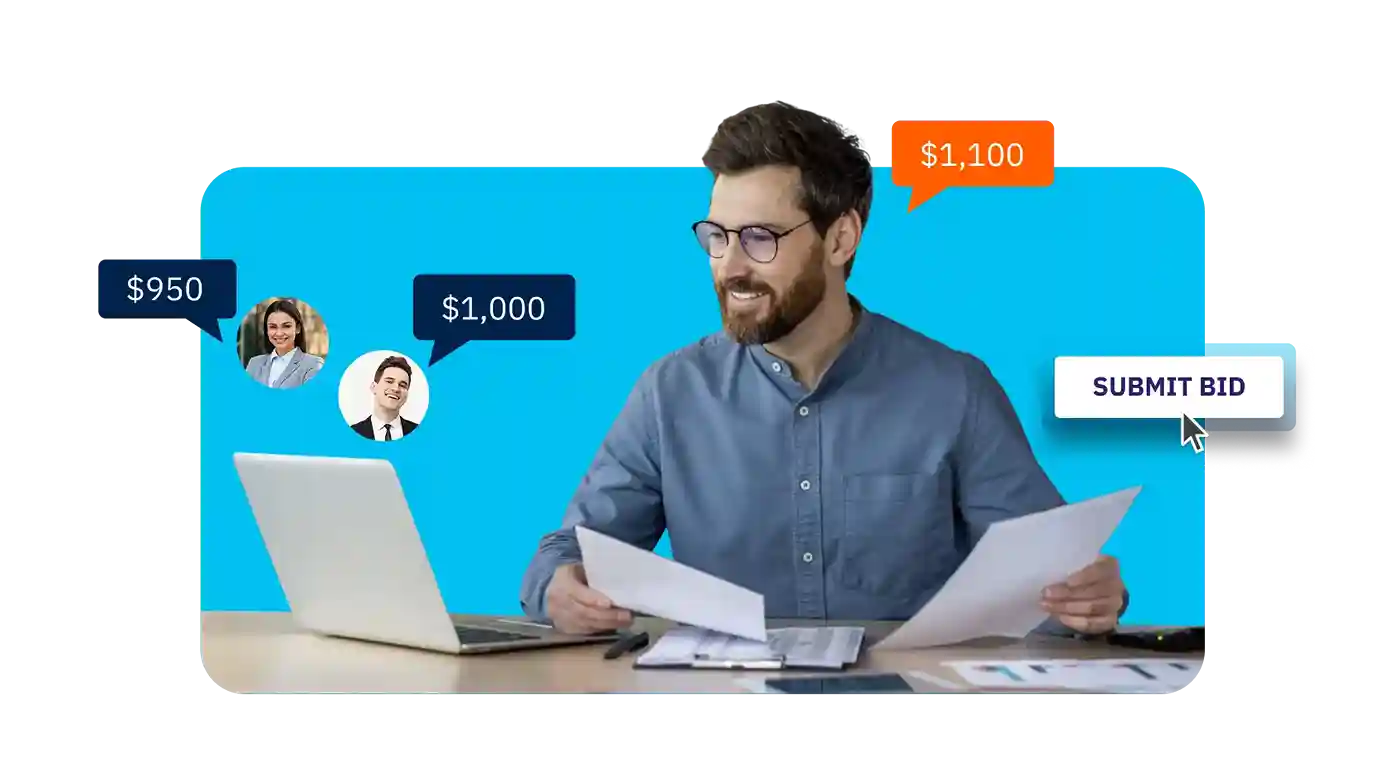
3. Negotiation targets are missed
Negotiations don’t land where they need to. Savings slip, value gets left on the table, and escalation becomes the default option.
3 drivers of negotiation excellence in procurement teams
Good negotiations start with clear, shared preparation.
Strong procurement teams do not rely on personal styles or last minute thinking. Every negotiation starts from the same preparation structure, so quality is consistent across people, categories, and suppliers.
Preparation is visible, comparable, and easy to review. That creates alignment before the meeting and removes surprises during the negotiation.
What structured negotiation preparation looks like
- One shared preparation standard used by the entire team
- Clear objectives, priorities, trade offs, and walk away points
- Preparation that managers and peers can quickly review and challenge
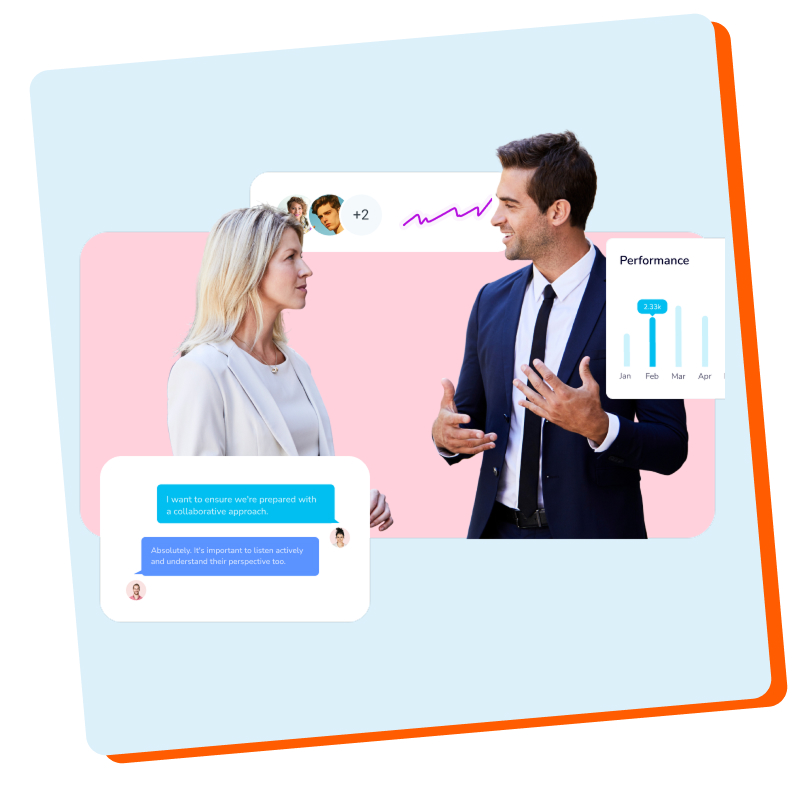
Less manual work, more time to think and prepare properly.
Good preparation takes time. In reality, that time often gets eaten up by repetitive tasks, information gathering, and administrative work.
AI supports the preparation process by removing friction. It speeds up inputs and analysis, so negotiators can spend more time thinking through strategy, scenarios, and choices.
Ownership always stays with the negotiator. AI supports judgement, it does not replace it.
What AI support in negotiations preparation looks like
- Less time spent on repetitive or manual preparation tasks
- Faster access to relevant inputs and context
- More time to focus on strategy and scenario thinking
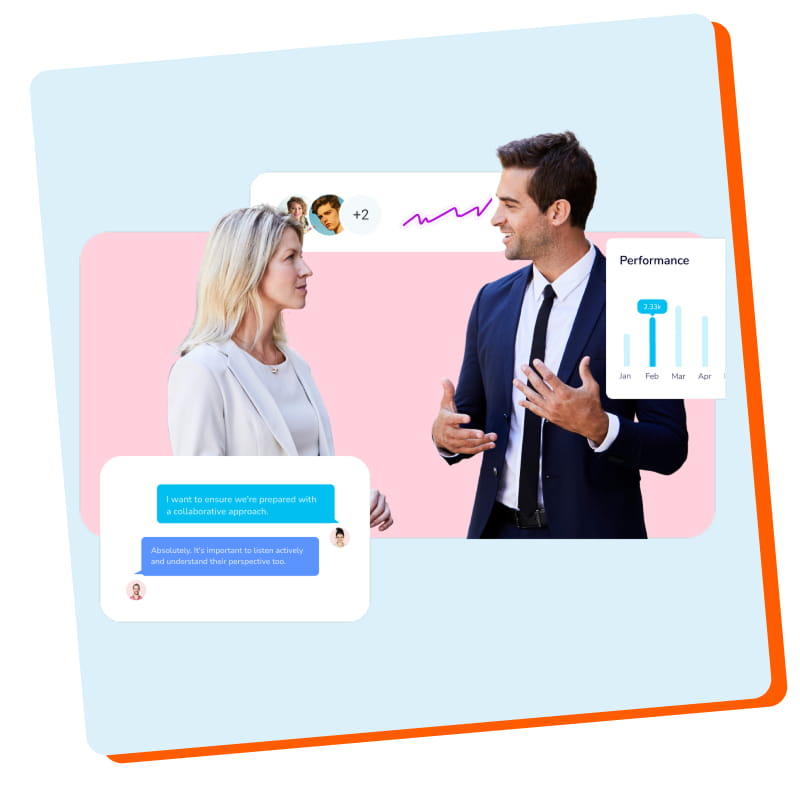
Teams know how to apply tactics, respond under pressure, and stay in control.
Preparation only matters if teams can execute when it counts. Strong negotiation capability means people recognise tactics, choose the right response, and adapt when the conversation shifts.
Skills are not limited to senior negotiators. The entire team operates with the same level of confidence and control, regardless of experience or role.
What improved negotiation skills looks like
- Ability to recognise and apply negotiation tactics in real time
- Confident responses under pressure without improvising
- Consistent behaviour and better negotiation outcomes across the team
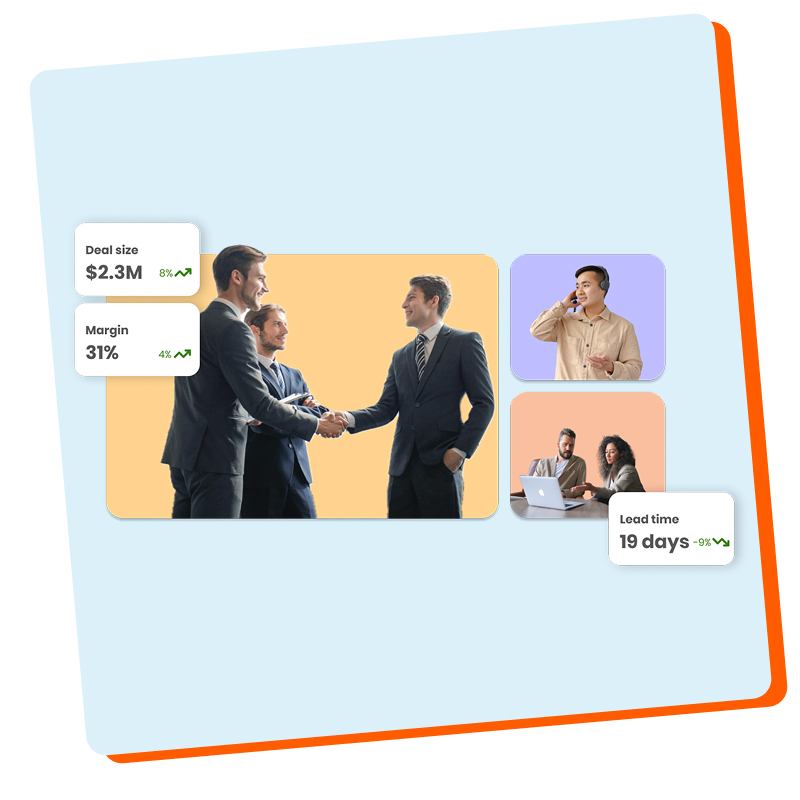
How we help teams to build negotiation excellence
1. Structured Negotiation Preparation
Most negotiation results are decided before the meeting starts.
We focus on building a shared way of preparing negotiations so objectives, limits, and strategy are clear for every team member.
Preparation becomes a repeatable process, not a personal habit.

2. Faster Preparation with AI Support
AI can significantly reduce the time needed to prepare negotiations when used correctly.
We show teams how to use AI to sharpen preparation, test assumptions, and think through scenarios faster, without replacing judgment or experience.
AI supports preparation. Decisions remain human.

3. Practical Negotiation Skills for Procurement
Strong preparation only works if teams know how to execute it in real supplier negotiations.
We focus on procurement-specific negotiation behavior, common mistakes, and realistic scenarios teams actually face.
The goal is not style. The goal is control and better outcomes.
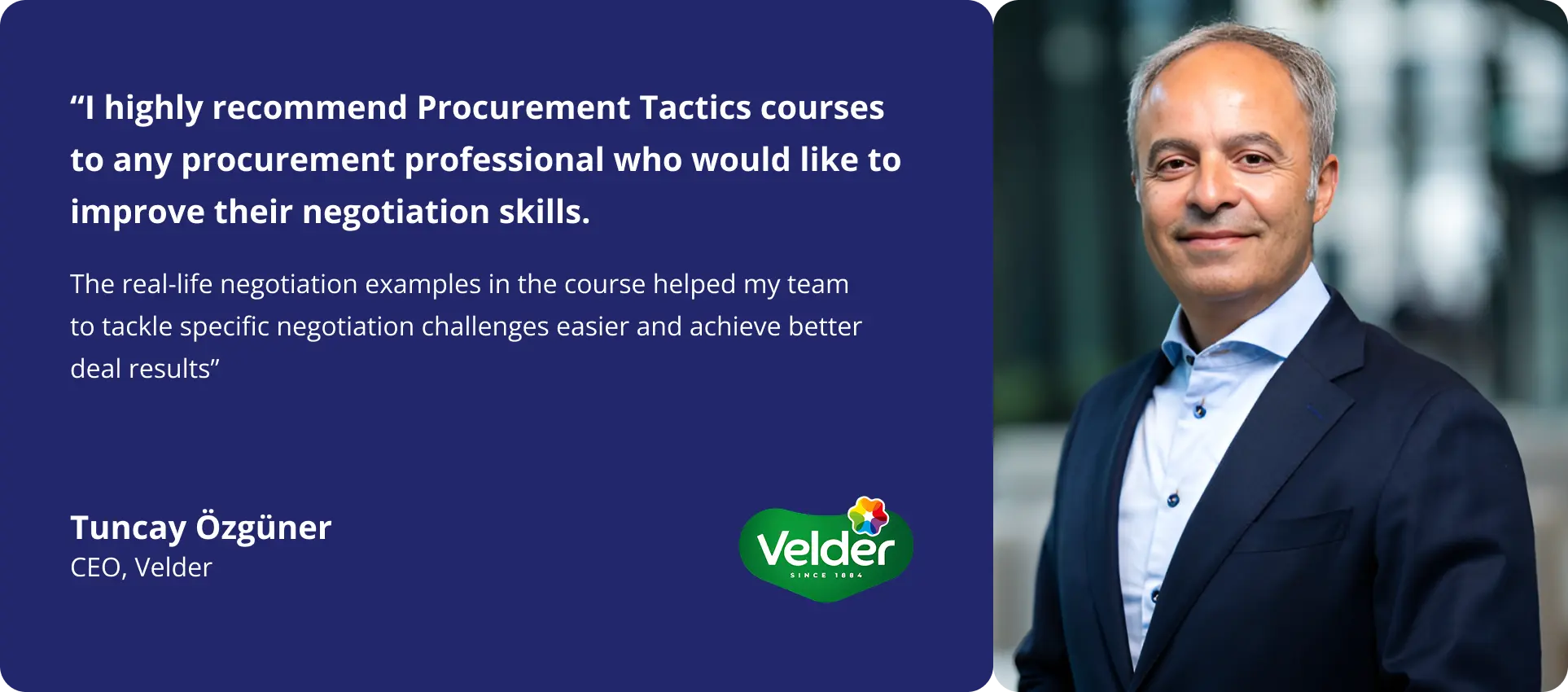
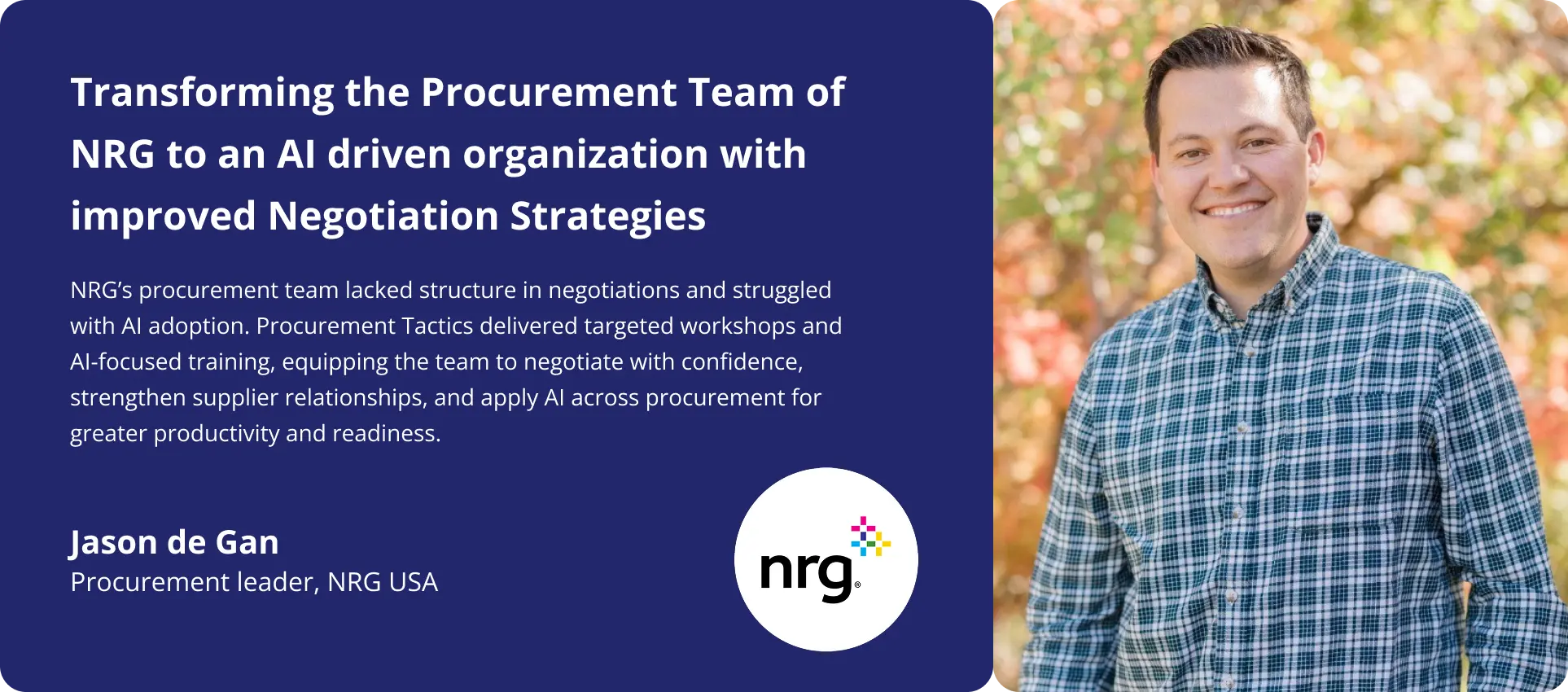
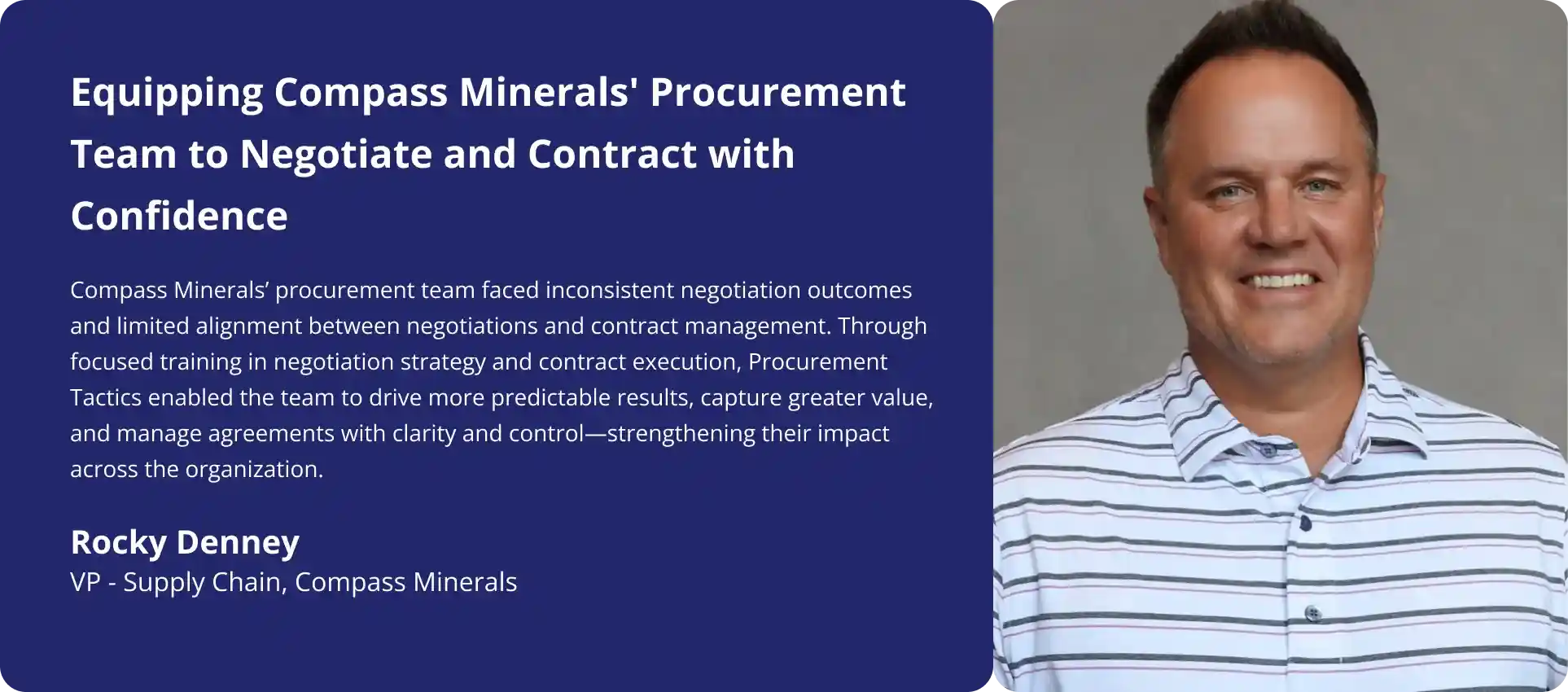
Client Success Stories
Get a Price Quote
Want to understand what it would cost to strengthen negotiation capability across your procurement team?
Use this conversation to discuss your team size, negotiation maturity, and where outcomes currently vary. We will outline a realistic approach and provide a clear price indication based on your negotiation reality.
Click here to grab a slot in my calendar. Talk soon!

Pim Herremans 
SUPPORT
FAQs
Have more questions? Get in touch with one of our sales consultants. Book a demo for further questions.
Why should I invest in negotiation capability if my team already negotiates every day?
Because negotiating often does not mean negotiating consistently.
In many teams, outcomes still depend on individual experience and gut feeling. That works until pressure increases, margins matter more, or juniors take the lead. This is about reducing dependency on individuals and creating predictable outcomes across the team.
How is this different from classic negotiation training with role plays?
Most negotiation training focuses on techniques or behavior in the room.
This focuses on what happens before the negotiation. Preparation, decision making, and clarity account for most of the outcome. Role plays can help, but they do not solve inconsistent preparation or team wide alignment.
My concern is adoption. How do I know this will stick?
That concern is valid.
Negotiation capability only sticks when it is practical, repeatable, and embedded in daily work. This approach focuses on shared structures and real negotiation situations, not abstract models that disappear after training.
Where does AI fit in without turning this into an AI project?
AI is used to speed up preparation, not to replace negotiators.
It helps teams think through scenarios, structure input, and prepare faster. Judgment, trade offs, and final decisions remain with the procurement professional.
How do you tailor this to our organization?
There is no fixed template. We start by understanding your current negotiation processes and team structure. From there, we scope a practical approach and provide a price quote based on your situation, not a standard package.