


Written by Marijn Overvest | Reviewed by Sjoerd Goedhart | Fact Checked by Ruud Emonds | Our editorial policy
Internal Stakeholder Engagement Plan — A Step-by-Step Guide
As taught in the Internal Stakeholder Management Course / ★★★★★ 4.9 rating
- An effective internal stakeholder engagement plan is purpose-built: it links stakeholders, roles, and timing to clear project outcomes so engagement is intentional rather than accidental.
- It prioritizes the right relationships and adapts messages and channels to different audiences so communication actually lands.
- An effective internal stakeholder engagement plan defines who does what and when, reducing rework, preserving trust, and keeping decisions on track.
What is an Internal Stakeholder Engagement Plan
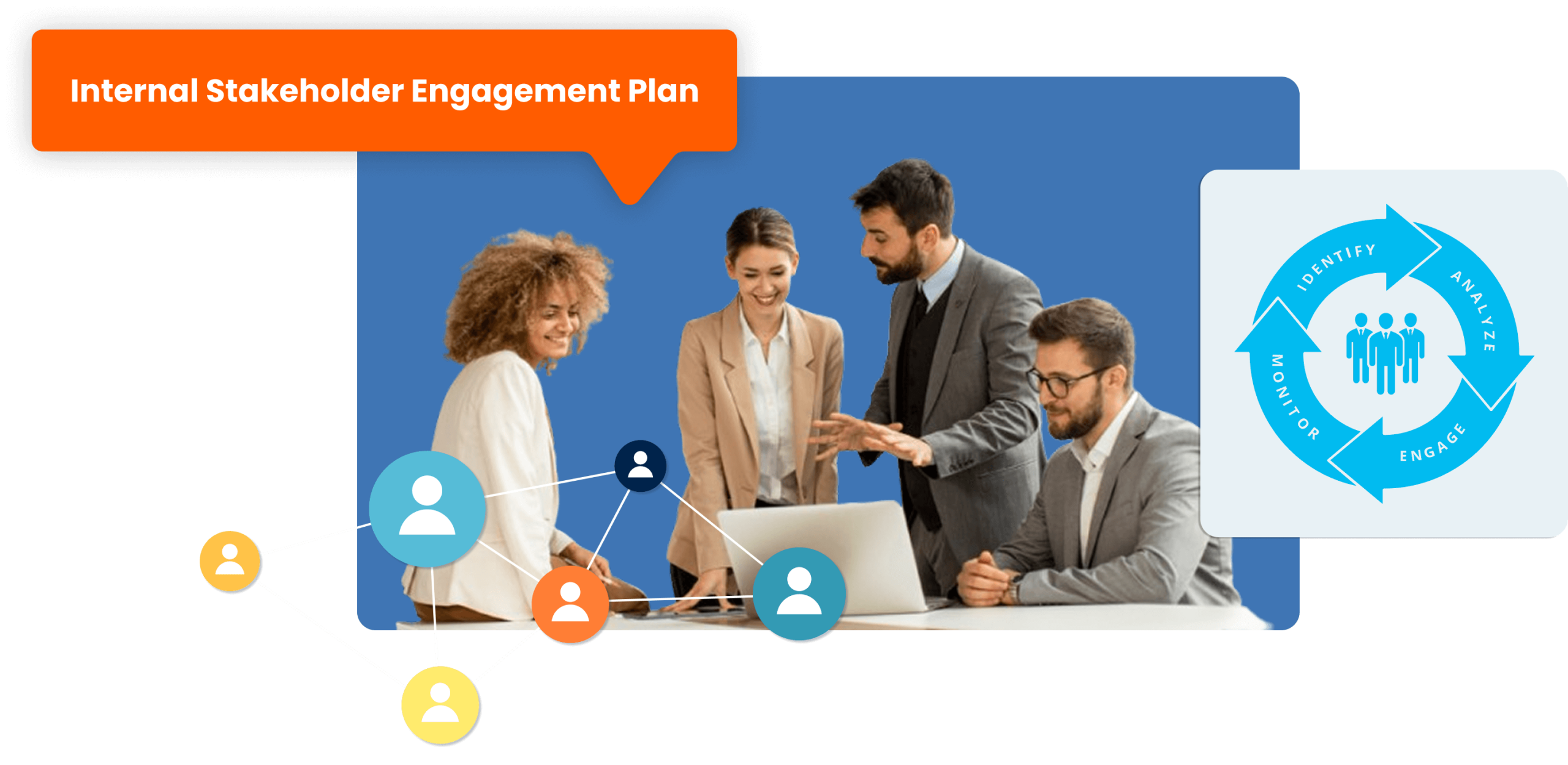
An internal stakeholder engagement plan is a simple, structured roadmap for how you will collaborate with people inside your organization who are affected by or can influence your work. It clarifies who your key stakeholders are, what they care about, how and when you will communicate with them, and what success in the relationship looks like.
Instead of relying on ad-hoc conversations, it turns engagement into a deliberate, repeatable process that supports both day-to-day projects and long-term goals.
Without a plan, engagement is reactive: opportunities are missed, alignment drifts, and trust erodes. For procurement teams and other functions that work across departments without formal authority, a simple, structured plan becomes a primary tool for influencing outcomes and keeping projects moving. It helps you prioritize relationships, schedule meaningful interactions, tailor messages to different audiences, and anticipate risks before they escalate.
What the Project Stakeholder Engagement Plan Contains

6 Steps to Create an Internal Stakeholder Engagement Plan
This guide gives a concise, practical framework for building a stakeholder engagement plan focused on clear objectives and measurable KPIs.
It covers identifying and prioritizing stakeholders, planning targeted communications, and assigning accountability to speed decisions and reduce rework.
1. Start with a concise project summary
Write one clear sentence describing the project’s purpose and expected outcome, and list 2–3 KPIs that will define success. Keeping the summary outcome-focused ensures all activities remain aligned and measurable.
2. Identify and segment stakeholders
List everyone with influence, interest, or dependency on the project and group them by role and priority. Use a Power/Interest grid to decide where to focus engagement effort for the biggest impact.
3. Define when to engage each stakeholder
Record the specific project phase when each stakeholder’s input is critical (e.g., Legal at contract review, R&D during testing). Engaging stakeholders at the right phase reduces rework and schedule risk.
4. Select the engagement approach and channel
Decide how closely to involve each stakeholder and the best format (workshops for collaborative design, short briefs for busy execs, face-to-face for sensitive matters). Match channels to stakeholder preferences and availability.
5. Populate the detailed communication entries
For high-priority stakeholders, specify the exact key message, the owner, the timing, and the expected decision or outcome. Make asks explicit (e.g., “Decision required: approve spec v1 by MM/DD”) to avoid ambiguity.
6. Plan follow-up and accountability
Record who will follow up, how progress will be tracked (e.g., weekly reports, task tracker), and escalation steps if decisions slip. Build checkpoints into the timeline to surface and remove blockers early.
Conclusion
An internal stakeholder engagement plan converts ad‑hoc outreach into a repeatable, outcome-driven practice. It helps you focus effort where it matters, reduce surprises, and maintain trust across functions. Start by filling in the project summary, mapping stakeholders by priority and influence, and then design explicit communication steps that ask for specific outcomes.
Frequentlyasked questions
What is an Internal Stakeholder Engagement Plan?
An internal stakeholder engagement plan is a simple, structured roadmap that defines who your key internal stakeholders are, what they care about, and how and when you will collaborate and communicate with them to achieve project goals.
How do I handle busy or resistant stakeholders?
Engage early with concise asks tied to shared goals, use the channel they prefer, and offer to remove barriers (e.g., draft language for Legal). Credibility and help often work better than pressure.
How often should I update the plan?
Treat it as a living document: review at major milestones, after key decisions, or whenever stakeholder priorities shift.
About the author
My name is Marijn Overvest, I’m the founder of Procurement Tactics. I have a deep passion for procurement, and I’ve upskilled over 200 procurement teams from all over the world. When I’m not working, I love running and cycling.