

Written by Marijn Overvest | Reviewed by Sjoerd Goedhart | Fact Checked by Ruud Emonds | Our editorial policy
Stakeholder Analysis: Definition + Step-by-Step Guide
As taught in the Internal Stakeholder Management Course / ★★★★★ 4.9 rating
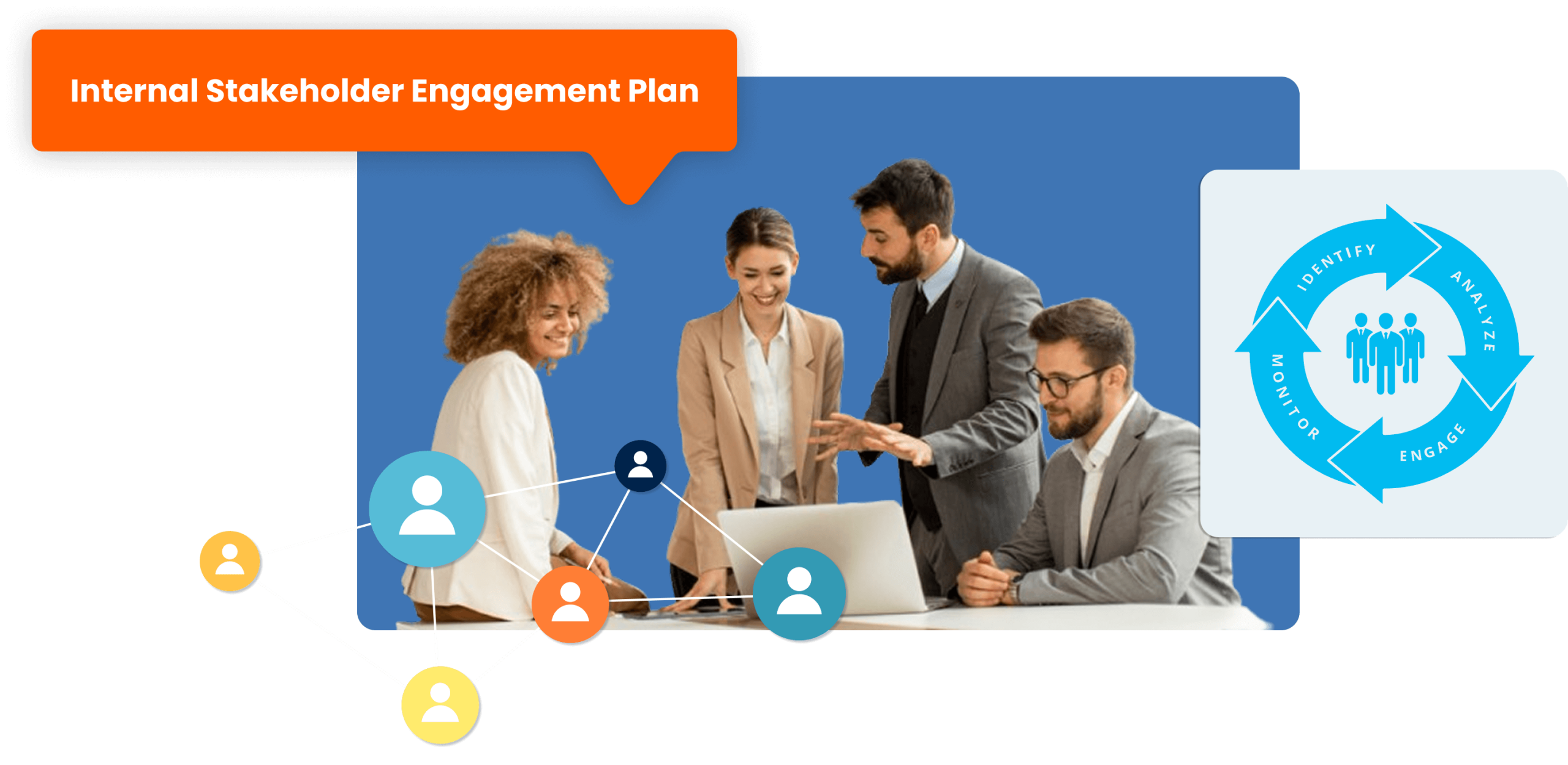
- Stakeholder analysis is the practice of identifying people who can affect or be affected by your initiative and understanding their goals, influence, and potential risks.
- It prioritizes time and communication so you engage the right people at the right moments with the right message.
- Used continuously from kickoff to go live, it reduces late surprises, speeds decisions, and increases adoption.
What is Stakeholder Analysis?
Stakeholder analysis identifies who can affect or be affected by your initiative and clarifies their interests, influence, and potential risks. It turns assumptions into a visible plan so you can involve the right people at the right time. Done well, it reduces miscommunication, speeds decisions, and improves adoption across Finance, Legal, R&D, Marketing, Operations, end users, and leadership.
Why Stakeholder Analysis Matters?
Even if you have mapped and interviewed stakeholders, understood their interests, and crafted a communication plan, risks can still appear. Stakeholder resistance, delays, and misunderstandings often surface during implementation, when timelines are tight, and decisions become real.
That is why analyzing stakeholder risk and influence is a core part of internal stakeholder management. Influence is a stakeholder’s ability to shape decisions, formally or informally. Risk is the potential negative consequence if expectations are not met, if someone is excluded, or if needs are misunderstood.
Ignoring either dimension can lead to late conflicts, project delays, or weak buy-in. Analyze both together, early, and update regularly.
How to Assess Influence and Risk
Start by revisiting your stakeholder map and Power/Interest Grid. Shift focus from simple involvement to understanding where disruption could come from and why. For each stakeholder, ask:
- Do they hold formal authority over budget, contracts, compliance, or timelines
- Do they have informal power through relationships, reputation, or deep organizational knowledge
- Have they raised late objections, delayed decisions, or withdrawn support in past projects
Influence does not always follow hierarchy. A respected specialist may sway outcomes more than a senior title, and a senior leader who seemed uninvolved can become central if priorities clash.
On the risk side, stakeholders can resist change, carry conflicting priorities, lack trust from past initiatives, be unavailable at key moments, or raise legal and compliance concerns late.
These risks do not mean people are difficult; they often reflect misalignment or lack of clarity. Because risk is not static, schedule periodic check-ins and adjust as roles and expectations shift.
Value and Risk Segmentation Model
Not everyone needs the same depth or cadence. Classify stakeholders by the value they bring to the outcome and the risk if they are not properly engaged.
1. High value, high risk – Critical to success, but priorities may not fully align. Keep tight alignment, clarify trade-offs, and secure timely decisions.
Typical roles: senior leadership, compliance, and quality approvers.
2. High value, low risk – Supportive enablers who provide key expertise or resources. Maintain visibility and be involved at checkpoints.
Typical roles: Finance partners, data owners, process SMEs.
3. Low value, high risk – May not add much to delivery, but can slow or block if overlooked. Acknowledge concerns and set clear touchpoints.
Typical roles: local managers resisting new processes or tools.
4. Low value, low risk – Light touch. Inform at milestones to keep transparency without over-engaging.
Typical roles: peripheral teams not directly impacted.
This grid focuses effort where it moves the outcome the most and reduces friction elsewhere.
How to use the matrix
List and place. Using your stakeholder map, write each stakeholder’s name or role and place them in one quadrant based on demonstrated value and likely risk. Add one sentence for each: “Value because… Risk because…”
Plan engagement by quadrant.
- High value, high risk: co-design sessions, frequent check-ins, clear approvals, and escalation paths
- High value, low risk: milestone reviews, early visibility of decisions, quick feedback loops
- Low value, high risk: short briefings, targeted FAQs, defined channels to raise concerns
- Low value, low risk: milestone emails or dashboard access only
Assign ownership. Note who on your team owns the relationship and the next concrete step. Where roles are complex, support with a simple RACI to clarify who is responsible, accountable, consulted, and informed.
Review regularly. Influence and risk change with scope, timelines, and org shifts. Recheck the matrix at phase gates or monthly on fast-moving work and move stakeholders as signals change.
The goal is not to eliminate risk but to reduce it to a manageable level while preserving momentum and trust. Used this way, the value–risk lens turns stakeholder analysis into day-to-day choices about where you spend time, how you communicate, and when you escalate—so decisions arrive faster, surprises drop, and adoption improves.
Common Pitfalls and How to Avoid Them
1. Assuming the cast
Revalidate your list at kickoff and at phase changes. New influencers appear as the scope evolves.
2. Overweighting hierarchy
Find doers and informal advisors through quick interviews. They often unlock progress.
3. Treating everyone the same
Match cadence and depth to the quadrant. Weekly for high value and high risk, milestone briefs for low risk.
4. Set and forget.
Review the template weekly. Influence and risk are dynamic. Adjust owners, cadence, and messages accordingly.
Conclusion
Stakeholder analysis is a working habit, not a one-time slide. Identify who matters, understand how they can shape the outcome, and decide where to invest time and how to communicate.
Keep a simple template live, revisit it at milestones, and let it drive your meetings, decisions, and escalations. When you treat analysis as an ongoing loop, decisions come faster, issues surface earlier, and adoption improves after go-live.
Frequentlyasked questions
What is stakeholder analysis?
Identifying people who can affect or be affected by your work and assessing their goals, influence, and risks so you can engage them effectively.
How often should I update the stakeholder analysis?
At a minimum, at phase gates and after major decisions. For fast-moving projects, review weekly.
What tool should I start with?
A spreadsheet or one-page table works. Add a Power Interest Grid or value risk matrix when you need a prioritization at a glance.
About the author
My name is Marijn Overvest, I’m the founder of Procurement Tactics. I have a deep passion for procurement, and I’ve upskilled over 200 procurement teams from all over the world. When I’m not working, I love running and cycling.