

Written by Marijn Overvest | Reviewed by Sjoerd Goedhart | Fact Checked by Ruud Emonds | Our editorial policy
Stakeholder Segmentation and Mapping — How to Segment Your Stakeholders
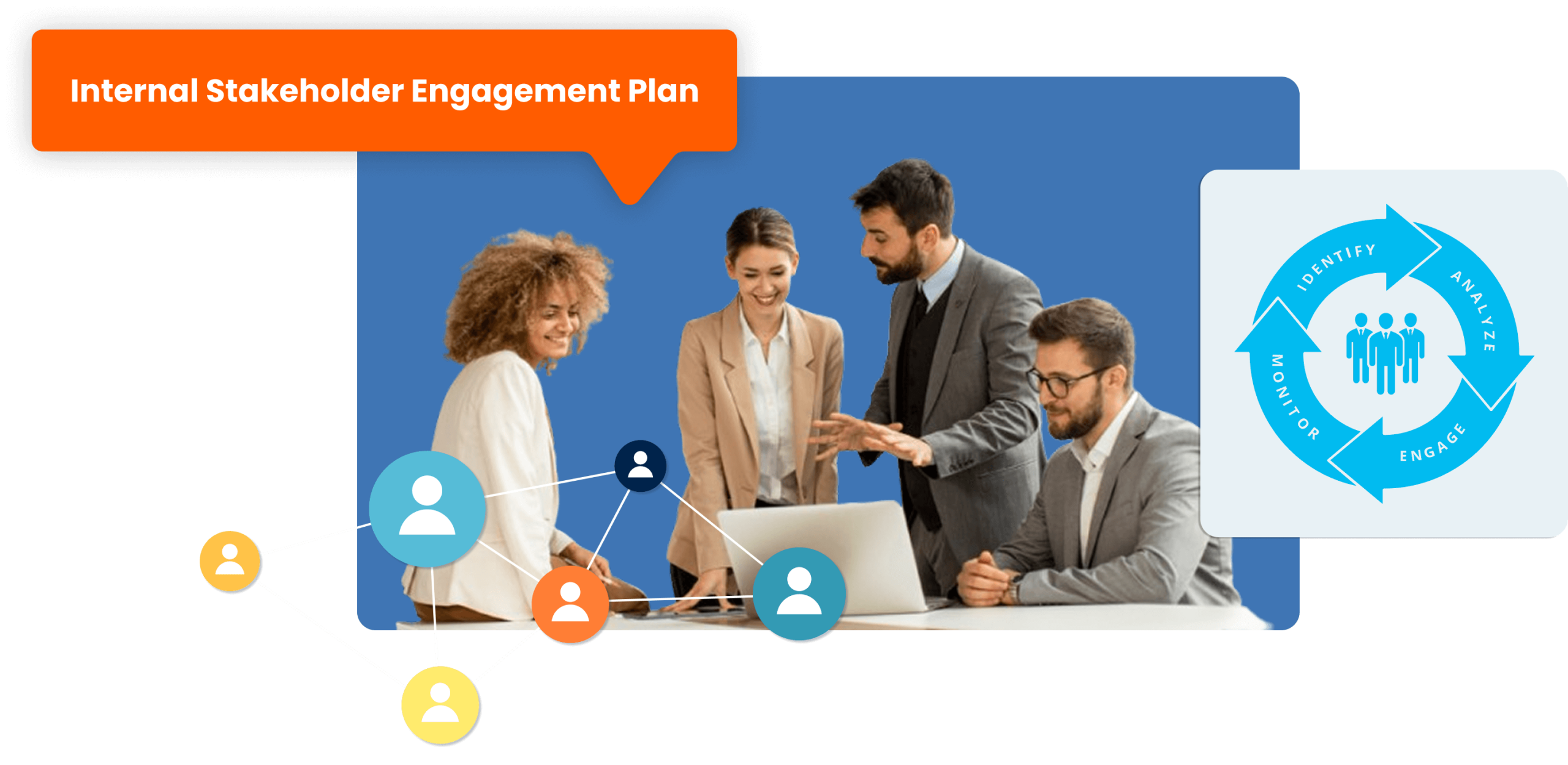
As taught in the Internal Stakeholder Management Course / ★★★★★ 4.9 rating
- Stakeholder segmentation and mapping is the practice of identifying everyone who can affect or be affected by your initiative, then grouping and prioritizing them so you can engage the right people at the right time.
- It turns “assumptions about who matters” into a visible map with roles, influence, interests, and preferences you can plan against.
- Done well, it prevents miscommunication, aligns expectations, and speeds decisions across Finance, Legal, R&D, Marketing, Operations, end users, and leadership.
What is Stakeholder Segmentation and Mapping?
Stakeholder segmentation and mapping are the first steps in effective stakeholder management. You identify all relevant internal players, organize them into meaningful groups, and visualize how they connect to your goals. Even so, it is often skipped or rushed.
Many teams and procurement professionals rush this step and rely on past patterns, assuming they already know their stakeholders well or believe that one engagement approach will work for everyone, then discover late that a decision maker was missed or an influencer was under-engaged.
Studies show that up to 80% of project success is influenced by the quality of stakeholder identification and analysis. Investing time here pays back through clearer expectations, faster feedback, and smoother collaboration.
Why Stakeholder Segmentation and Mapping Matter
Skipped or shallow mapping leads to predictable pain: crossed wires, drifting expectations, slow approvals, and low ownership. Studies consistently show that project outcomes correlate strongly with the quality of stakeholder identification and analysis.
Treat this as core project work, not admin. When you can see who matters, why, and how, you can engage intentionally instead of reactively.
How to Identify and Segment Your Stakeholders
Before segmenting, build a complete list. Ask: who uses the product/service, who signs the budget, who owns technical/quality/regulatory/data requirements, and who can accelerate or block progress? Typical groups include Finance, Legal, R&D, Marketing, Operations, end users, IT/InfoSec, Risk/Compliance, and executive sponsors.
Once you have identified them, it’s time to segment. Segmenting is about choosing the lens that best fits the work. Use one or combine them to get a fuller view. Here are 3 practical ways to segment stakeholders:
1. By role or function
- Strategic: executives and budget owners who set direction and unlock resources
- Tactical: category managers and project leads who translate strategy into plans
- Operational: end users and support teams who run day-to-day processes
This lens clarifies who to brief on strategy, who to co-plan with, and who needs hands-on enablement.
2. By relationship to procurement

- Decision makers: approve scope, spend, or supplier selection
- Contributors: provide specifications, data, or technical constraints
- Receivers: live with the outcome and determine adoption
- Influencers: shape perception and momentum without formal authority
This lens helps you calibrate involvement, cadence, and decision rights.
3. By communication style or behavior
- Detail-oriented versus big picture: data decks versus concise narratives
- Analytical versus relational: evidence first versus consensus and trust first
- Fast paced versus deliberate: quick touchpoints versus time to reflect
- This lens ensures your message lands by matching format, channel, and timing to the person.
How to Build a Stakeholder Map
Once you’ve segmented your stakeholders, it’s time to create a stakeholder map. Turn segmentation into a usable artifact you can share and update.
A simple table or diagram is enough at the start. For each stakeholder, identify the following:
- Name and Department help you identify who they are and their position within the organization.
- Relevance indicates the criticality of their role to the project’s success (e.g., high, medium, low).
- Influence refers to their decision-making power or ability to sway others (also ranked as high, medium, or low).
- Communication Style helps you adapt your approach to be more effective (e.g., detail-oriented, big-picture, relational, analytical)
This map bridges into prioritization tools such as the Power and Interest Grid in the next lesson and directly informs your meeting cadence, decision checkpoints, and reporting.
Here’s a practical template to map out your stakeholders for a project you’re currently working on or have recently completed. Here is how to fill it out:
- Start by listing all internal stakeholders who are involved or affected by the project.
- Think carefully about each stakeholder’s relevance to the success of your work. Are they key decision-makers, subject matter experts, or impacted end users?
- Evaluate their level of influence. Who has the power to approve or block progress?
- Identify their preferred way of working and communicating. Do they like structured data? Big-picture overviews? Personal connection?
Here’s an example:
There are many formats you can use for mapping, including stakeholder tables, influence/interest matrices, mind maps, and relationship diagrams.
Common Pitfalls and How to Avoid Them
Even strong teams fall into repeatable traps. Naming them now helps you prevent rework later.
- Assuming you already know the players. Each project shifts dynamics. Re-validate the list at kickoff and at milestones.
- Overweighting hierarchy. Informal influencers matter. Find the doers and trusted voices through quick interviews.
- Treating everyone the same. Tailor cadence and depth. Some need weekly syncs, others only milestone briefs.
- Set and forget maps. Roles and priorities move. Update the artifact when ownership, scope, or risks change.
Avoiding these pitfalls keeps your segmentation useful and keeps your later engagement plan grounded in reality.
To help you improve your stakeholder segmenting and mapping, compare one successful and one difficult past project. Ask yourself, were the right people engaged early, did you adapt by role, influence, and style, and which assumptions proved wrong. Capture the answers, then choose one change you will apply in your next engagement plan. This reflection links your mapping habits to tangible improvements in speed and adoption.
Conclusion
Stakeholder segmentation and mapping turn guesswork into a working plan. When you deliberately list who matters, choose the right lenses to segment them, and capture relevance, influence, and communication style in a simple map, you prevent crossed wires, set clear expectations, and shorten decision cycles. This is not admin work, but rather, it is the foundation for engagement, prioritization, and the cadence you will set in the next phase.
Use your map to guide everything that follows: who you brief early, where you seek specifications, which approvals you secure, and how you tailor updates. Revisit it at milestones, because roles shift and priorities move. A current map keeps your engagement grounded in reality and makes the transition to the Power–Interest Grid, RACI, and meeting governance straightforward.
Start now. Pick one active project, build the first version of your stakeholder map, and schedule a 15-minute review with a trusted partner to validate it. Small, consistent updates to this artifact will compound into faster alignment and stronger outcomes.
Frequentlyasked questions
What is the fastest way to start stakeholder mapping
Begin with a table listing name, department, relevance, influence, and preferred communication style. Share it with the core team to fill gaps and calibrate ratings, then add interdependencies and next steps.
How many segmentation lenses should I use?
Usually, two are enough, for example, a role or function plus a relationship to procurement. Add the communication style lens for complex, cross-regional work or when prior collaborations struggled.
How often should I update the map?
At a minimum, update at each phase gate or monthly on longer projects. Refresh sooner if ownership changes, scope shifts, or new risks emerge so your engagement plan stays aligned.
About the author
My name is Marijn Overvest, I’m the founder of Procurement Tactics. I have a deep passion for procurement, and I’ve upskilled over 200 procurement teams from all over the world. When I’m not working, I love running and cycling.