


Written by Marijn Overvest | Reviewed by Sjoerd Goedhart | Fact Checked by Ruud Emonds | Our editorial policy
Logistics Sourcing: Definition, Types + Examples
What is logistics sourcing?
- Logistics sourcing is the process of identifying, evaluating, and contracting logistics providers that best fit a company’s operational and strategic needs.
- Logistics sourcing combines procurement and supply chain principles to achieve cost efficiency, service quality, and risk control.
- When done strategically, logistics sourcing drives resilience, transparency, and long-term value across the supply chain.
What is Logistics Sourcing?
Logistics sourcing refers to the structured process of selecting and managing logistics service providers, such as carriers, freight forwarders, or third-party logistics companies (3PLs and 4PLs). Its main goal is to ensure that transportation, warehousing, and distribution services are delivered efficiently, reliably, and in alignment with business priorities.
Unlike traditional purchasing, logistics sourcing is strategic. It focuses not only on price but also on supplier performance, technology integration, sustainability, and long-term collaboration.
In an era of global uncertainty, capacity shortages, and volatile freight costs, logistics sourcing has become one of the most critical levers for competitive advantage.
Types of Logistics Sourcing
Choosing the right logistics sourcing model is a strategic decision that depends on company size, supply chain complexity, and long-term goals. The table below outlines the main types of logistics sourcing, from in-house operations to advanced 5PL networks, and explains how each model affects cost efficiency, control, and scalability.
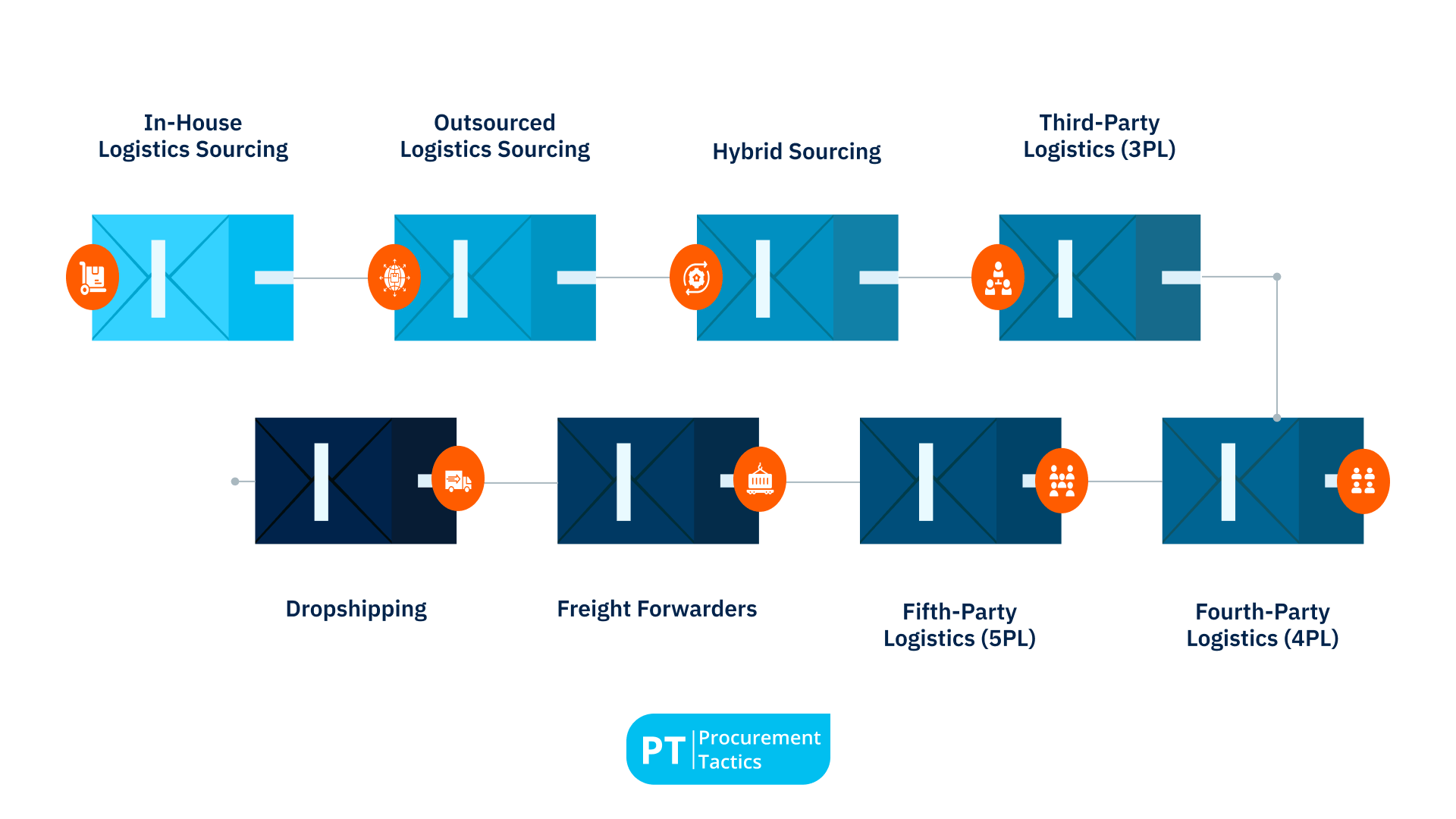
While sourcing models define who manages logistics, functional logistics types describe what parts of the logistics process are being managed. Most companies blend several of these functions into one cohesive logistics strategy, for example, using demand-planning logistics to forecast inventory, warehouse logistics for storage, and reverse logistics to manage returns. Below are seven common types of functional logistics.
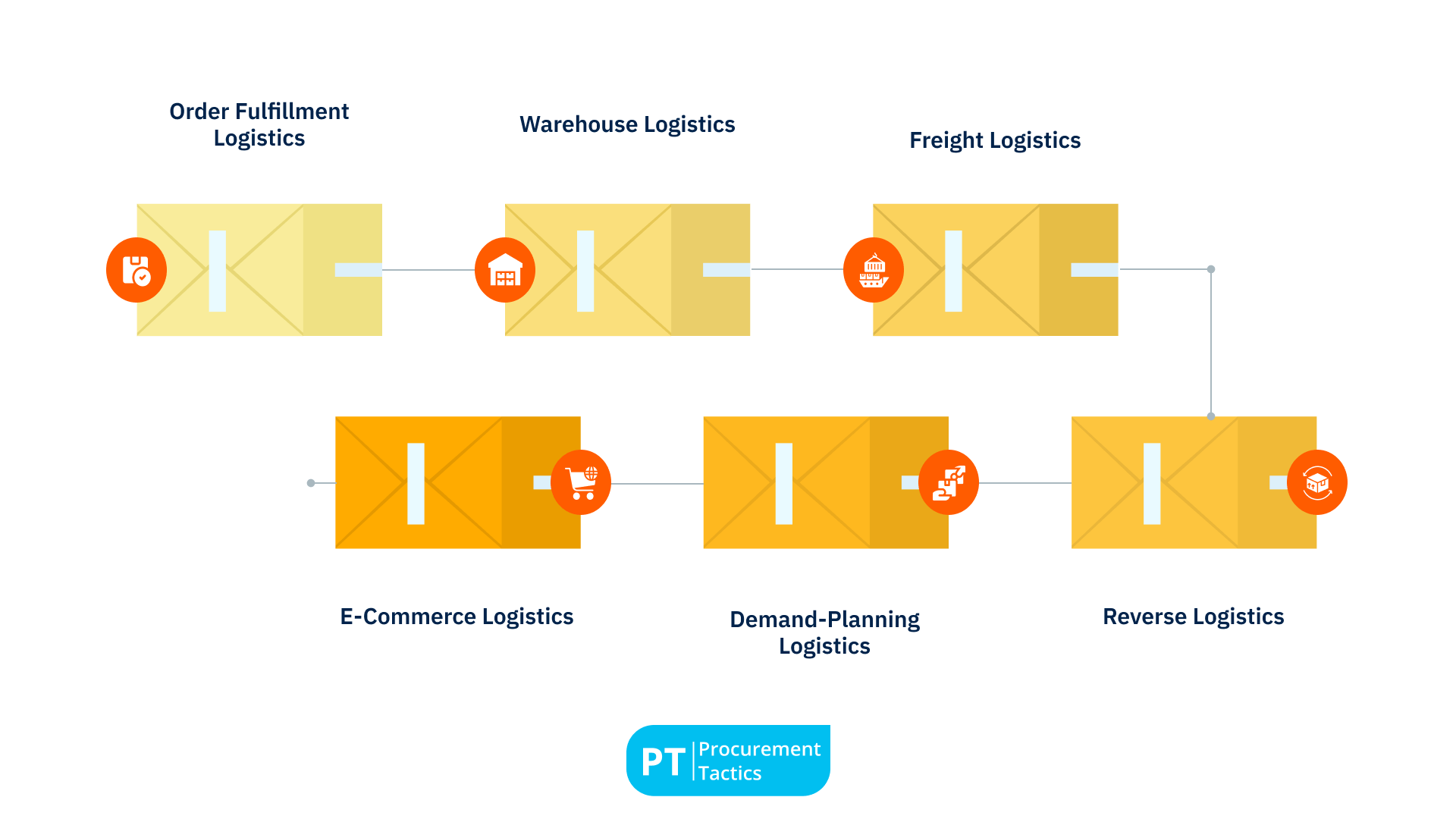
In practice, businesses often combine these logistics types under one sourcing framework.
For instance, an electronics manufacturer might rely on demand-planning logistics for purchasing timing, warehouse logistics for component storage, and 3PL outsourcing for global distribution, all coordinated through a centralized digital platform.
How to Select The Right Logistics Sourcing Setup
Choosing the right logistics sourcing setup isn’t about finding one perfect model; it’s about choosing what works best for your business. Every company has different needs. Some want full control over their logistics, others need flexibility to scale up or down, and many fall somewhere in between.
Before deciding, it helps to ask a few key questions:
- Do we have the people and systems to manage logistics ourselves?
- Are our costs, routes, and delivery times stable and predictable?
- Do we operate mainly in one country or across several regions?
If your company operates in fast-changing or global markets, outsourcing to 3PL or 4PL providers can bring flexibility, expert support, and better cost control. For example, an e-commerce company expanding into new markets might rely on an external logistics partner to handle cross-border deliveries and customs.
But if your business sells high-value, fragile, or sensitive products, managing logistics in-house might be a better choice. In-house teams can ensure tighter quality control, handle returns more efficiently, and respond faster to customer needs.
Many organizations combine both approaches in a hybrid setup, managing strategic or local deliveries internally while outsourcing complex or international ones. This mix provides agility, cost efficiency, and control, helping companies adapt to seasonal changes or sudden demand spikes.
Logistics Strategy & Make-or-Buy: To Outsource or Not?
One of the most important decisions in logistics sourcing is whether to “make” (manage logistics in-house) or “buy” (outsource to external partners). This choice shapes how much control, flexibility, and investment a company wants to maintain across its supply chain. Below are the two approaches explained, and how to know which one might be right for your business.
1. Logistics Strategy “Make” Decision
Choosing to make means keeping logistics operations in-house. Companies that follow this approach view logistics as a core strength and an essential part of their value proposition. They prefer to manage transportation, warehousing, and delivery themselves to ensure quality and consistency.
In-house logistics provides full visibility and control over operations. Teams can react quickly to disruptions, adjust routes or delivery schedules, and protect sensitive customer data. For example, large e-commerce retailers such as Amazon and Zalando have built their own delivery networks to guarantee on-time performance and protect their brand reputation.
However, this approach requires significant investment in technology, vehicles, infrastructure, and staff. It also demands expertise in route optimization, inventory management, and compliance.
As a result, in-house logistics works best for companies that:

- Operate at a large scale with predictable demand,
- Rely on logistics as part of the customer experience,
- And can afford long-term investments in assets and systems.
2. Logistics Strategy “Buy” Decision
Choosing to buy means outsourcing logistics to external providers, often 3PL or 4PL partners. This option allows companies to leverage the expertise, technology, and infrastructure of specialized logistics providers without having to build everything internally.
Outsourcing reduces upfront costs and allows faster scalability. For example, a mid-sized manufacturer can partner with a 3PL provider to manage warehousing and global shipping while focusing on production and customer service. Outsourcing also gives access to global networks, digital tracking tools, and advanced analytics that smaller or mid-sized firms couldn’t afford on their own.
The trade-off is less control over service quality and customer touchpoints. If contracts aren’t managed carefully, businesses may experience communication issues, inconsistent delivery standards, or hidden costs. That’s why outsourced logistics requires strong vendor management and regular performance reviews
3 Example of Logistics Sourcing
1. ZF Friedrichshafen
ZF, a leading global automotive supplier, faced increasing complexity in managing transportation across multiple regions. To improve scalability while keeping strategic control, ZF adopted a hybrid logistics sourcing model through the Transporeon Freight Procurement platform. Instead of running separate tenders for each region, ZF centralized all logistics procurement within one digital system. This approach allowed the company to outsource execution tasks, like carrier bidding and rate management, while keeping strategic decision-making in-house. The result was full transparency, lower administrative costs, and faster supplier comparison. By combining internal oversight with outsourced operations, ZF achieved the right balance between control and efficiency.
2. RPM Logistics
RPM Logistics adopted Transporeon’s Autonomous Procurement solution, using an outsourced and technology-enabled model. The system uses artificial intelligence and real-time market data to automatically match shipments with the most suitable carriers. This digital setup replaced manual freight tendering and negotiations, cutting both time and human error. By outsourcing the execution layer but using AI to maintain strategic visibility, RPM increased sourcing speed, consistency, and supplier trust. This model fits companies that want efficiency gains without losing oversight of performance and quality.
3. Argus Logistics
Argus Logistics leveraged digital sourcing tools to consolidate its carrier base and streamline freight tendering. The company used a centralized and data-driven outsourcing model, where automation handled repetitive sourcing tasks while internal teams monitored compliance and supplier performance. This change reduced sourcing costs by 17 percent compared to traditional manual bidding processes. Through automation and analytics, Argus improved transparency, responsiveness, and risk control, key pillars of modern logistics sourcing.
Modern Technology in Logistics Sourcing
Technology has reshaped how logistics sourcing operates. Procurement and logistics teams increasingly use digital platforms, AI, and data analytics to make faster, data-driven procurement.
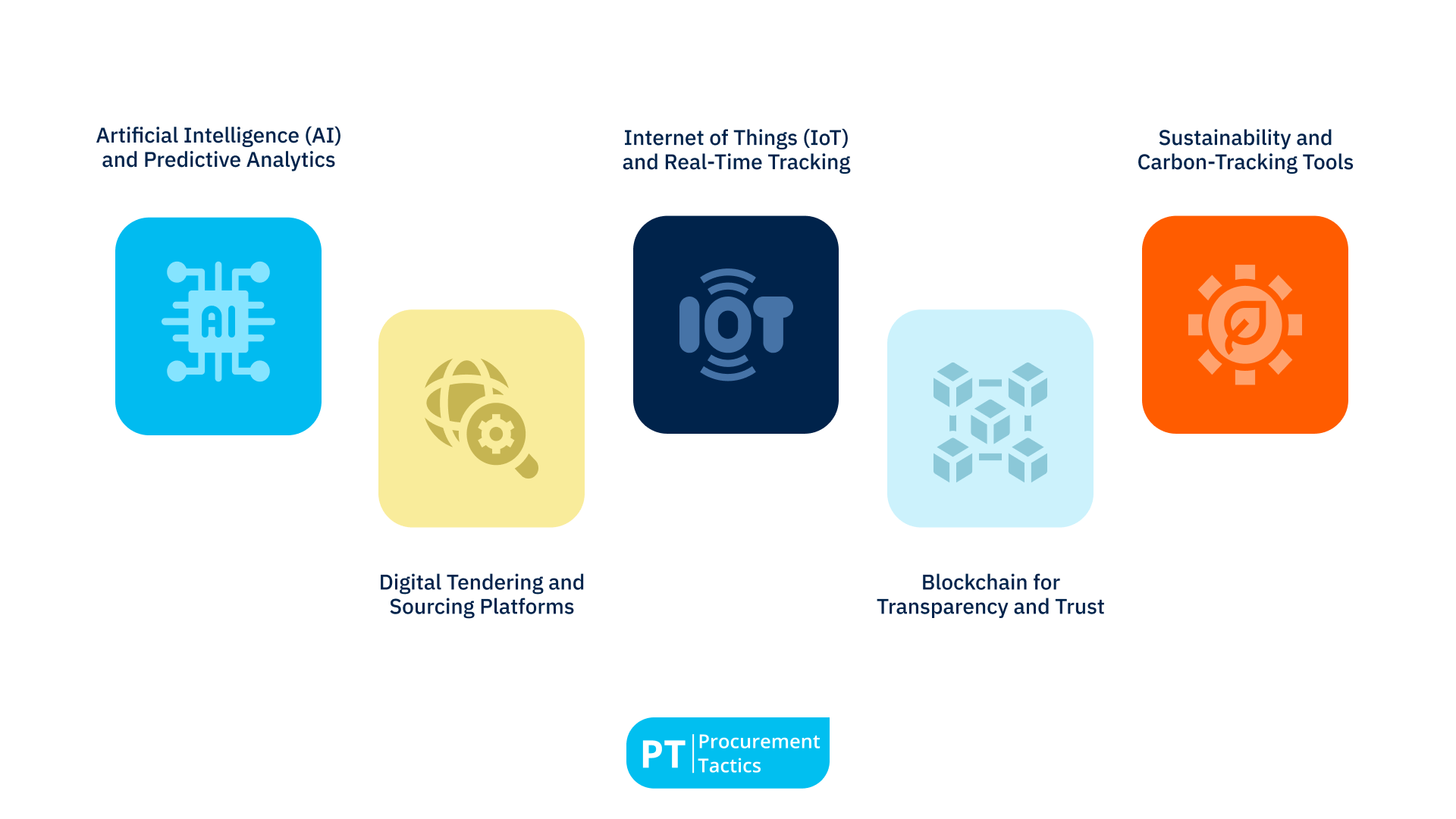
1. Artificial Intelligence (AI) and Predictive Analytics
AI helps companies plan instead of reacting too late. By analyzing past and real-time data, AI can predict when shipping demand will rise, which carriers offer the best rates, or where costs might increase.
For example, if the system sees that transport capacity will be limited next month, it can suggest booking carriers early, saving both time and money. AI also spots inefficiencies like routes that often run half-empty, helping logistics teams redesign operations and cut waste before it becomes a problem.
2. Digital Tendering and Sourcing Platforms
Digital platforms have replaced long email chains and manual spreadsheets. Tools like Transporeon or SAP Ariba allow procurement teams to compare suppliers, review bids, and manage contracts, all in one place.
These systems automatically launch tenders, check supplier performance, and even measure sustainability scores. This saves hours of administrative work, reduces human error, and keeps the whole process transparent, especially useful for companies working with many logistics partners worldwide.
3. Internet of Things (IoT) and Real-Time Tracking
IoT devices, such as GPS trackers and smart sensors, give real-time updates on shipments. They show exactly where goods are and what condition they’re in, including temperature and humidity levels for sensitive products like food or medicine.
If something goes wrong, such as a delay at the border, the system immediately alerts the logistics team. They can then reroute the shipment before it becomes a serious issue. This visibility builds trust and reduces losses caused by late or damaged deliveries.
4. Blockchain for Transparency and Trust
Blockchain works like a shared digital record of every shipment step, from pickup to delivery. Each update is securely stored and cannot be changed or deleted. This makes fraud or data errors almost impossible.
For example, when trading globally, blockchain ensures that important documents like bills of lading are shared instantly with everyone involved. This speeds up customs checks, improves compliance, and strengthens trust between partners.
5. Sustainability and Carbon-Tracking Tools
Sustainability has become a core part of modern logistics. Digital tools now let companies measure their carbon emissions, choose greener carriers, and plan more efficient routes.
Some platforms can even simulate changes, such as switching from trucks to trains or combining shipments, to see how much CO₂ can be saved. A European manufacturer, for instance, might use a carbon-tracking dashboard to pick carriers with the lowest emissions and meet its ESG goals.
Challenges of Logistics Sourcing
While logistics sourcing brings efficiency and strategic value, it also comes with significant challenges that procurement teams must address. Rising freight costs, supply disruptions, and increasing sustainability demands make it difficult to design a logistics strategy that is both cost-effective and resilient.
The table below highlights the most common challenges organizations face, and explains why they remain critical pain points in today’s logistics environment.
4 Practical Solutions to Logistics Sourcing Challenges
Overcoming logistics sourcing challenges takes more than cutting costs; it requires better teamwork, visibility, and smarter decision-making. Below are four practical solutions that can help companies turn logistics sourcing into a coordinated, strategic process that drives both efficiency and long-term resilience.
1. Strengthen Cross-Functional Collaboration
Procurement, logistics, and IT teams often work independently, each focusing on its own priorities. To solve this, companies should build cross-functional sourcing teams where all departments collaborate from the beginning.
For example, a consumer goods company might involve procurement, logistics, and finance teams in the same freight tendering meeting.
Procurement negotiates pricing based on supplier data, logistics reviews delivery performance, and finance checks budget impact.
This teamwork creates faster decisions, better contract terms, and smoother supplier management.
2. Improve Visibility Through Digital Integration
Lack of visibility is one of the biggest causes of logistics disruptions. Adopting digital tools and
cloud-based systems, such as Transportation Management Systems (TMS) or real-time tracking platforms, connect all providers and data sources in one place.
For example, a manufacturing company can use a TMS to monitor shipment status, compare carrier performance, and calculate total freight costs automatically.
When a delay happens, the system sends instant alerts, allowing the team to reroute goods before it affects production.
This integration results in fewer surprises, faster responses, and stronger supplier accountability.
3. Standardize KPIs and Supplier Performance Reviews
Without shared metrics, performance becomes subjective. Companies should set clear Key KPIs that apply to every logistics partner, like on-time delivery, cost per shipment, or carbon emissions per load.
For example, a global retailer can use a monthly supplier scorecard to track delivery accuracy, claims ratio, and sustainability performance.
During quarterly reviews, procurement can share this data with each supplier to discuss improvements.
This data-driven process builds transparency, motivates suppliers to perform better, and creates a culture of accountability.
4. Embed Sustainability into Sourcing Decisions
Sustainability is now a key part of every sourcing decision. Companies can reduce emissions by switching to greener modes of transport, optimizing routes, and partnering with eco-certified carriers.
For example, a European electronics brand decided to move part of its freight from road to rail and use carbon-tracking dashboards to monitor results. Within a year, it cut CO₂ emissions by 20% while maintaining delivery reliability. Although sustainable solutions can cost more initially, they create long-term savings, improve brand reputation, and ensure compliance with ESG goals.
Conclusion
Logistics sourcing has become a core part of modern procurement, not just a cost-control activity. What once focused only on transport savings is now a strategic process that connects finance, technology, sustainability, and supplier collaboration.
Leading organizations see logistics sourcing as a driver of business resilience and long-term value, not just an operational task. With digital tools like AI, analytics, and real-time tracking, companies can predict demand, reduce risks, and make smarter decisions. But technology alone isn’t enough; it works best when it supports clear business goals such as cost efficiency, customer satisfaction, and sustainability.
Procurement teams play a key role in this transformation. By aligning data, partnerships, and strategy, they can turn logistics sourcing into a competitive advantage. The companies that will lead in the coming years are those that keep improving, collaborate with their suppliers, and use innovation to build sustainable, future-ready supply chains.
Frequentlyasked questions
What is logistics sourcing?
Logistics sourcing is the process of assessing and choosing logistics partners to ensure that transportation, warehousing, and distribution services are carried out effectively.
How does technology improve logistics sourcing?
AI, analytics, and digital platforms automate tendering, provide real-time visibility, and enable smarter decision-making, reducing cost and human error.
What factors should companies consider before outsourcing logistics?
Key considerations include cost structure, service quality, strategic control, and supplier reliability. The ideal balance depends on company size, market volatility, and long-term goals.
About the author
My name is Marijn Overvest, I’m the founder of Procurement Tactics. I have a deep passion for procurement, and I’ve upskilled over 200 procurement teams from all over the world. When I’m not working, I love running and cycling.