


Written by Marijn Overvest | Reviewed by Sjoerd Goedhart | Fact Checked by Ruud Emonds | Our editorial policy
Negotiation Statistics 2026 — 60 Key Figures
Table of contents
What are negotiation statistics?
- Negotiation statistics reveal how often people negotiate and succeed, 66% of U.S. workers who negotiate get higher offers.
- They show gaps and trends, like 55% still accept first offers even though 73% of employers expect negotiation.
- They also track tech's impact, AI tools now speed up talks by 80% and boost savings by over 280%.
Negotiation is part of our everyday life even if we do not notice it. In a professional setting, negotiation is a crucial part of the growth of your business. However, how does the negotiation look nowadays?
In this article, we will show you some figures about negotiation in businesses. Additionally, we will check some of the factors that affect negotiation nowadays.
Once you are done reading this article, you will know the latest things you should know in negotiation for you to be able to negotiate well, especially this 2026. So without further ado, let us now start!
I have created a free-to-download negotiation preparation toolkit template. It’s a PowerPoint file that can help you prepare for your next negotiation. I even created a video where I’ll explain how you can use this template.
Negotiation Statistics in 2026 That You Should Know
Here are some negotiation statistics for 2026 you may want to know!
1. 54% Women Negotiate Salary Offers vs 44 % Men
As of 2025, 54% of surveyed workers who negotiate salary offers are women, compared to 44% who are men.
This finding debunks the myth that women negotiate less often than men. Despite these higher negotiation rates, systemic gender discrimination continues to cause women’s salary requests to be rejected more frequently, highlighting the urgent need for organizational and cultural reforms.
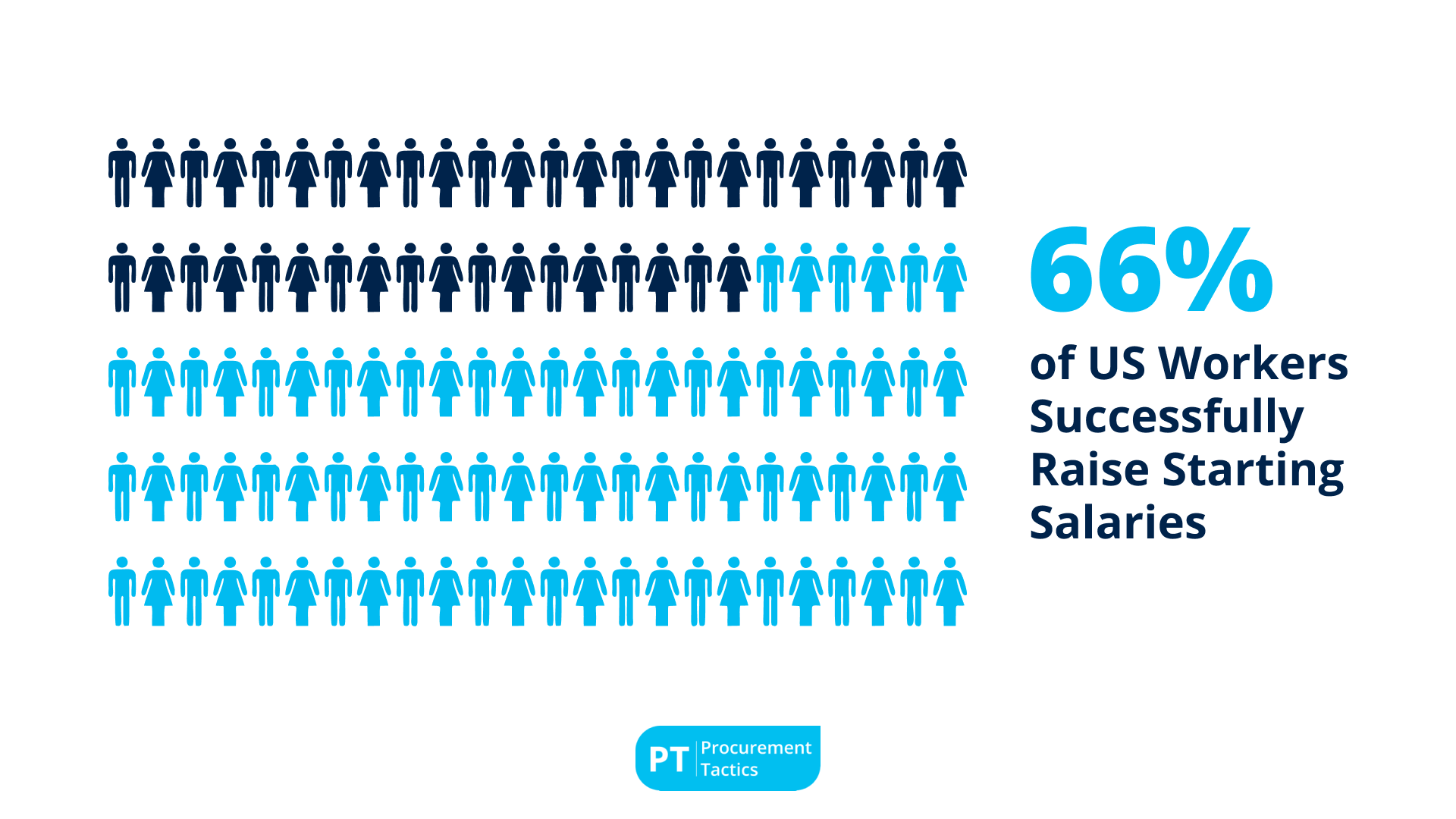
2. 66% of US Workers Successfully Raise Starting Salaries via Negotiation
As of 2025, 66% of US job candidates who negotiated their starting salary secured a higher offer, according to a Pew Research Center survey.
This underscores the ongoing value of negotiation skills for improving initial compensation. Employers should anticipate and prepare for such discussions to attract and retain top talent.
3. 55% of US Workers Accept First Offer Without Negotiation
As of 2025, 55% of American workers accept the initial salary offer without negotiating, according to the 2025 Salary Negotiation & Expectations Survey by Resume Genius
The majority suggests that many candidates forgo opportunities to improve their compensation by speaking up. Employers should recognize this trend and foster a culture that encourages and supports salary discussions to promote pay equity and retention.
4. 4.7% OECD Inflation Rate Sparks Negotiation Challenges
As of January 2025, year‑on‑year consumer‑price inflation across the OECD stood at 4.7%, heightening cost pressures that complicate negotiation strategies.
Elevated inflation reduces purchasing power, forcing buyers to push harder for prices while sellers strive to protect their profit margins. Under these conditions, negotiators must adopt flexible tactics and stronger value propositions to reach mutually satisfactory agreements.
5. 73% of Employers Expect Candidates to Negotiate Salaries
As of 2025, 73% of employers anticipate that job candidates will negotiate their salary offers.
This expectation makes salary discussions a standard component of the hiring process. Job seekers who prepare and practice negotiation strategies can leverage this norm to secure better compensation.
6. 3.7% Standard Raises vs. Up to 20% Job‑Switch Increases
As of 2025, employers plan average total salary increases of 3.7% for non‑unionized employees, reflecting typical merit and cost‑of‑living adjustments.
In contrast, workers who change jobs can negotiate raises of up to 20%, leveraging new offers to boost compensation significantly. This gap highlights the value of strategic career moves and the critical role of negotiation in maximizing earnings.
7. Negotiation Training Market to Reach USD 2B in 2025, Growing at 7% CAGR
As of 2025, the global negotiation training service market reached USD 2 billion, driven by rising demand for effective negotiation skills across sectors.
The industry is forecast to grow at a 7% compound annual growth rate through 2033, reaching approximately USD 3.5 billion. This expansion underscores the strategic importance of negotiation training in enhancing organizational performance and competitive positioning.
8. 1% Direct‑Material Cost Cut Yields 0.8% EBITDA Margin Gain
As of 2025, APQC’s Procurement Open Standards Benchmarking shows that reducing direct‑material costs by 1% correlates with a 0.8% increase in EBITDA margin among median performers.
This finding underscores the powerful leverage of supplier negotiations and cost‑management strategies on a company’s bottom line. By targeting even small percentage savings on material inputs, organizations can unlock significant profitability improvements and reinvest those gains into growth initiatives.
9. 50% of Outcome Variance Tied to First‑Offer Anchor
As of 2025, research shows that up to 50% of the variance in negotiation outcomes is directly attributable to the initial offer anchor
This anchoring effect can skew subsequent adjustments and result in less balanced agreements if left unchecked. Negotiators are advised to use range offers and perspective‑taking techniques to mitigate anchoring bias and secure more equitable deals.
10. 100% of CBD Parties Commit to Four 2050 Biodiversity Goals
All 196 Parties to the UN Convention on Biological Diversity have committed to achieving four overarching biodiversity goals by 2050 under the Kunming‑Montreal Global Biodiversity
Framework, a pledge formalized at the resumed COP16 session in Rome. These targets, halting extinctions, restoring ecosystems, ensuring equitable benefit‑sharing, and mobilizing finance, provide a clear roadmap for global conservation efforts. Ongoing negotiations through mid‑2025 also aim to adopt a binding plastics treaty to curb pollution, an essential step toward meeting these goals.
11. 78% of New Hires Get Better Offers After Negotiating
78% of new hires who negotiate their starting salary receive a better offer than initially proposed.
This demonstrates the clear payoff of preparing and advocating for one’s value at the offer stage. Employers should be ready for these conversations to ensure competitive and equitable compensation packages.
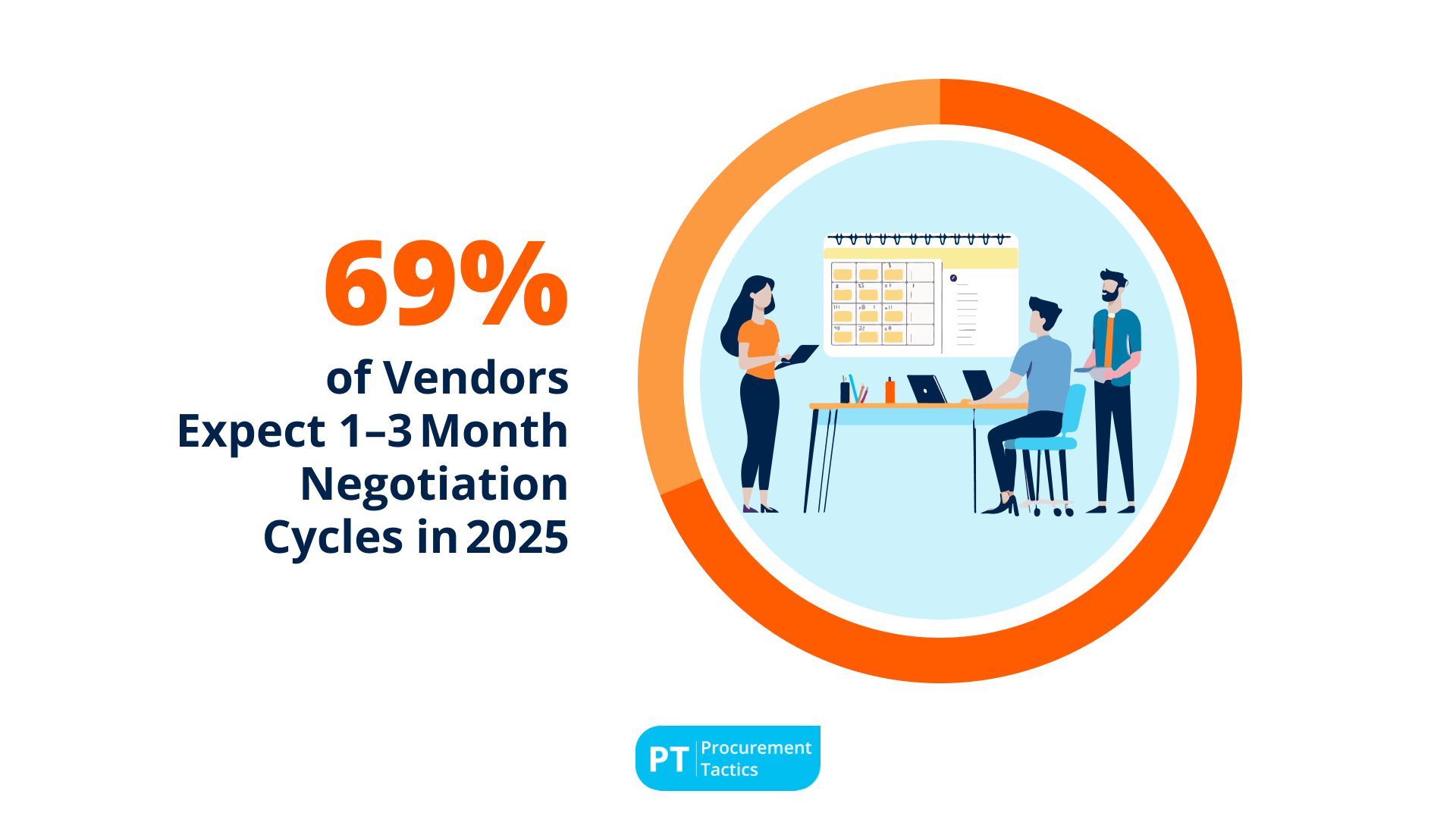
12. 69% of Vendors Expect 1–3 Month Negotiation Cycles in 2025
According to a 2025 Amazon Vendor Survey, 69% of third‑party vendors anticipate spending between one and three months negotiating their annual agreements.
Extended negotiation timelines reflect growing complexity in supply‑chain terms and risk‑management provisions. Brands that streamline negotiation workflows can accelerate go‑to‑market plans and strengthen supplier partnerships.
13. 50% of Organizations Use AI for Supplier Contract Negotiations
Half of all companies now deploy AI‑enabled contract risk analysis and editing tools to support supplier negotiations, automating clause reviews and real‑time risk warnings.
This adoption accelerates negotiation cycles by providing data‑driven insights and reducing manual contract drafting. Organizations leveraging these tools report greater consistency in terms and improved compliance across their agreements.
14. 80% of B2B Negotiations Will Occur Digitally by 2025
Gartner forecasts that 80% of B2B negotiation interactions between buyers and suppliers will take place through digital channels (email, portals, and virtual meetings) by the end of 2025.
This shift underscores the importance of seamless online negotiation platforms that support e‑signatures, version tracking, and integrated messaging. Companies need to invest in secure, user‑friendly digital negotiation hubs to stay competitive and meet partner expectations.
15. 37% of Vendors Find 2025 Trade Negotiations More Difficult Than in 2024
In the same Amazon vendor study, 37% of respondents reported that their 2025 annual trade negotiations were more challenging than those in 2024.
Heightened macroeconomic uncertainty and tighter margin targets have increased pressure on both sides to secure favorable terms. Negotiators must therefore enhance preparation, leverage benchmarking data, and foster transparent communication to navigate tougher talks successfully.
16. 80% Faster Negotiation Cycles with CLM Adoption
Organizations using contract lifecycle management (CLM) software report negotiation cycles, from initial bid to signed agreement, are completed 80% faster than manual processes.
This acceleration stems from automated clause libraries, real‑time collaboration, and streamlined approval workflows. Faster cycles free up legal and procurement teams to focus on higher‑value negotiation tactics and relationship building.
17. 55% Boost in Negotiation Compliance via Contract Digitization
Digitizing contracts increases post‑negotiation compliance, fully realizing agreed terms by 55% compared to paper‑based workflows.
Enhanced visibility and audit trails ensure negotiated discounts and clauses are correctly executed. Higher compliance drives consistent value capture and reduces revenue leakage from off‑contract spending.
18. 39% Shorter Contract Lifecycle from AI Implementation
AI‑enabled contract management solutions cut end‑to‑end contract lifecycles by 39%, expediting everything from drafting to execution.
Natural‑language processing automates risk analysis and highlights negotiation opportunities in real time. Teams leveraging AI report that they can redirect saved hours toward strategic negotiation planning and stakeholder engagement.
19. 44% Productivity Increase from AI‑Powered Contract Management
By offloading routine contract drafting and review tasks to AI assistants, organizations achieve a 44% boost in contract management productivity.
Legal and procurement professionals spend less time on low‑value edits and more on nuanced negotiation strategies. This productivity gain accelerates deal velocity and improves overall negotiation outcomes.
20. 23% of Organizations Use AI for Contract Negotiations
Only 23% of companies have adopted AI‑enabled tools for contract risk analysis and supplier‑negotiation optimization, automating clause reviews and real‑time risk alerts.
This limited uptake suggests significant headroom for digital transformation in procurement negotiations. Early adopters report faster cycle times and more consistent compliance with negotiated terms.
21. 90% of Suppliers Rate AI‑Led Negotiations “As Easy or Easier” Than Human Negotiations
In trials of AI negotiation assistants, 90% of participating suppliers said the AI‑led process was as easy, or easier, than traditional human negotiations.
High supplier acceptance underscores AI’s potential to streamline deal‑making without sacrificing relationship quality. Organizations leveraging these tools can scale negotiations while maintaining partner trust.
22. 10% Average Spend Reduction & 281% Increase in Savings with AI Negotiators
Sanofi’s deployment of generative‑AI sourcing bots delivered a 10% average reduction in procurement spend while boosting total negotiation savings by 281% on pilot contracts.
These results illustrate how AI can both drive deeper discounts and multiply overall value capture. As AI negotiators mature, firms stand to unlock exponential ROI from their sourcing programs.
23. 65% of CFOs Enter Supplier Negotiations to Mitigate Tariff Risks
The 2025 Certainty Project found that 65% of CFOs actively engage in supplier negotiations in response to tariff threats.
This proactive posture reflects the high stakes of supply‑chain disruption and cost volatility. Negotiators must blend risk‑hedging clauses with flexible terms to protect margins.
24. 64% of Vendors Have Fielded Cost‑Decrease Requests from Amazon
A majority of surveyed Amazon vendors (64%) said they received requests for cost‑price decreases during 2025 negotiations.
This pressure reflects buyers’ focus on margin preservation amid inflation and competitive pressures. Suppliers that can demonstrate efficiency gains and value-added services are better positioned to resist deep cuts.
25. 51% of Vendors Plan to Increase Trade Investments in 2025
More than half of vendors (51%) intend to boost trade‑promotional investments in 2025 to strengthen their negotiation leverage and grow category share.
Allocating funds to joint business plans and marketing support can unlock preferential terms and enhance buyer partnerships. Strategic investment signals commitment and fosters win‑win outcomes.
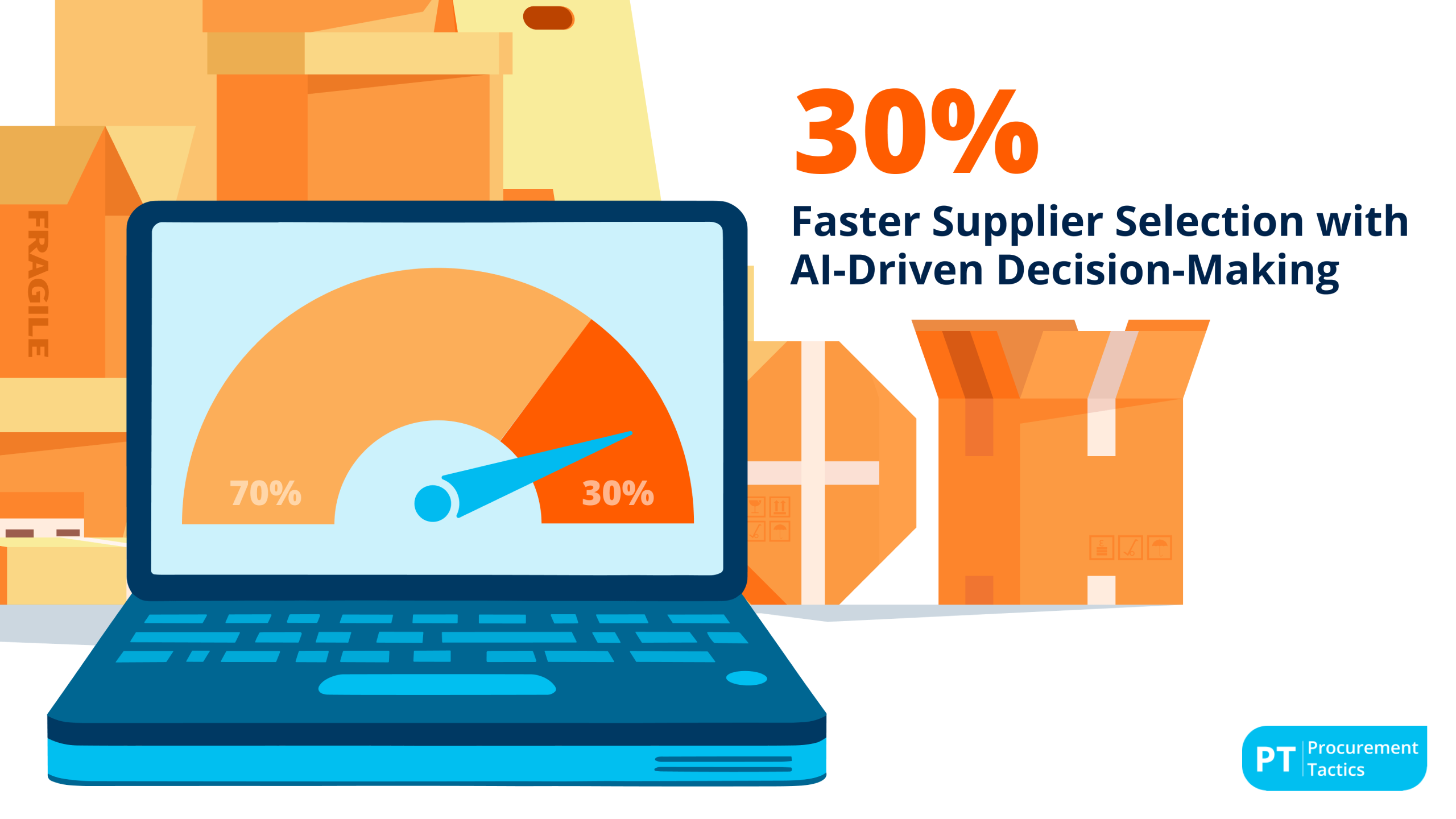
26. 30% Faster Supplier Selection with AI‑Driven Decision‑Making
A Deloitte‑cited McKinsey report finds that procurement teams using AI‑driven decision‑making tools speed up supplier selection processes by 30%.
By automating market‑scan analyses and risk assessments, negotiators redirect time toward strategy and relationship management. This efficiency gain translates into faster time‑to‑value and stronger sourcing outcomes.
27. 80% of Companies Lack a Formal Negotiation Process
Eighty percent of organizations report having no documented negotiation process in place.
Without standardized protocols, teams rely on ad‑hoc tactics that yield inconsistent outcomes and missed value. Establishing formal frameworks is critical to drive repeatable negotiation success and safeguard margins.
28. 84% of Organizations Don’t Measure Negotiation Success Beyond Signature
Only 16% of companies track negotiation performance after the contract is signed, leaving 84% blind to realized savings and compliance gaps.
Without post‑award metrics, procurement cannot validate whether negotiated terms translate into actual benefits. Implementing end‑to‑end measurement is essential for continuous improvement and ROI visibility
29. 4% of Firms Share Negotiation Learnings Across Divisions
A mere 4% of organizations have a formal mechanism to disseminate negotiation best practices and lessons learned across business units.
This siloed approach stifles collective learning and prevents the scaling of successful tactics. Creating enterprise‑wide knowledge repositories can accelerate skill development and value capture.
30. 90% of Procurement Leaders to Adopt AI Agents in 2025
Nine in ten procurement chiefs plan to deploy AI “agents”, autonomous bots that draft, review, and optimize contract clauses, by the end of 2025.
These tools promise faster negotiations through real‑time risk analysis and data‑driven recommendations. Early adopters report reduced cycle times and more consistent compliance.
31. 53% of Employers Willing to Negotiate Salary for Entry‑Level Workers
As of 2025, 53% of employers are open to negotiating salaries for entry‑level positions, yet only 42% of workers aged 18–34 initiate those discussions.
This gap highlights a missed opportunity for young professionals to advocate for themselves and suggests employers could do more to encourage open dialogue around compensation.
32. 42% of Workers Aged 18–34 Actively Negotiate for Better Pay
As of 2025, 42% of employees between 18 and 34 years old report negotiating their salary when offered a job.
This contrasts with employer willingness (53%) and underscores the need for early‑career professionals to build negotiation confidence and skills.
33. 70% of Kiwi Employees Say Negotiating a Pay Rise Is More Challenging
As of 2025, 70% of New Zealand workers report that securing a pay rise has become more difficult compared to the previous year.
This reflects shifting economic pressures and employer hesitancy. Negotiators in tight markets should come armed with clear performance metrics and external salary benchmarks.
34. 66% of Negotiators Succeed, with an Average 18.83% Pay Increase
As of 2025, 66% of individuals who negotiate their salary achieve success, securing an average increase of 18.83%, according to Apt AI.
These figures demonstrate the tangible value of negotiation preparation and strategy.
35. 72% of Workers Report Negotiating a Pay Rise Is More Challenging Than Last Year
As of 2025, 72% of employees find it more difficult to negotiate a pay rise than in the previous year, reflecting employer caution amid economic headwinds.
Effective negotiators must leverage up‑to‑date market data and clearly articulate their unique contributions to overcome resistance.

36. 70% of M&A Deals Succeed
Nearly seven in ten mergers and acquisitions initiated in early 2025 reached completion, marking a 70% success rate despite market volatility and regulatory challenges.
Dealmakers continue to refine cross‑border and sector‑specific strategies to navigate uncertainty and close transactions.
37. 57% of Successful M&A Deals Involved a Clear Growth Strategy
A recent Bain & Company analysis found that 57% of completed M&A transactions in 2025 featured at least one party with an articulated post‑deal growth plan.
That compares to only 25% of failed deals, underscoring the importance of strategic foresight in negotiations.
38. 37.5% of Practitioners Cite Intercultural Competence as Negotiation’s Top Skill
In a global survey of negotiation professionals, 37.5% identified intercultural competence as the most critical factor for successful international negotiations, more than any other single skill or tactic.
Mastering cultural norms and communication styles enables negotiators to build rapport faster and avoid misunderstandings that can derail deals.
39. 72.2% of Businesses Report Increased Cross‑Cultural Negotiations
Over 70% of companies say they engaged in more negotiations with partners from unfamiliar cultures in 2025, reflecting deeper globalization and the need for cultural‑awareness training.
Firms investing in intercultural workshops report up to a 25% reduction in negotiation delays caused by miscommunication.
40. 78% of Negotiators Prefer Specific over General Agreements
In a comparative study, 78% of respondents favored narrowly defined, specific contracts rather than broad “umbrella” agreements, believing detailed terms reduce ambiguity and post‑deal disputes.
Detailed clauses also streamline enforcement and compliance checks, cutting downstream legal costs by an average of 15%.

41. 8.5% CAGR Projected for the Negotiation Training Market through 2033
Market forecasts show negotiation‑training services growing at an 8.5% compound annual rate through 2033, driven by demand in corporate, legal, and public sectors.
Providers are responding with AI‑enhanced role plays and on‑demand e‑learning modules to meet diverse learner needs and deliver measurable skill improvements.
42. 40% of Construction Contracts Are Renegotiated Within a Year
A recent public procurement study found that 40 % of infrastructure contracts entered into after policy reforms required renegotiation within twelve months.
Frequent amendments often stem from unforeseen site conditions and evolving stakeholder requirements, underscoring the importance of flexible negotiation frameworks.
43. Role‑Play Simulation Cuts Competitive Tactics by 67%
Participants in conflict‑resolution simulations reduced their use of escalatory, competitive negotiation strategies by 67% and doubled cooperative approaches, demonstrating the power of immersive practice.
Such simulations also boost participants’ confidence and emotional intelligence, leading to a 30 % increase in perceived negotiation effectiveness.
44. M&A Volumes Fell 9% While Deal Values Rose 15%
In the first half of 2025, global M&A deal counts dropped by 9 % year‑on‑year, yet total transaction value surged 15%, indicating a trend toward larger, more strategic deals.
This divergence suggests negotiators must balance pricing discipline with creative structuring to capture synergies in high‑value transactions.
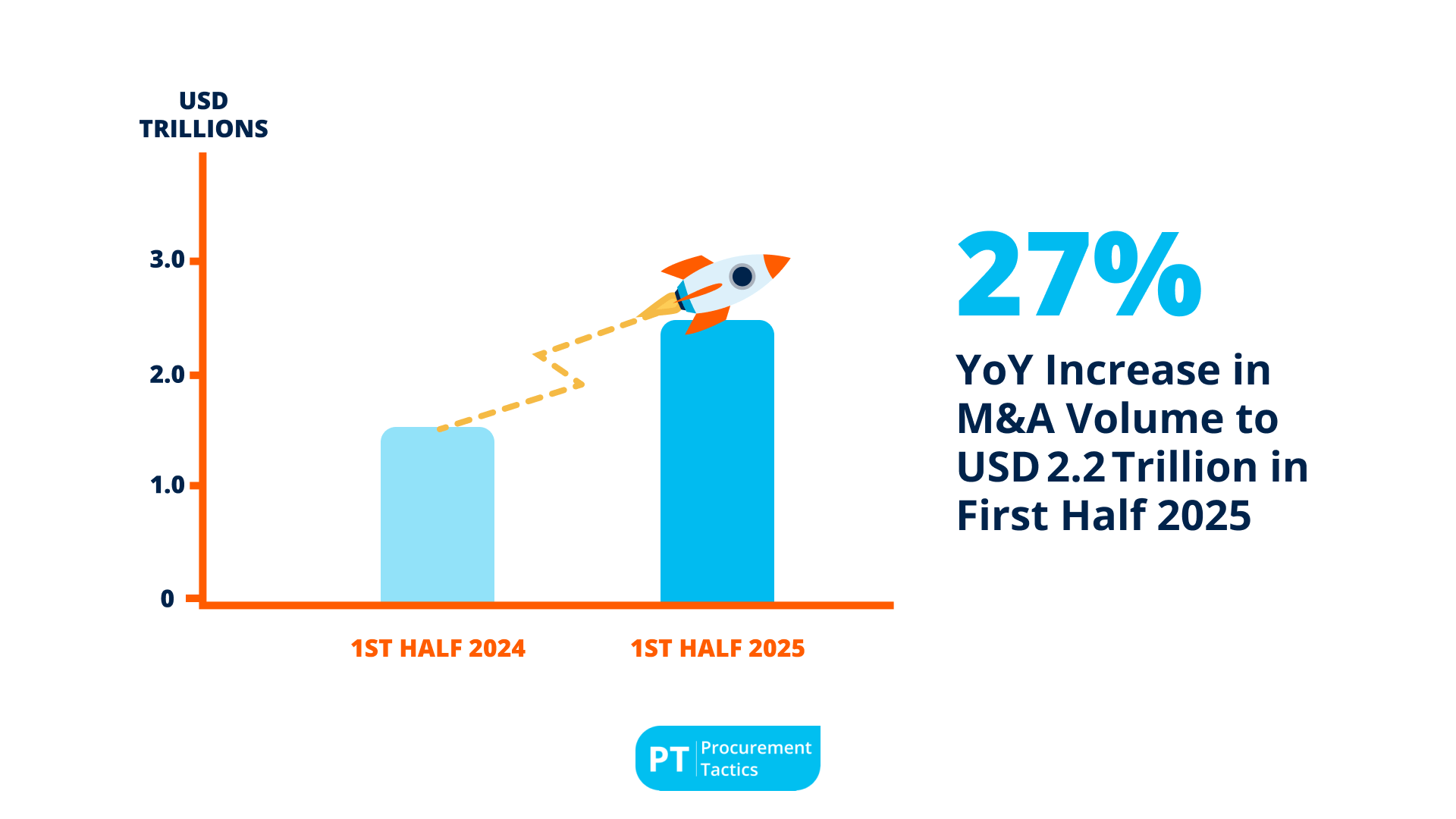
45. 27% YoY Increase in M&A Volume to USD 2.2 Trillion in First Half 2025
Deal pipelines surged despite economic headwinds, with global M&A volume rising 27% year‑on‑year to USD 2.2 trillion in the first half of 2025.
Increased activity underscores negotiators’ ability to navigate uncertainty and secure large‑scale transactions.
46. 57% Rise in Deals Over USD 10 B in First Half 2025
Transactions exceeding USD 10 billion jumped 57% compared to the same period in 2024, marking a 20‑year high for mega‑mergers.
Negotiators are structuring ever‑more complex agreements to capture scale and synergies.
47. 72% Increase in Deals Over USD 1 B in First Half 2025
Deals valued above USD 1 billion climbed 72% year‑over‑year, reflecting a shift toward fewer but larger negotiations.
This trend demands heightened due diligence and multi‑stakeholder alignment from deal teams.
48. 97% of Dealmakers Incorporated Generative AI by Mid‑2025
Nearly all (97%) surveyed corporations and private‑equity firms had embedded generative AI and advanced analytics into their dealmaking processes by mid‑2025.
These tools accelerate scenario modeling and risk assessment in negotiations.
49. 85% Prioritize Cross‑Border Dealmaking in 2025
85% of respondents ranked cross‑border transactions among their top negotiation priorities for the year, driven by the search for new markets and supply‑chain resilience.
These cross‑border deals often leverage digital due diligence platforms and virtual data rooms to streamline complex negotiations across multiple jurisdictions.
50. 88% Report Strategic “Pivots” in Deal Targeting Over the Past Two Years
In 2025, 88% of corporate respondents confirmed they had shifted their M&A targeting strategies recently, favoring agility and adapting terms to evolving market conditions.
Such strategic pivots have enabled firms to redirect deal flow toward rapidly growing sectors and to mitigate regional economic slowdowns.
51. 33% of Procurement Leaders to Automate Contract Management & Payments in 2025
One‑third of procurement executives planned to deploy intelligent automation for contract management and payment processes during 2025, boosting negotiation throughput and auditability.
This automation reduces manual data‑entry tasks by up to 50%, freeing procurement professionals to focus on higher‑value negotiation and strategic sourcing activities.
52. 19% of Organizations to Enhance Contract Negotiations with Autonomous Capabilities
Nearly one‑in‑five companies aimed to leverage autonomous (AI‑driven) negotiation agents or tools in 2025 to optimize terms, flag risks, and streamline decision‑making during supplier negotiations.
Organizations reported that these autonomous capabilities cut average contract‑cycle times by around 20%, accelerating deal closures and reducing administrative overhead.
53. 60% of Contracts Are on Counterparty Paper
In 2025, 60% of enterprise contracts still originate on the supplier’s template rather than the buyer’s standard form, shifting power toward counterparties and often leading to less favorable terms
Organizations are countering this by setting hard “must‑have” negotiation floors in their master templates to push back effectively.
54. 76% of Contracts Involve Direct Legal Review
Legal teams are directly involved in 76% of contracts in 2025, indicating heavy reliance on in‑house counsel for deal negotiations and risk assessment.
To free up legal resources, many companies are defining low‑complexity contracts that business users can handle under approved playbooks.
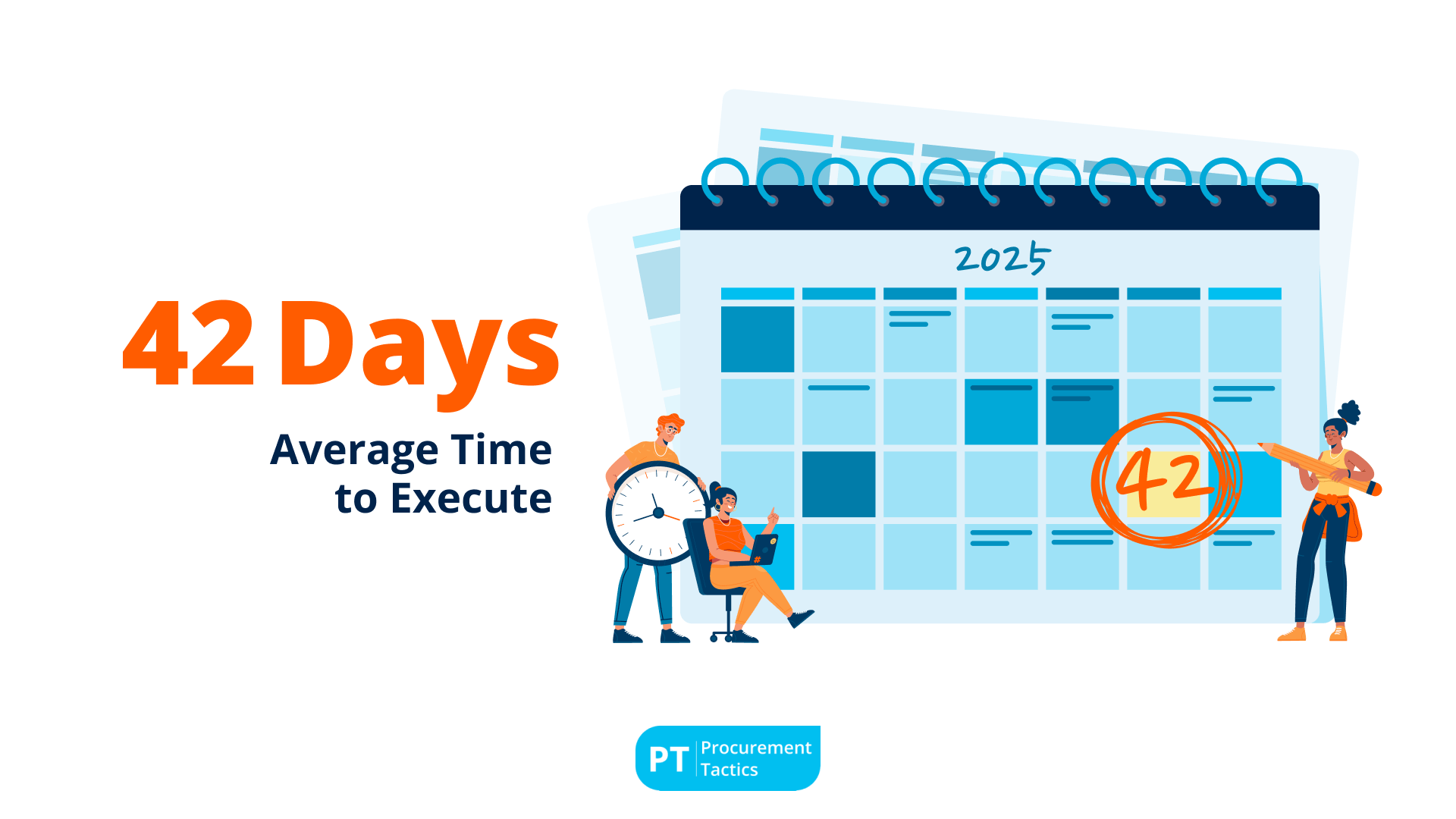
55. 42 Days Average Time to Execute
The median end‑to‑end contract cycle, from draft to signature, stands at 42 days in 2025, underscoring persistent bottlenecks in negotiation, redlining, and approval workflows.
Firms are tackling this with automated reminders, self‑serve clause libraries, and parallel review processes to shave weeks off their timelines.
56. 60% of Procurement Leaders Will Lean on Automation in 2025
According to The Hackett Group’s 2025 CPO Agenda, 60% of procurement executives plan to ramp up automation and digital‑procurement capabilities this year, aiming to accelerate supplier negotiations and improve compliance.
This shift is projected to cut manual negotiation tasks by half and boost throughput.
57. 79% of B2B Companies Report Much Shorter Negotiation Cycles
As of 2025, nearly eight in ten B2B firms have shifted from annual to monthly or quarterly negotiation reviews to accelerate dealmaking and stay aligned with rapid market changes.
This streamlined cadence prevents a backlog of unresolved issues and enhances transparency into team performance.
58. 31% of Organizations Require Contracts to Follow a Formal Playbook or Guidance Document
Only about one-third of companies mandate the use of standardized templates and negotiation playbooks, leaving the majority to rely on ad‑hoc approaches that can introduce inconsistencies.
Formalizing contract frameworks helps reduce drafting errors, speeds up approvals, and ensures alignment with internal and regulatory requirements.
59. 75% of Organizations Lack Preapproved Fallback Terms
Three out of four organizations enter negotiations without predefined alternative clauses, forcing teams to draft new offers on the fly when primary proposals stall.
Establishing pre-approved fallback terms enables negotiators to maintain momentum and minimize delays in closing agreements.
60. 35% of New SaaS Proposals Are Converted to Signed Contracts
As of 2025, top‑performing SaaS firms convert 35% of their new business proposals into finalized agreements, reflecting the effectiveness of their negotiation strategies.
Maintaining or improving this benchmark requires continuous refinement of pricing models, proposal customization, and stakeholder alignment throughout the negotiation process.
Conclusion
The landscape of negotiation in businesses is evolving, influenced by various factors and trends. This article sheds light on the current state of negotiation, emphasizing the importance of data, personalized approaches, and strategic concessions.
As businesses adapt to the changing dynamics, understanding key statistics and emerging patterns becomes crucial for successful negotiations.
Frequentlyasked questions
What are negotiation statistics?
Negotiation statistics lets you show the newest trends in negotiation.
What is negotiation?
It is an approach between parties in a dispute seeking to reach a concession by finding a solution for both parties to agree with.
What is the importance of negotiation?
Negotiation is important as it holds the key to getting ahead in resolving conflicts and creating value in contracts.
About the author
My name is Marijn Overvest, I’m the founder of Procurement Tactics. I have a deep passion for procurement, and I’ve upskilled over 200 procurement teams from all over the world. When I’m not working, I love running and cycling.