


Written by Marijn Overvest | Reviewed by Sjoerd Goedhart | Fact Checked by Ruud Emonds | Our editorial policy
What is Omnichannel Logistics? Definition + Example
- Omnichannel Logistics is an integrated supply chain strategy that synchronizes inventory across online, mobile, and brick-and-mortar channels.
- Omnichannel Logistics delivers seamless fulfillment by centralizing order management and offering flexible options like ship-from-store or BOPIS.
- Omnichannel Logistics provides real-time visibility and a consistent customer experience through unified data and connected distribution networks.
What is Omnichannel Logistics?
Omnichannel logistics, often referred to as omnichannel distribution, defines how companies deliver products and services to end customers. Omnichannel logistics is an integrated approach to managing the flow of products, information, and services across all sales channels, such as online portals, mobile apps, social media, retail stores, and third-party platforms.
The goal is to provide customers with a seamless shopping experience, no matter where or how they shop. This approach involves strategically combining digital and physical components of the supply chain, maintaining a single view of inventory, and centralizing order management.
In this way, orders can be intelligently routed, whether for in-store pickup, delivery from a nearby warehouse, or direct delivery from the manufacturer with consistent, real-time notifications.
Formally, omnichannel logistics synchronizes inventory, logistics, and distribution across all sales channels to meet consumer demand. It moves beyond siloed operations, where each channel operates independently, to a modern model powered by advanced technologies.
Systems, services, and fulfillment centers communicate and operate as a single, interconnected network. In today’s ever-changing marketplace, this approach is not only an advantage but also a necessity for staying competitive and delivering high customer satisfaction.
Key Elements of Omnichannel Logistics
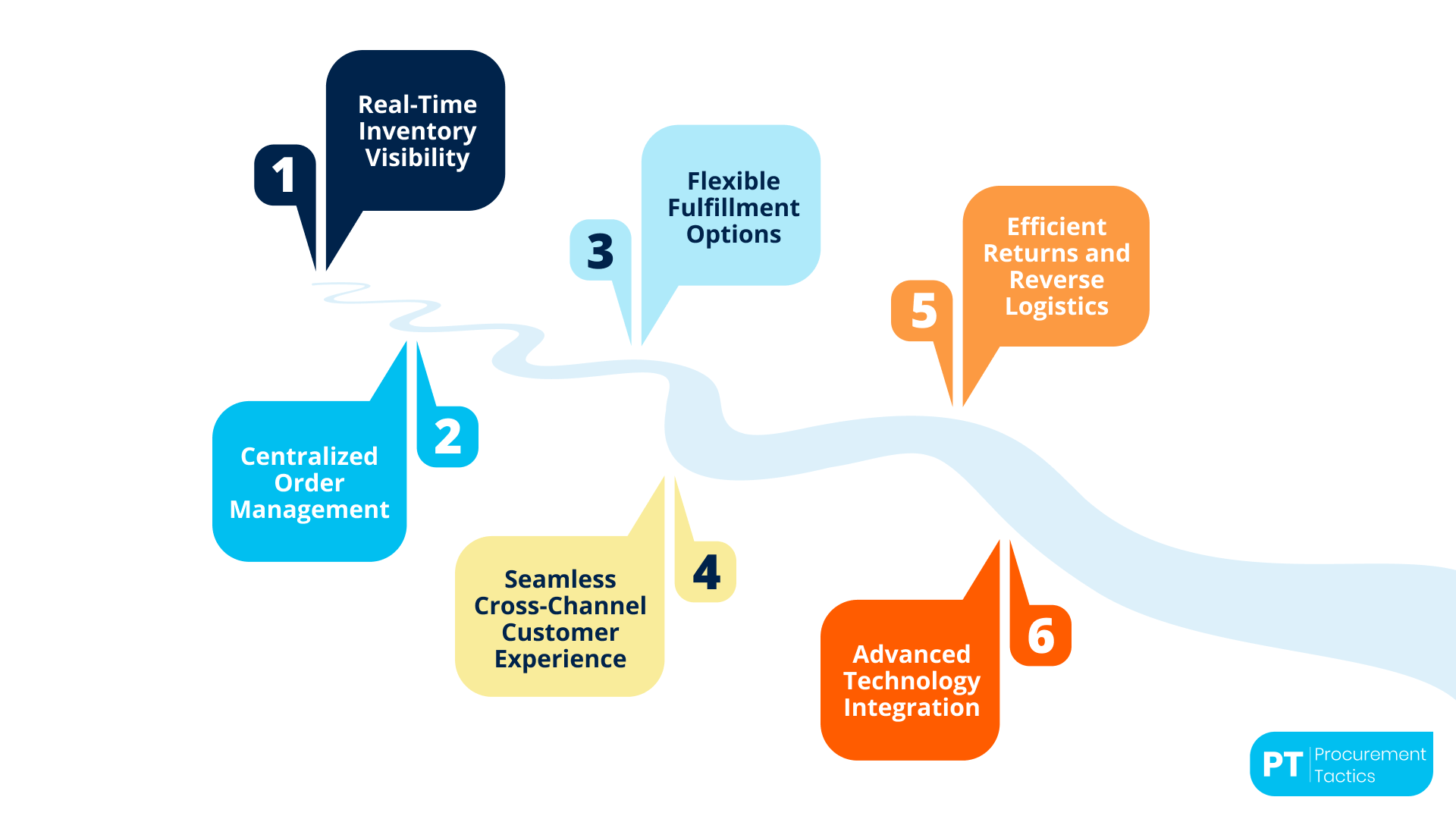
The omnichannel distribution strategy refers to an overall diversified way of ensuring that, through different sales channels, a seamless and consistent type of customer experience is delivered uninterruptedly. Below are a few main elements of the omnichannel distribution strategy:
1. Real-Time Inventory Visibility
Real-time inventory visibility means that inventory levels across all channels (warehouses, distribution centers, stores, and even in-transit stock) are consolidated into a single view.
This empowers both customers and operations teams to know exactly what’s available, where, and when, preventing overselling and stockouts.
By integrating inventory systems and using automated updates, businesses can display accurate product availability on all sales platforms and make informed replenishment decisions instantly.
2. Centralized Order Management
A robust order management system (OMS) serves as the nerve center of omnichannel logistics.
It captures orders from every touchpoint (online marketplaces, mobile apps, in-store terminals) and orchestrates fulfillment by intelligently routing each order to the optimal source (e.g., nearest store, regional warehouse, or drop-ship partner).
Centralizing order orchestration reduces processing errors, accelerates delivery times, and enables features like order modifications or cancellations across channels.
3. Flexible Fulfillment Options
Modern consumers expect choice in how they receive purchases.
Flexible fulfillment includes options such as buy-online-pick-up-in-store (BOPIS), curbside pickup, ship-from-store, same-day delivery, and direct ship from manufacturer.
Implementing multiple, customer-driven fulfillment methods not only enhances convenience and satisfaction but also balances loads across the network, helping to optimize transport costs and delivery speed.
4. Seamless Cross-Channel Customer Experience
Seamlessness means that the customer sees consistent branding, pricing, and service levels whether they interact via web, mobile, social media, or in person.
Behind the scenes, this requires synchronized data (orders, returns, loyalty points) and unified customer profiles.

A frictionless journey, where a shopper can start in one channel and finish in another without re-entering information, builds trust and loyalty, driving higher repeat purchase rates
5. Efficient Returns and Reverse Logistics
An omnichannel returns process lets customers return online purchases to any store location or arrange pick-up, with real-time tracking of return status.
Integrating returns into the main inventory system ensures that returned items are immediately inspected, restocked, refurbished, or routed for liquidation.
Streamlined reverse logistics minimizes handling costs, accelerates refunds, and preserves stock accuracy across channels.
6. Advanced Technology Integration
Technology underpins every element:
- Warehouse Management Systems (WMS) and Warehouse Execution Systems (WES) automate picking, packing, and shipping;
- Transportation Management Systems (TMS) plan and optimize routes; and
- API-driven integrations connect platforms (e.g., e-commerce, ERP, 3PL).
Together, these systems enable real-time data exchange, automated decision-making, and scalability, critical for handling peak loads and providing visibility to all stakeholders.
Practical Application of Omnichannel
Omnichannel logistics transforms traditional supply chains by seamlessly integrating digital and physical channels, ensuring customers receive consistent, convenient service wherever they shop.
The following real-world examples illustrate how leading retailers leverage this approach to optimize inventory, fulfillment, and customer engagement.
1. Nike’s House of Innovation: A Seamless Blend of Digital and Physical
At Nike’s flagship House of Innovation stores, such as those in Paris and New York, the brand has created a true omnichannel playground for athletic footwear and apparel.
Shoppers can scan products with the Nike app to view live inventory across the local store and nearby warehouses, receive AI-driven outfit recommendations based on their browsing history, and even customize sneakers on-site.
Interactive digital kiosks guide customers through personalized selections, while self-checkout stations and mobile payments eliminate lines. In-store events like exclusive product drops and community workouts are pushed through the app and social media, ensuring that Nike’s digital ecosystem and physical experience operate as one continuous journey.
2. Sephora’s Connected Beauty Ecosystem
Sephora leverages its Beauty Insider loyalty program across more than 2,000 stores, its website, and mobile app to deliver skincare, hair-care, and cosmetic products through a unified fulfillment network.
Customers enjoy real-time stock updates online, buy-online-pick-up-in-store (BOPIS) and curbside collection options, and same-day delivery powered by both in-house logistics and partners like DoorDash.
In addition, location-based app features recognize when a shopper enters a store and surface personalized promotions and digital store maps. Automated auto-replenish subscriptions for essentials (e.g., face serums) further streamline replenishment, all while tying back to the Beauty Insider loyalty points system.
3. Walmart’s Distributed Fulfillment Network
With over 4,600 supercenters, Neighborhood Markets, and Sam’s Clubs acting as mini-fulfillment hubs, Walmart orchestrates grocery and general merchandise logistics via its e-commerce site and mobile app.
Customers can place grocery orders online for curbside or in-store pickup, access in-home delivery through GoLocal, or have non-perishables shipped directly from their nearest store. More than 4,300 locations now offer same-day delivery, and sophisticated “ship-from-store” routing reduces transit times and costs by leveraging excess store inventory.
This interconnected network not only boosts convenience, enabling families to collect fresh produce within hours, but also drives sustainability by optimizing delivery routes and minimizing empty-mile travel.
Omnichannel vs Multi-Channel

Challenges in Omnichannel Logistics
The implementation of omnichannel logistics, while crucial for meeting today’s customer expectations for seamless shopping experiences across various platforms, introduces several intricate challenges for businesses.
These challenges can significantly impact logistics efficiency, customer satisfaction, and operational costs. Here’s an overview of the obstacles encountered in omnichannel logistics:

1. Complexity in Reverse Logistics/Cross-Channel Returns
If product returns are managed through multiple channels, the complexity of reverse logistics multiplies.
It is complex in a manner that one will experience difficulties in determining the right channel for processing returns, or otherwise, inabilities and customers will perceive inefficiencies.
2. Inventory Management and Visibility Issues
Effective inventory management becomes more challenging with omnichannel logistics due to the need for real-time visibility across all channels and locations.
Lack of synchronization of inventory may result in either overstocking or stockout situations, detrimental to customer service and tantamount to lost sales revenue.
3. Integration of Technology and Processes
At the level of warehouse management systems, this poses great challenges for the integration of different IT systems, be it eCommerce platforms or in-store/retail POS systems.
4. Disjointed Systems
This could hamper the effective flow of information, leading to order fulfillment inefficiencies and delivery delays.
5. Delivery and Last-Mile Efficiency
Ensuring efficiency in delivery, more particularly on the last mile, takes serious consideration in advanced planning, optimization of routes, and tracking abilities in real-time.
Other challenges that bring about more complications in the last delivery include weather, transport delays, and driver shortages, among others.
6. Increased Operational Costs
The omnichannel logistics network will have increased operational costs when benchmarked with single-channel networks.
Such investments consider technology integration, inventory, and complexities in managing multiple delivery and return options.
7. Adapting to Consumer Expectations
Consumers expect fast, flexible, and transparent delivery and return options.
Meeting these expectations could happen only if there is visibility of real-time inventory and delivery, backed by an agile reverse logistics operation to be able to respond nimbly to the rapidly changing demands.
8. Supply Chain Coordination and Optimization
Seamless coordination, integrating all supply chain constituents from suppliers through to distribution centers and retail outlets.
However, the optimization of these operations for omnichannel distribution becomes quite challenging due to the variability of demand in different channels, complexities in the global supply chain, and shifting preferences and expectations of hyper-informed consumers.
9. Selecting and Managing 3PL Partners
The effective use of 3PL capabilities should ideally involve selecting a 3PL partner based on more than the rate; it encompasses knowing the logistics fulfillment capabilities, geographic knowledge, and compliance adherence to Service Level Agreements (SLAs) by a 3PL.
This increase in such challenges calls for investment in technology that begets visibility and integration while at the same time optimizing inventory management and reverse logistics processes.
Other strategic approaches include the improvement of last-mile efficiency through delivery and route optimization, while at the same time having adaptable supply chain operations that would be in a position to cope with the dynamism witnessed in market demand.
Implementing Omnichannel Logistics
Implementing and optimizing omnichannel logistics is pivotal for businesses aiming to meet the ever-evolving customer expectations in today’s digital age.
The essence of achieving a successful omnichannel logistics system lies in the seamless integration of various components of the supply chain, leveraging technology, and prioritizing customer satisfaction.
Here’s how to implement and enhance omnichannel logistics efficiently:
1. Comprehensive Assessment and Strategy Development
Start with an elaborate assessment of how your current logistics and supply chain operations measure up, and be in a position to identify potential gaps or inefficiencies that can thwart your omnichannel journey.
The assessment should consider the technology infrastructure, inventory management practices, and customer experiences in deliveries.
Develop a strategy that addresses these gaps while aligning with your overall business objectives.
2. Technology Investment and Integration
Implementation of advanced technology solutions forms the core of omnichannel logistics.
The priorities here should be the investments in integrated systems, including WMS, Order Management Systems (OMS), and Customer Relationship Management (CRM) platforms, alongside routing software.
All these technologies are supposed to work together in a manner that bequeaths real-time visibility and communication on every platform for effective inventory control, order processing, and customer interaction.
3. Supply Chain Optimization for Flexibility
Rethink and redesign your supply chain to help flexibilities that an omnichannel logistics demands.
This may include diversification of distribution centers, optimization of inventory placement for fast order fulfillment, and efficiency in handling returns and reverse logistics.
The objective is to form a supply chain that will be sensitive and resilient to changes experienced in customer demand and market conditions.
4. Empowering Your Team with Knowledge and Tools
Only a well-informed and technology-savvy workforce will be able to work with an omnichannel logistics model.
Inculcate the team with comprehensive training on the relevance of omnichannel logistics, in addition to new operational processes and technology usage.
5. Leveraging Data Analytics for Continuous Improvement
Development and application will be a continuous improvement process, given the leveraging of data analytics in omnichannel logistics.
Data analytics tools should be used to ensure continuous follow-up on the different performance metrics, customer feedback, and market trends.
This data may be analyzed to reveal where some needed improvements, optimization of operations, and changes in strategies may lead to whatever will please the customer and thus keep a smile on their face always.
6. Customer-Centric Approach
The commitment to meeting the customers’ needs and preferences stands at the core of omnichannel logistics.
It is a customer-centric approach with a special focus on delivering a smooth, effective, and personalized purchasing journey across channels.
These include flexible options in delivery, orders routed most efficiently, to assure time-definite deliveries, and regular communication concerning their orders and deliveries to the customers.
7. Innovative Practices for Speed and Efficiency
Direct shipping from the storefronts to balance inventory levels, use advanced routing software to ensure streamlined deliveries, and optimize the warehouse for efficiency.
That way, it is plausible to believe that the firms will not be able to surmount the main challenges that feature omnichannel logistics: complexity in supply chain management, integration of technology, and the level of customer expectation.
Ultimately, a well-executed omnichannel logistics strategy enhances the level of operational efficiencies; more importantly, it fuels customer satisfaction and loyalty, which are the sine qua non for sustained business success in the competitive retail landscape.
Importance of Omnichannel Logistics
Omnichannel logistics plays a critical role in today’s retail landscape by creating a truly unified shopping experience that aligns with consumer expectations for speed, convenience, and personalization. By breaking down silos between online and offline channels, companies can meet rising demands for same-day delivery, in-store pickup, and flexible return options.
All of which foster stronger customer loyalty and higher repeat purchases. Moreover, that seamless interplay of channels helps retailers drive traffic across digital touchpoints around the clock, ensuring that no opportunity to engage and convert a shopper is missed.
From an operational standpoint, omnichannel logistics is equally indispensable for optimizing cost structures and supply chain resilience. Synchronizing inventory and order management across every sales channel reduces unnecessary stock holding and logistics expenses. While integrated data flows grant real-time visibility into shipment status and warehouse operations, key enablers for proactive decision-making and accurate forecasting.
Finally, the increased transparency and collaboration among suppliers, 3PL partners, and fulfillment centers not only minimize errors and delays but also advance sustainability goals by streamlining routes and cutting waste, giving companies a competitive edge in a rapidly evolving market.
Conclusion
Omnichannel logistics represents a fundamental shift in supply chain management, unifying digital and physical channels into a cohesive network that delivers real-time inventory visibility, centralized order orchestration, and flexible fulfillment options.
By breaking down traditional silos and leveraging advanced technologies (such as integrated WMS, OMS, TMS, and API-driven platforms) companies can offer seamless customer experiences like BOPIS, same-day delivery, and effortless returns, all while maintaining consistent branding and data across touchpoints.
This approach not only meets modern consumer expectations for speed and convenience but also drives higher engagement, loyalty, and repeat purchases by ensuring that every interaction, online or offline, feels interconnected and personalized.
However, implementing omnichannel logistics brings its complexities, from synchronizing disparate IT systems and managing reverse logistics to optimizing last-mile routes and controlling operational costs.
Success requires a clear strategy, starting with a thorough assessment of existing processes, followed by targeted investments in technology, supply chain reconfiguration for flexibility, and staff training to support new workflows.
By continuously leveraging data analytics for performance monitoring and embracing a customer-first mindset, businesses can overcome obstacles and turn omnichannel logistics into a competitive advantage, boosting resilience, sustainability, and profitability in an increasingly dynamic retail landscape.
Frequently asked questions
What is omnichannel logistics?
Omnichannel logistics is the strategy that integrates all available channels of a business’s supply chain, including e-commerce, mobile apps, physical stores, and any other sales channels, to create a seamless customer experience.
How does omnichannel logistics benefit businesses and customers?
For businesses, omnichannel logistics can lead to increased sales, improved customer loyalty, and more efficient use of inventory and resources.
What are the key challenges in implementing omnichannel logistics?
Implementing an omnichannel logistics strategy poses several challenges, including the Integration of IT Systems, Supply Chain Complexity, Data Management and Analytics, and Costly implementation.
About the author
My name is Marijn Overvest, I’m the founder of Procurement Tactics. I have a deep passion for procurement, and I’ve upskilled over 200 procurement teams from all over the world. When I’m not working, I love running and cycling.