


Written by Marijn Overvest | Reviewed by Sjoerd Goedhart | Fact Checked by Ruud Emonds | Our editorial policy
13 Best Sourcing Platforms of 2026
What is a sourcing platform?
- A sourcing platform is a digital solution that helps procurement teams manage supplier discovery, sourcing events, and supplier evaluation in a centralized environment.
- Modern sourcing platforms are increasingly powered by AI, enabling faster RFx processes, better supplier matching, and data-driven sourcing decisions.
- Instead of relying on emails, spreadsheets, and manual supplier outreach, sourcing platforms digitize and automate activities such as RFI, RFP, RFQ, e-auctions, and supplier shortlisting.
The list below highlights AI-powered sourcing platforms that combine supplier management, e-sourcing automation, and intelligent analytics, making them strong options for mid-sized and large organizations in 2026.
13 Best Sourcing Platforms of 2026
1. Fairmarkit
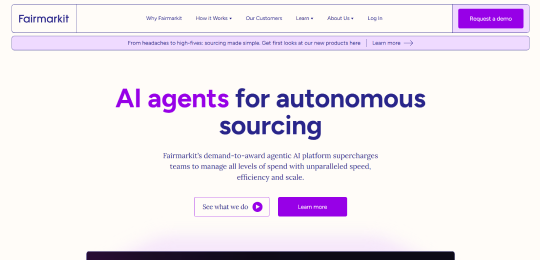
Fairmarkit is a leading AI-powered sourcing platform designed to automate RFQ processes and improve supplier discovery, particularly for tail spend and mid-value sourcing categories. The platform helps procurement teams reduce manual effort by digitizing supplier identification, quote collection, and comparison within a single, streamlined workflow.
What makes Fairmarkit stand out as a sourcing platform is its strong focus on AI-driven supplier matching and RFQ automation. By using artificial intelligence to identify relevant suppliers and encourage competitive bidding, Fairmarkit enables sourcing teams to increase response rates, shorten sourcing cycles, and achieve better pricing outcomes. The platform integrates with existing procurement and ERP systems, allowing organizations to enhance sourcing performance without replacing their core infrastructure.
Fairmarkit is most commonly used by mid-sized and large organizations that want to scale sourcing activity, improve efficiency, and increase competition across high-volume sourcing events without adding additional procurement headcount.
Why choose Fairmarkit?
- Fairmarkit automates RFQ creation and supplier discovery using artificial intelligence, reducing manual sourcing effort.
- Its AI-driven supplier matching increases competition and improves pricing outcomes.
- The platform is especially effective for managing tail spend and repetitive sourcing activities at scale.
Pricing
Contact Fairmarkit for pricing. Costs typically depend on sourcing volume, organization size, and deployment scope.
Ratings and Reviews
- G2: 4.6/5 (70+ reviews)
- Capterra: 4.7/5 (40+ reviews)
Pros and Cons
| Pros | Cons |
| Strong AI-driven supplier discovery and RFQ automation | Not a full end-to-end procurement platform |
| Reduces sourcing cycle time and manual workload | Focused primarily on RFQ-based sourcing |
| Well-suited for tail spend and high-volume sourcing |
Requires integration with ERP or procurement systems |
2. Keelvar
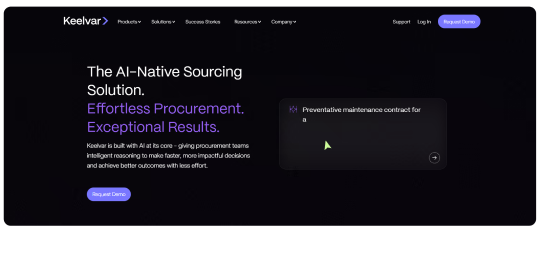
Keelvar is an AI-powered sourcing platform focused on advanced sourcing optimization and automated negotiation, particularly for complex and high-volume sourcing scenarios. The platform is designed to help procurement teams run data-driven sourcing events, optimize award decisions, and manage multi-variable constraints such as price, capacity, risk, and sustainability criteria.
What differentiates Keelvar as a sourcing platform is its strong emphasis on optimization-driven sourcing and autonomous sourcing bots. Using artificial intelligence and mathematical optimization, Keelvar evaluates thousands of award scenarios to recommend optimal supplier allocations based on predefined business rules. The platform also supports automated RFQs and auctions, allowing sourcing teams to scale events without increasing manual workload.
Keelvar is most commonly used by mid-sized and large organizations with mature sourcing functions that want to improve sourcing outcomes, manage complexity, and move beyond price-only award decisions.
Why choose Keelvar?
- Keelvar enables advanced sourcing optimization across complex categories with multiple constraints.
- Its AI-driven award analysis supports better sourcing decisions beyond lowest price logic.
- The platform helps scale sourcing activity through automation and autonomous sourcing capabilities.
Pricing
- Contact Keelvar for pricing. Costs typically depend on sourcing complexity, event volume, and deployment scope.
Ratings and Reviews
- Public ratings are limited. Keelvar is frequently referenced in enterprise sourcing shortlists and analyst discussions focused on AI-driven sourcing optimization.
Pros and Cons
| Pros | Cons |
| Powerful sourcing optimization and award scenario modeling | Requires higher sourcing maturity to fully leverage capabilities |
| Supports complex, multi-variable sourcing decisions | Less suitable for simple or low-complexity sourcing |
| Automation enables scaling sourcing without extra headcount | Limited focus outside strategic and complex sourcing |
3. SAP Ariba
SAP Ariba is a cloud-based, AI-enabled sourcing platform designed for organizations managing large, complex, and global sourcing activities. As part of the SAP ecosystem, the platform supports strategic sourcing, RFx events, supplier discovery, and collaboration through the Ariba Network, one of the largest digital supplier networks worldwide.
What makes SAP Ariba stand out as a sourcing platform is its ability to standardize sourcing processes at scale while maintaining strong governance and compliance. Artificial intelligence is used to support guided sourcing, supplier risk monitoring, and spend-driven insights that inform sourcing decisions. The platform enables sourcing teams to run structured RFIs, RFPs, RFQs, and auctions while ensuring alignment with internal policies and regulatory requirements.
SAP Ariba is most commonly used by large and global enterprises that require high levels of control, transparency, and supplier connectivity across regions and categories.
Why choose SAP Ariba?
- SAP Ariba provides access to a large global supplier network, improving supplier discovery and competition.
- Its structured sourcing workflows support compliant and auditable RFx processes at enterprise scale.
- Native integration with SAP ERP systems enables seamless data flow between sourcing, purchasing, and finance.
Pricing
- Contact SAP Ariba for pricing. Costs typically depend on organization size, transaction volumes, and selected sourcing modules.
Ratings and Reviews
- G2: 4.1/5 (700+ reviews)
- Capterra: 3.8/5 (80+ reviews)
Pros and Cons
| Pros | Cons |
| Access to one of the largest global supplier networks | Complex implementation and setup |
| Strong governance, compliance, and auditability | Steep learning curve for new users |
| Well-suited for large-scale and global sourcing | High costs, less suitable for smaller organizations |

4. Coupa
Coupa is a leading AI-powered sourcing platform within a broader spend management ecosystem, designed to help organizations improve control and visibility over sourcing activities and supplier collaboration. From a sourcing perspective, the platform supports strategic sourcing events, supplier evaluation, auctions, and data-driven sourcing decisions across categories and regions.
What makes Coupa stand out as a sourcing platform is its use of community intelligence. By analyzing aggregated and anonymized sourcing and spend data from its global customer base, Coupa delivers benchmarking insights, pricing signals, and risk indicators that help sourcing teams make better, market-informed decisions. The platform is cloud-based and mobile-friendly, enabling real-time access to sourcing data across global organizations.
Coupa is most commonly used by mid-to-large enterprises that want to standardize sourcing processes, improve compliance, and strengthen sourcing decisions through AI-driven insights and peer benchmarks.
Why choose Coupa?
- Coupa provides strong visibility into sourcing-related spend, helping teams identify savings opportunities.
- Its AI-driven analytics and community intelligence support smarter supplier selection and sourcing strategies.
- The platform integrates seamlessly with major ERP systems and supports mobile access for global sourcing teams.
Pricing
- Contact Coupa for pricing. Costs typically depend on company size, selected modules, and deployment scope.
Ratings and Reviews
Ratings and Reviews
- G2: 4.2/5 (260+ reviews)
- Capterra: 4.2/5 (80+ reviews)
Pros and Cons
| Pros | Cons |
| User-friendly and intuitive interface | Implementation can be complex and time-consuming |
| Strong sourcing visibility and AI-powered analytics | Limited customization options compared to some competitors |
| Well-suited for enterprise-scale sourcing | Pricing may be high for smaller organizations |

5. Ivalua
Ivalua is a highly configurable, AI-enabled sourcing platform designed to support complex sourcing environments across industries. From a sourcing perspective, the platform enables organizations to manage strategic sourcing events, RFx processes, supplier evaluation, and award decisions within a flexible and data-driven framework.

What differentiates Ivalua as a sourcing platform is its strong focus on configuration and adaptability. Artificial intelligence and advanced analytics support supplier assessment, risk analysis, and performance evaluation, while allowing sourcing teams to tailor workflows, scoring models, and approval structures to match specific sourcing strategies and governance requirements.
Ivalua is most commonly used by mid-sized and large enterprises that require a scalable and highly adaptable sourcing platform capable of handling complex sourcing scenarios and diverse organizational structures.
Why choose Ivalua?
- Ivalua offers a highly configurable sourcing environment that adapts to different industries and sourcing models.
- Its AI-driven analytics support informed supplier selection and risk-aware sourcing decisions.
- The platform enables structured and compliant sourcing while maintaining flexibility.
Pricing
Contact Ivalua for pricing. Costs depend on selected sourcing modules, customization level, and organization size.
Ratings and Reviews
- G2: 4.7/5 (120+ reviews)
- Capterra: 4.8/5 (200+ reviews)
Pros and Cons
| Pros | Cons |
| Highly configurable and flexible sourcing workflows | Complex and time-consuming implementation |
| Strong analytics and AI-driven sourcing insights | Requires experienced users or consultants |
| Well-suited for complex and multi-category sourcing | Higher cost compared to simpler sourcing tools |

6. GEP SMART
GEP SMART is an AI-powered sourcing platform designed to support end-to-end strategic sourcing activities within a unified, cloud-native environment. From a sourcing perspective, the platform enables procurement teams to manage RFx events, supplier evaluation, auctions, and award decisions while maintaining visibility and control across categories and regions.
What makes GEP SMART stand out as a sourcing platform is its AI-driven, lifecycle-based approach. Artificial intelligence and machine learning are used to guide sourcing teams through each stage of the sourcing process, analyze supplier responses, and identify savings opportunities. The platform combines advanced analytics with a user-friendly interface and mobile accessibility, making sourcing processes easier to adopt across global teams.
GEP SMART is most commonly used by mid-sized and large organizations that want a balanced sourcing platform combining strong AI capabilities, usability, and enterprise-grade control.
Why choose GEP SMART?
- GEP SMART provides structured and guided sourcing workflows supported by AI-driven insights.
- Its analytics help sourcing teams identify savings opportunities and improve award decisions.
- The platform offers strong usability and mobile access for globally distributed sourcing teams.
Pricing
- Contact GEP for pricing. Costs depend on selected sourcing modules, organization size, and deployment scope.
Ratings and Reviews
- G2: 4.4/5 (20+ reviews)
- Capterra: 4.6/5 (7 reviews)
Pros and Cons
| Pros | Cons |
| Strong AI-driven guidance across the sourcing lifecycle | Pricing information is not transparent |
| User-friendly interface with mobile accessibility | Some sourcing modules may be less mature |
| Well-suited for enterprise and global sourcing | Implementation may require significant effort |

7. JAGGAER
JAGGAER is an AI-enabled sourcing platform designed to support organizations with complex, large-scale, and often regulated sourcing environments. From a sourcing perspective, the platform enables structured RFx events, supplier evaluation, auctions, and award management across multiple categories and regions.
What distinguishes JAGGAER as a sourcing platform is its strong focus on governance, compliance, and scalability. Artificial intelligence and advanced analytics are used to support spend analysis, supplier performance insights, and sourcing optimization, helping teams make informed and compliant sourcing decisions. The platform is widely used across industries such as manufacturing, healthcare, higher education, and the public sector.
JAGGAER is most commonly used by mid-sized and large organizations that require a robust sourcing platform capable of handling complex supplier ecosystems, strict compliance requirements, and global sourcing operations.
Why choose JAGGAER?
- JAGGAER supports structured and compliant sourcing processes suitable for regulated environments.
- Its AI-supported analytics help sourcing teams identify savings opportunities and optimize supplier decisions.
- The platform scales well across regions, categories, and organizational units.
Pricing
Contact JAGGAER for pricing. Costs depend on selected sourcing modules, organization size, and implementation complexity.
Ratings and Reviews
- G2: 4.4/5 (25+ reviews)
- Capterra: 4.2/5 (2+ reviews)
Pros and Cons
| Pros | Cons |
| Strong governance and compliance features | The user interface can feel complex for new users |
| Well-suited for complex and regulated sourcing | Implementation and configuration require time |
| Scalable for global sourcing environments | Less intuitive UX compared to newer platforms |
8. Zycus
Zycus is an AI-driven sourcing platform designed to help organizations automate and scale strategic sourcing activities. From a sourcing perspective, the platform supports RFx creation, supplier evaluation, award management, and spend-informed sourcing decisions, with a strong emphasis on automation and efficiency.
What sets Zycus apart as a sourcing platform is its Merlin AI and GenAI capabilities, which automate repetitive sourcing tasks such as RFx drafting, spend classification, and initial supplier analysis. By embedding AI across the sourcing workflow, Zycus enables faster event execution, more consistent evaluations, and data-driven award decisions. The platform integrates with existing ERP and procurement systems, allowing sourcing teams to enhance performance without disrupting core infrastructure.
Zycus is most commonly used by mid-sized and large enterprises that want to strengthen sourcing automation, improve spend visibility, and introduce AI into daily sourcing operations.
Why choose Zycus?
- Zycus automates key sourcing activities, reducing manual effort and cycle times.
- Its AI and GenAI capabilities support faster RFx creation and more consistent supplier evaluation.
- The platform helps sourcing teams leverage spend data to inform sourcing strategies.
Pricing
- Contact Zycus for pricing. Costs depend on organization size, selected sourcing modules, and deployment scope.
Ratings and Reviews
- G2: 3.6/5 (13 reviews)
- Capterra: 4.3/5 (12 reviews)
Pros and Cons
| Pros | Cons |
| Strong AI and GenAI-driven sourcing automation | Implementation can be complex and time-consuming |
| Good support for RFx and spend-informed sourcing | The user interface may feel less intuitive |
| Suitable for scaling sourcing activities | Less flexible for highly customized sourcing models |
9. Supplier.io
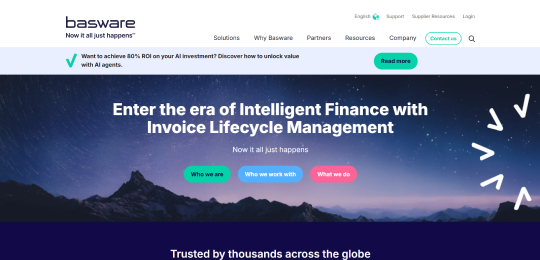
Supplier.io is a data-driven sourcing platform focused on supplier discovery and supplier intelligence, with a strong emphasis on diversity, sustainability, and risk-related attributes. From a sourcing perspective, the platform helps procurement teams identify, qualify, and segment suppliers based on certifications, ownership, ESG criteria, and geographic coverage.
What differentiates Supplier.io as a sourcing platform is its rich supplier data and discovery capabilities. Using advanced analytics and continuously updated datasets, the platform enables sourcing teams to uncover new and often hard-to-find suppliers that align with specific sourcing objectives such as supplier diversity, local sourcing, or sustainability targets. Supplier.io integrates with existing procurement and ERP systems, enriching sourcing workflows with reliable supplier intelligence.
Supplier.io is most commonly used by mid-sized and large organizations that want to strengthen supplier discovery, support ESG and diversity goals, and improve transparency in supplier selection.
Why choose Supplier.io?
- Supplier.io enhances supplier discovery with detailed data on diversity, sustainability, and certifications.
- Its analytics support more informed and inclusive supplier selection decisions.
- The platform integrates with existing sourcing and procurement systems to enrich supplier intelligence.
Pricing
- Contact Supplier.io for pricing. Costs typically depend on organization size, data scope, and integration requirements.
Ratings and Reviews
- Public ratings are limited. Supplier.io is widely referenced in sourcing and supplier diversity shortlists but does not consistently publish aggregated scores on G2 or Capterra.
Pros and Cons
| Pros | Cons |
| Strong supplier discovery and intelligence capabilities | Not designed for RFx or sourcing event execution |
| Excellent support for diversity and ESG-focused sourcing | Relies on integration with other sourcing platforms |
| Enriches sourcing decisions with high-quality data | Limited focus beyond supplier discovery |
10. Market Dojo
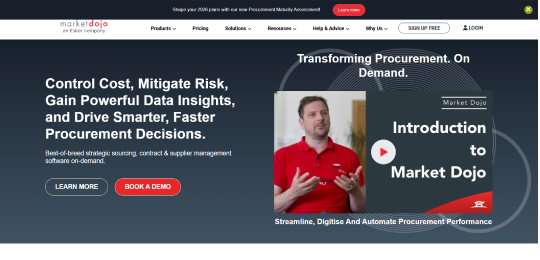
Market Dojo is a cloud-based sourcing platform designed to help organizations run structured RFx events and e-auctions in a simple and accessible way. The platform focuses on core sourcing functionality, enabling procurement teams to digitize supplier communication, compare bids, and improve transparency without the complexity of large enterprise suites.
What differentiates Market Dojo as a sourcing platform is its emphasis on ease of use and fast deployment. The platform supports RFIs, RFPs, RFQs, and various auction formats, allowing sourcing teams to quickly set up and manage sourcing events. While it does not position itself as an AI-heavy enterprise platform, Market Dojo provides practical tools that help teams professionalize sourcing processes and reduce reliance on spreadsheets and email-based workflows.
Market Dojo is most commonly used by small and mid-sized organizations, as well as procurement teams looking for a focused sourcing tool that can be implemented quickly with minimal overhead.
Why choose Market Dojo?
- Market Dojo provides a straightforward and easy-to-use platform for running RFx events and auctions.
- Its fast setup and intuitive interface support quick adoption by sourcing teams.
- The platform is well-suited for organizations that want structured sourcing without enterprise-level complexity.
Pricing
Market Dojo offers transparent and flexible pricing options:
- From £500 per user per month (billed annually) for a full sourcing licence.
- On-demand and monthly options are also available for higher tiers or pay-per-event usage.
- A free sandpit/trial version exists to test core sourcing features before purchase.
Ratings and Reviews
- G2: ~4.5/5 (limited number of reviews)
- Capterra: ~4.7/5 (limited reviews)
Pros and Cons
| Pros | Cons |
| Easy to use and quick to deploy | Limited advanced AI and analytics features |
| Transparent and flexible pricing options | Less suitable for highly complex sourcing scenarios |
| Good fit for SMBs and focused sourcing teams | Smaller feature set compared to enterprise platforms |
11. Scanmarket
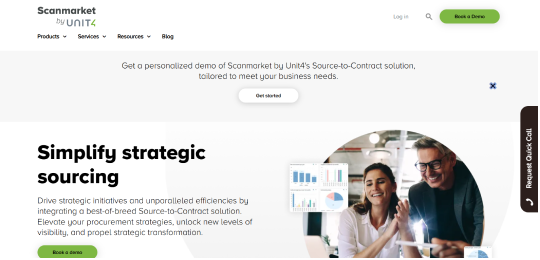
Scanmarket is an AI-enabled sourcing platform focused on RFx automation, supplier collaboration, and structured sourcing execution. The platform is designed to help procurement teams manage sourcing events efficiently, with tools that support RFIs, RFPs, RFQs, and auctions in a centralized environment.
What differentiates Scanmarket as a sourcing platform is its strong emphasis on user experience combined with sourcing discipline. The platform applies automation and analytics to streamline sourcing workflows, standardize supplier communication, and improve comparability of supplier responses. Scanmarket is known for balancing ease of use with sufficient depth for professional sourcing teams, without the complexity of large enterprise suites.
Scanmarket is most commonly used by mid-sized organizations and sourcing teams that want a dedicated sourcing platform with strong RFx capabilities and fast adoption.
Why choose Proactis?
- Scanmarket simplifies RFx execution with structured and easy-to-use sourcing workflows.
- Its automation improves efficiency and consistency across sourcing events.
- The platform is well-suited for organizations seeking a dedicated sourcing tool without enterprise overhead.
Pricing
- Scanmarket offers subscription-based pricing depending on organization size, sourcing volume, and selected modules. Pricing is available upon request.
Ratings and Reviews
- G2: ~4.6/5 (100+ reviews)
- Capterra: ~4.6/5 (100+ reviews)
Pros and Cons
| Pros | Cons |
| Strong RFx and e-sourcing functionality | Limited scope outside sourcing activities |
| User-friendly interface with quick onboarding | Fewer advanced AI features than AI-first platforms |
| Good balance between usability and structure | Less suitable for highly complex global sourcing |
12. Juicebox
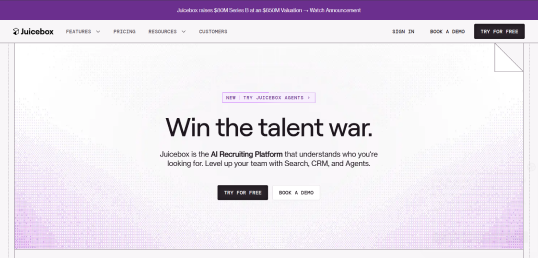
Juicebox is a specialized sourcing platform focused on services and talent sourcing, helping organizations source consultants, freelancers, and professional services in a structured and compliant way. The platform is designed to bring transparency and consistency to categories that are traditionally managed through emails, agencies, and ad-hoc processes.
What differentiates Juicebox as a sourcing platform is its category-specific focus on services sourcing. The platform supports RFx workflows, supplier shortlisting, rate benchmarking, and award decisions tailored to professional services rather than goods-based sourcing. This enables procurement teams to improve control, visibility, and value in complex service categories.
Juicebox is most commonly used by mid-sized and large organizations that want to professionalize services sourcing while maintaining flexibility for business stakeholders.
Why choose Juicebox?
- Juicebox brings structure and transparency to services and talent sourcing.
- Its workflows are tailored to consulting and professional services categories.
- The platform improves compliance and visibility in traditionally fragmented sourcing areas.
Pricing
Juicebox offers a tiered subscription model with options suitable for individuals and teams:
- Free — $0 per seat per month: limited free searches, AI email templates, ability to set up a Juicebox agent.
- Starter — approximately $119 per seat per month: unlimited searches, 250 contact credits, 250 export credits, up to 3 active projects, email outreach + AI templates.
- Growth — approximately $179 per seat per month: everything in Starter plus talent insights, 1,000 contacts + export credits, support for multiple users and mailboxes.
- Business / Custom — tailored pricing on request: full-access plan with onboarding, unlimited credits, analytics, priority support, deeper integrations, and agent automation.
Note that add-ons such as additional AI agents may be available for extra monthly fees.
Ratings and Reviews
- Public ratings are limited. Juicebox is frequently referenced in services sourcing and contingent workforce discussions.
Pros and Cons
| Pros | Cons |
| Strong focus on services and talent sourcing | Limited applicability for direct materials sourcing |
| Improves visibility and control over services spend | Not designed for traditional goods-based RFx |
| Tailored workflows for professional services | Smaller ecosystem than enterprise suites |
13. ORO Labs
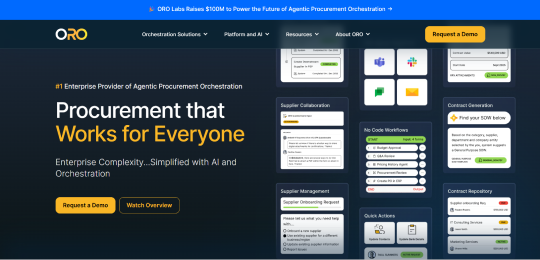
ORO Labs is a sourcing intake and orchestration platform designed to standardize how sourcing requests enter and move through procurement. Rather than replacing existing sourcing or procurement systems, ORO acts as a unifying layer that connects business users, sourcing teams, and multiple backend tools.
What makes ORO Labs stand out as a sourcing platform is its focus on intake-driven sourcing orchestration. The platform uses automated workflows to route sourcing requests, enforce policies, and trigger the right sourcing processes based on category, value, and risk. This improves governance and consistency across sourcing activities without adding friction for business users.
ORO Labs is most commonly used by large and fast-growing organizations with complex sourcing landscapes and multiple procurement tools or ERPs.
Why choose ORO Labs?
- ORO Labs standardizes sourcing intake and request management across the organization.
- Its orchestration layer improves compliance and visibility in complex sourcing environments.
- The platform enhances sourcing efficiency without replacing existing systems.
Pricing
- Contact ORO Labs for pricing. Costs depend on organization size, number of integrations, and workflow complexity.
Ratings and Reviews
- Public ratings are still limited, as ORO Labs is a relatively new platform. It is increasingly referenced in enterprise procurement transformation projects focused on orchestration and scalability.
Pros and Cons
|
Pros |
Cons |
|
Strong sourcing intake and orchestration capabilities |
Not a standalone RFx or sourcing execution tool |
|
Improves governance and request standardization |
Requires existing sourcing or procurement systems |
|
Ideal for complex, multi-tool environments |
Limited value for simple sourcing setups |
6 Advantages and Disadvantages of Using Sourcing Platforms
Conclusion
Sourcing platforms have become a core part of modern procurement in 2026, helping organizations digitize RFx processes, improve supplier discovery, and make better sourcing decisions. By combining automation, AI-driven insights, and structured workflows, these platforms reduce manual effort and increase transparency across sourcing activities.
The sourcing platforms featured in this article address different needs, from AI-first automation and optimization to enterprise-scale governance and niche supplier discovery.
Choosing the right sourcing platform depends on sourcing maturity, category complexity, and integration requirements.
When aligned with organizational needs, sourcing platforms enable teams to focus more on strategic sourcing and value creation rather than administrative tasks.
Frequentlyasked questions
What is a sourcing platform?
A sourcing platform is a digital solution that helps procurement teams manage supplier discovery, RFx processes, sourcing events, and supplier evaluation in a centralized system.
Modern sourcing platforms are often powered by AI, enabling faster sourcing cycles, improved supplier matching, and more data-driven sourcing decisions.
Who should use a sourcing platform?
Sourcing platforms are suitable for organizations of all sizes that want to professionalize sourcing activities.
They are especially valuable for procurement teams managing frequent RFQs, complex sourcing events, multiple suppliers, or categories where competition, transparency, and speed are critical.
What should organizations consider when choosing a sourcing platform?
Organizations should evaluate their sourcing maturity, category complexity, supplier landscape, and integration needs.
It is important to define whether the priority is automation, optimization, governance, supplier discovery, or scalability before selecting a sourcing platform.
About the author
My name is Marijn Overvest, I’m the founder of Procurement Tactics. I have a deep passion for procurement, and I’ve upskilled over 200 procurement teams from all over the world. When I’m not working, I love running and cycling.