

Written by Marijn Overvest | Reviewed by Sjoerd Goedhart | Fact Checked by Ruud Emonds | Our editorial policy
15 Best Procurement Platforms of 2026
- A procurement platform is a digital system that helps organizations manage sourcing, purchasing, supplier relationships, and spend in one centralized place.
- Modern procurement platforms go beyond basic process automation by using AI-powered capabilities to improve visibility, efficiency, and decision-making across the entire procurement lifecycle.
- AI-enabled procurement platforms reduce manual work by automating approvals, sourcing events, spend analysis, and supplier evaluation, allowing teams to operate faster and more efficiently.
The 15 procurement platforms below highlight AI-powered procurement platforms that combine end-to-end functionality with intelligent features such as analytics, automation, and supplier insights, making them strong options for mid-sized and large organizations in 2026.
15 Procurement Platforms of 2026

1. Coupa
Coupa is a leading AI-powered procurement and spend management platform designed to help organizations gain full visibility and control over their procurement, sourcing, and supplier collaboration activities. The platform covers a wide range of procurement processes, including purchasing, strategic sourcing, contract management, supplier management, and spend analytics.
What makes Coupa stand out as an AI procurement platform is its use of artificial intelligence and community intelligence. By analyzing aggregated and anonymized spend data from its global user base, Coupa provides benchmarking insights, risk signals, and recommendations that help procurement teams make better, data-driven decisions. The platform is cloud-based and mobile-friendly, enabling real-time access to procurement data across global organizations.
Coupa is most commonly used by mid-to-large enterprises that want to standardize procurement processes, improve compliance, and elevate procurement from an operational function to a strategic business partner.
Why choose Coupa?
- Coupa provides real-time visibility into spending, helping procurement teams identify savings opportunities and control costs more effectively.
- Its AI-driven analytics and community intelligence enable smarter sourcing decisions based on market and peer benchmarks.
- The platform integrates seamlessly with major ERP systems and supports mobile access, making it suitable for global and distributed procurement teams.
Pricing
- Contact Coupa for pricing. Costs typically depend on company size, modules selected, and deployment scope.
Ratings and Reviews
- G2: 4.2/5 (260+ reviews)
- Capterra: 4.2/5 (80+ reviews)
Pros and Cons
|
Pros |
Cons |
|
User-friendly and intuitive interface |
Implementation can be complex and time-consuming |
|
Strong spend visibility and analytics powered by AI |
Limited customization options compared to some competitors |
|
Comprehensive procurement and spend management capabilities |
Pricing may be high for smaller organizations |
2. SAP Ariba
SAP Ariba is a cloud-based, AI-enabled source-to-pay procurement platform built for large and global organizations that manage complex procurement networks. It connects buyers with millions of suppliers through the Ariba Network, enabling improved transparency, collaboration, and compliance across procurement processes.
As an AI procurement platform, SAP Ariba uses artificial intelligence to support spend analysis, supplier risk monitoring, guided buying, and compliance management. Its strength lies in standardizing procurement processes at scale and ensuring alignment with global regulations and internal policies. Deep integration with SAP ERP systems makes it a natural choice for organizations already operating within the SAP ecosystem.
SAP Ariba is particularly suitable for enterprises that require high levels of control, governance, and global supplier connectivity, while maintaining visibility across sourcing, contracts, and purchasing activities.
Why choose SAP Ariba?
- SAP Ariba provides access to one of the world’s largest digital supplier networks, improving collaboration and supplier transparency.
- The platform integrates seamlessly with SAP ERP systems, enabling standardized and compliant procurement processes across global operations.
- Advanced tools for spend control, risk management, and regulatory compliance make it well-suited for complex enterprise environments.
Pricing
- Contact SAP Ariba for pricing. Costs depend on organization size, transaction volumes, and selected modules.
Ratings and Reviews
- G2: 4.1/5 (700+ reviews)
- Capterra: 3.8/5 (80+ reviews)
Pros and Cons
|
Pros |
Cons
|
|
Access to a large global supplier network |
Complex implementation and setup |
|
Strong integration with SAP ERP systems |
Steep learning curve for new users |
|
Robust compliance, risk, and spend control tools |
High costs, less suitable for smaller companies |


3. Ivalua
Ivalua is a highly configurable AI-enabled source-to-pay procurement platform designed to support complex procurement environments across industries. The platform covers the full procurement lifecycle, including strategic sourcing, procurement, supplier management, contract management, and spend analysis.
What sets Ivalua apart as an AI procurement platform is its strong focus on flexibility and data-driven decision-making. It uses artificial intelligence and advanced analytics to support supplier evaluation, risk assessment, and performance management. Organizations can tailor workflows, data models, and user experiences to match their specific procurement strategies and governance requirements.
Ivalua is commonly used by mid-sized and large enterprises that need a scalable and adaptable procurement platform capable of supporting both operational efficiency and strategic procurement objectives.
Why choose Ivalua?
- Ivalua offers a highly configurable platform that adapts to different procurement models, industries, and organizational structures.
- Its advanced analytics and AI-driven insights support better supplier management, risk mitigation, and strategic sourcing decisions.
- The platform provides end-to-end source-to-pay functionality while maintaining strong control, visibility, and compliance.
Pricing
- Contact Ivalua for pricing. Costs vary depending on modules, customization level, and organization size.
Ratings and Reviews
- G2: 4.7/5 (120+ reviews)
- Capterra: 4.8/5 (200+ reviews)
Pros and Cons
|
Pros |
Cons |
|
Highly configurable and flexible platform |
Complex and time-consuming implementation |
|
Strong analytics and AI-driven insights |
Requires experienced users or consultants for setup |
|
Comprehensive end-to-end source-to-pay coverage |
Higher cost and effort compared to simpler solutions |

4. GEP SMART
GEP SMART is a comprehensive AI-powered source-to-pay procurement platform designed to support end-to-end procurement processes in mid-sized and large organizations. The platform covers sourcing, procurement, contract management, supplier management, and spend analytics within a single, unified environment.
As an AI procurement platform, GEP SMART uses artificial intelligence and machine learning to automate workflows, analyze spending patterns, and identify savings opportunities throughout the procurement lifecycle. Its guided buying and lifecycle-based approach helps procurement teams navigate each stage of the process while maintaining control, compliance, and visibility. The platform is cloud-native and mobile-enabled, making it suitable for globally distributed procurement teams.
GEP SMART is particularly well-suited for organizations looking for a balanced combination of strong AI capabilities, usability, and full source-to-pay coverage, without relying on multiple disconnected tools.
Why choose GEP SMART?
- GEP SMART provides full visibility and control across the entire source-to-pay process, helping procurement teams track purchases, approvals, and supplier performance.
- Its AI-driven lifecycle guidance identifies cost-saving opportunities and efficiency improvements at every stage of procurement.
- The platform combines powerful analytics, automation, and a user-friendly interface in a single, integrated solution.
Pricing
- Contact GEP for pricing. Costs depend on selected modules, organization size, and deployment scope.
Ratings and Reviews
- G2: 4.4/5 (20+ reviews)
- Capterra: 4.6/5 (7 reviews)
Pros and Cons
|
Pros |
Cons |
|
Comprehensive end-to-end source-to-pay functionality |
Pricing information is not transparent |
|
Strong AI and automation across procurement processes |
Some modules may be less mature than competitors |
|
User-friendly interface with mobile accessibility |
Implementation may require significant time and resources |

5. Zycus
Zycus is an established AI-driven source-to-pay procurement platform focused on helping organizations digitize and automate procurement at scale. The platform covers strategic sourcing, procurement, supplier management, contract management, and spend analysis, all within a centralized environment.
Zycus is especially known for its strong AI and generative AI capabilities, delivered through the Merlin GenAI Suite. These capabilities help procurement teams automate repetitive activities such as RFx creation, spend classification, contract analysis, and supplier evaluation. By embedding AI across the procurement lifecycle, Zycus supports faster cycle times and more consistent, data-driven decision-making.
The platform is typically used by mid-sized and large enterprises that want to strengthen strategic sourcing, improve spend visibility, and introduce AI into daily procurement operations without replacing their entire ERP landscape.
Why choose Zycus?
- Zycus centralizes procurement activities across the full source-to-pay lifecycle, providing better visibility and control.
- Its Merlin GenAI Suite automates manual and repetitive procurement tasks, enabling teams to focus on strategic initiatives.
- The platform supports data-driven sourcing and supplier decisions through advanced analytics and AI-powered insights.
Pricing
- Contact Zycus for pricing. Costs depend on organization size, selected modules, and deployment scope. Estimates from independent analysts suggest enterprise pricing may start around $50,000 annually.
Ratings and Reviews
- G2: 3.6/5 (13 reviews)
- Capterra: 4.3/5 (12 reviews)
Pros and Cons
|
Pros |
Cons |
|
Strong AI and generative AI capabilities |
Implementation can be complex and time-consuming |
|
Comprehensive source-to-pay functionality |
The user interface may feel less intuitive compared to newer platforms |
|
Advanced analytics for sourcing and spend management |
Limited flexibility for highly customized procurement processes |

6. JAGGAER
JAGGAER is a comprehensive, AI-enabled source-to-pay procurement platform designed to support organizations with complex and highly regulated procurement environments. The platform covers the full procurement lifecycle, including strategic sourcing, procurement, supplier management, contract management, and spend analytics.
JAGGAER uses artificial intelligence to enhance supplier discovery, spend analysis, and sourcing optimization, helping procurement teams improve visibility and decision-making. One of its key strengths is flexibility across industries, particularly in higher education, healthcare, manufacturing, and the public sector. The platform integrates with major ERP systems and supports global procurement operations with strong governance and compliance capabilities.
JAGGAER is commonly selected by mid-sized to large organizations that require a robust, configurable procurement platform capable of handling complex supplier ecosystems and strict compliance requirements.
Why choose JAGGAER?
- JAGGAER provides end-to-end source-to-pay coverage suitable for complex and regulated procurement environments.
- Its AI-supported analytics and sourcing tools help teams identify savings opportunities and optimize supplier decisions.
- The platform integrates well with ERP systems and supports global procurement operations with strong governance controls.
Pricing
- Contact JAGGAER for pricing. Costs depend on selected modules, organization size, and deployment complexity.
Ratings and Reviews
- G2: 4.4/5 (25+ reviews)
- Capterra: 4.2/5 (2+ reviews)
Pros and Cons
|
Pros |
Cons |
|
Strong end-to-end source-to-pay capabilities |
The interface can feel complex for new users |
|
Good fit for regulated and complex industries |
Implementation and configuration require time |
|
Solid supplier management and spend analytics |
Less intuitive UX compared to newer AI-native platforms |
7. Oracle Procurement Cloud
Oracle Procurement Cloud is an enterprise-grade, AI-enabled procurement platform that supports the full source-to-pay lifecycle within the Oracle Fusion Cloud ERP ecosystem. The platform includes strategic sourcing, purchasing, supplier qualification, contract management, and spend analysis, all tightly integrated into Oracle’s broader financial and supply chain modules.
As an AI procurement platform, Oracle Procurement Cloud leverages machine learning and advanced analytics to improve sourcing decisions, automate routine procurement tasks, and identify cost-saving opportunities. Its strength lies in standardization, automation, and control across global procurement operations. The platform is designed for organizations that require high levels of security, scalability, and compliance.
Oracle Procurement Cloud is best suited for large enterprises and organizations already operating in an Oracle-centric environment that want procurement deeply embedded within their ERP landscape.
Why choose Oracle Procurement Cloud?
- Oracle Procurement Cloud uses AI-driven analytics to support smarter sourcing and spend decisions.
- The platform enables a high degree of automation and standardization across procurement processes, reducing manual effort and errors.
- Its native integration with Oracle Fusion ERP makes it ideal for large organizations with complex, global operations.
Pricing
- Pricing typically starts from approximately $650 per user/month, depending on modules, user volume, and contract terms.
Ratings and Reviews
- G2: ~4.0/5 (industry averages)
- Capterra: Rating not consistently published
Pros and Cons
|
Pros |
Cons |
|
Deep integration with Oracle Fusion ERP |
High licensing and implementation costs |
|
End-to-end source-to-pay functionality |
Less intuitive for new or non-Oracle users |
|
Strong analytics, compliance, and security |
Limited flexibility outside the Oracle ecosystem |
8. NetSuite Procurement
NetSuite Procurement is an AI-enabled procurement solution embedded within the Oracle NetSuite ERP platform, designed to help organizations manage purchasing, supplier relationships, and spend control from a single, unified system. It supports core procurement activities such as purchase requisitions, purchase orders, approvals, and supplier management, all tightly connected to financial and inventory data.
As part of a cloud ERP, NetSuite Procurement uses automation and analytics to provide real-time visibility into budgets, commitments, and spending. While it is not a standalone AI-native procurement platform, it leverages intelligent workflows, controls, and reporting to improve procurement efficiency and financial governance. Its biggest strength is the seamless integration between procurement and finance, reducing data silos and manual reconciliation.
NetSuite Procurement is particularly well-suited for growing mid-sized companies that want procurement tightly integrated with finance and operations, without deploying a separate enterprise procurement suite.
Why choose NetSuite Procurement?
- NetSuite Procurement centralizes procurement activities within a single ERP environment, improving data consistency and control.
- Real-time visibility into spend, budgets, and commitments supports better financial planning and decision-making.
- The platform scales well with business growth and eliminates the need for multiple disconnected procurement tools.
Pricing
Contact Oracle NetSuite for pricing. Costs depend on ERP edition, number of users, and selected modules.
Ratings and Reviews
- G2: 4.2/5 (1,700+ reviews)
- Capterra: 4.2/5 (1,700+ reviews)
Pros and Cons
|
Pros |
Cons |
|
Native integration with NetSuite ERP and finance |
Limited advanced AI features compared to standalone platforms |
|
Real-time visibility into spend and budgets |
Less flexible customization outside the ERP structure |
|
Scalable solution for growing organizations |
Implementation and onboarding can be complex |
9. Basware
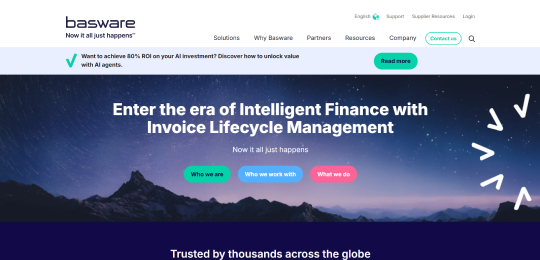
Basware is an AI-enabled procurement and accounts payable (AP) automation platform focused on connecting procurement and finance through a unified procure-to-pay (P2P) environment. The platform supports purchasing, invoice processing, compliance control, and spend visibility, helping organizations manage high transaction volumes with accuracy and transparency.
As an AI procurement platform, Basware applies artificial intelligence and automation primarily to invoice processing, spend classification, and compliance monitoring. Its strength lies in optimizing financial workflows, improving invoice matching, and ensuring adherence to internal policies and regulatory requirements. Basware is often used in environments where procurement and finance must work closely together, especially in organizations with complex approval structures.
Basware is commonly adopted by medium and large enterprises that prioritize financial control, compliance, and efficiency in procure-to-pay operations.
Why choose Basware?
- Basware connects procurement and accounts payable in a single P2P platform, improving visibility and control over spending.
- Its AI-driven invoice processing and compliance tools reduce manual work and errors in high-volume environments.
- The platform is well-suited for organizations that need strong financial governance and standardized procurement workflows.
Pricing
- Contact Basware for pricing. Costs depend on transaction volumes, modules selected, and organizational scale.
Ratings and Reviews
- Public review data is limited on major platforms. Basware appears in multiple enterprise procurement shortlists but does not consistently publish aggregated ratings on G2 or Capterra.
Pros and Cons
|
Pros |
Cons |
|
Strong integration between procurement and AP processes |
Limited transparency around pricing and reviews |
|
Effective AI-driven invoice processing and compliance |
Interface can feel less modern compared to newer platforms |
|
Good spend visibility and financial control |
Implementation and integrations may require significant effort |
10. Levelpath
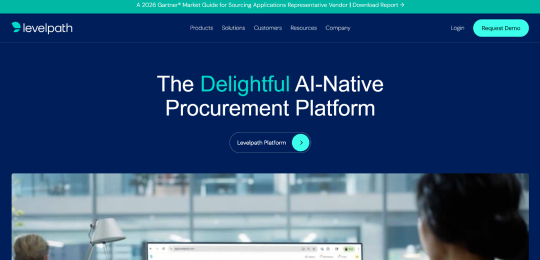
Levelpath is a modern, AI-native procurement platform designed to simplify and automate procurement operations through intelligent workflows and built-in AI assistants. Unlike traditional procurement suites, Levelpath is built with an AI-first architecture, focusing on intake management, sourcing, supplier management, contracts, and procurement orchestration in a single, intuitive environment.
As an AI procurement platform, Levelpath uses generative AI and embedded agents to guide users through procurement requests, automate repetitive tasks, and surface relevant insights at each stage of the process. The platform places strong emphasis on user experience, making procurement easier to adopt for both procurement professionals and business stakeholders outside procurement.
Levelpath is particularly attractive to mid-sized and large organizations that want to modernize procurement without the complexity and rigidity of legacy enterprise platforms.
Why choose Levelpath?
- Levelpath offers an AI-native procurement experience that reduces manual effort and accelerates procurement cycles.
- Its built-in AI assistants guide users through requests, sourcing, and approvals, improving adoption across the organization.
- The platform combines flexibility, automation, and a modern UI, making it easier to scale procurement operations without heavy customization.
Pricing
- Contact Levelpath for pricing. Costs depend on organization size, selected modules, and deployment scope.
Ratings and Reviews
- Public ratings are still limited, as Levelpath is a newer platform. It is increasingly featured in enterprise procurement shortlists and analyst discussions focused on AI-native procurement solutions.
Pros and Cons
|
Pros |
Cons |
|
AI-native platform designed around automation and usability |
Smaller user base compared to established enterprise platforms |
|
Modern, intuitive interface that supports high user adoption |
Limited public reviews on major rating platforms |
|
Flexible workflows and strong intake-to-procurement orchestration |
Some advanced enterprise features are still evolving |
11. Zip
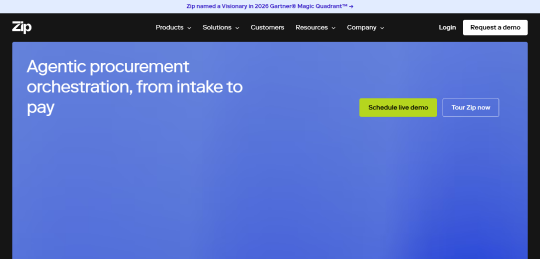
Zip is an AI-enabled procurement intake and orchestration platform designed to help organizations streamline how procurement requests enter and move through the procurement process. Rather than replacing existing procurement or ERP systems, Zip sits on top of them, acting as a smart front door for procurement, legal, finance, and IT workflows.
As an AI procurement platform, Zip uses automation and AI-driven workflows to standardize intake, approvals, and cross-functional collaboration. It enables organizations to capture all procurement requests in one place, route them intelligently to the right stakeholders, and ensure compliance with internal policies. Zip is particularly strong in improving visibility, speed, and user experience at the very start of the procurement lifecycle.
Zip is most commonly used by mid-sized and large enterprises that struggle with fragmented intake processes, email-based requests, and slow approval cycles across multiple departments.
Why choose Zip?
- Zip centralizes all procurement requests into a single intake layer, improving transparency and control.
- Its AI-powered workflows automate routing, approvals, and compliance checks across procurement and other functions.
- The platform integrates with existing procurement, ERP, and finance systems, making it easier to improve processes without replacing core systems.
Pricing
- Contact Zip for pricing. Costs depend on organization size, number of workflows, and integrations.
Ratings and Reviews
- G2: 4.8/5 (300+ reviews)
- Capterra: 4.8/5 (100+ reviews)
Pros and Cons
|
Pros |
Cons |
|
Strong intake and workflow orchestration across departments |
Not a full end-to-end procurement suite |
|
Improves user adoption and request visibility |
Relies on integration with existing procurement systems |
|
AI-driven automation reduces manual routing and approvals |
Limited sourcing and contract management capabilities |
12. Proactis
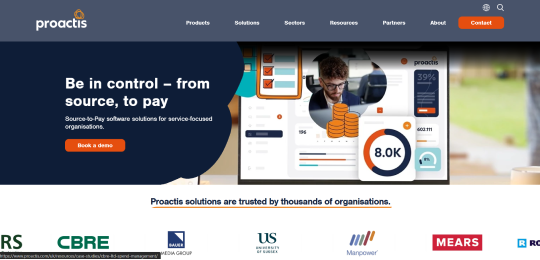
Proactis is an AI-enabled procurement and spend management platform focused on helping organizations standardize sourcing, improve compliance, and strengthen spend control. The platform supports key procurement activities such as sourcing, contract management, supplier management, purchasing, and spend analysis within a structured and policy-driven environment.
As an AI procurement platform, Proactis uses automation and analytics to support spend visibility, supplier performance tracking, and compliance monitoring. Its strength lies in enforcing procurement rules and procedures, making it particularly attractive for organizations operating in highly regulated environments. Proactis is widely used in the public sector, education, healthcare, and large enterprises with strict governance requirements.
Proactis is best suited for organizations that prioritize control, transparency, and compliance over flexibility and rapid customization.
Why choose Proactis?
- Proactis helps organizations standardize procurement processes and enforce compliance across sourcing and purchasing activities.
- The platform provides strong tools for spend analysis and supplier performance monitoring, supporting more informed procurement decisions.
- It is particularly well-suited for regulated environments where governance, auditability, and cost control are critical.
Pricing
- Contact Proactis for pricing. Costs depend on organization size, selected modules, and implementation scope.
Ratings and Reviews
- Public ratings are limited. Proactis appears in multiple enterprise procurement shortlists but does not consistently publish aggregated review scores on G2 or Capterra.
Pros and Cons
|
Pros |
Cons |
|
Strong focus on compliance and spend control |
The user interface is less intuitive than newer platforms |
|
Good tools for supplier performance and spend analysis |
Implementation and adoption can be time-consuming |
|
Well-suited for public sector and regulated environments |
Limited flexibility and customization options |
13. Tradeshift
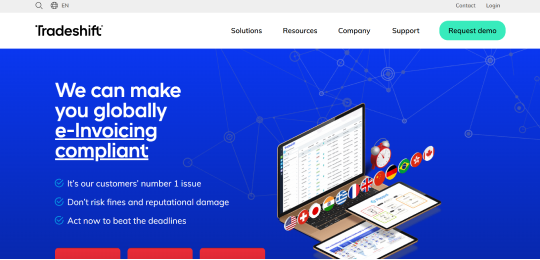
Tradeshift is a cloud-based procurement and supplier collaboration platform that combines e-procurement, invoicing, and supply chain connectivity within a single global network. The platform is designed to help organizations digitize procurement processes while improving collaboration and data exchange with suppliers.
As an AI-enabled procurement platform, Tradeshift applies artificial intelligence to document processing, compliance checks, supplier onboarding, and transaction monitoring. Its network-based approach allows buyers and suppliers to connect more easily, exchange documents digitally, and automate procure-to-pay workflows. Tradeshift is particularly strong in environments with a large and diverse supplier base, including international suppliers.
Tradeshift is commonly used by mid-sized and large organizations that want to improve supplier connectivity, invoice automation, and procurement-finance integration across global supply chains.
Why choose Tradeshift?
- Tradeshift connects buyers and suppliers through a global digital network, improving collaboration and transparency.
- Its AI-driven automation supports electronic invoicing, compliance checks, and document processing at scale.
- The platform helps organizations digitize procure-to-pay processes while strengthening supplier engagement.
Pricing
- Contact Tradeshift for pricing. Costs depend on transaction volumes, network usage, and selected modules.
Ratings and Reviews
- Public review data varies by region and module. Tradeshift is frequently included in enterprise procurement and AP automation shortlists, though aggregated ratings on G2 and Capterra are limited.
Pros and Cons
|
Pros |
Cons |
|
Strong global supplier network and collaboration features |
Pricing and cost structure can be complex |
|
Effective e-invoicing and compliance automation |
User experience can feel less intuitive for some users |
|
Good integration between procurement and finance workflows |
Implementation may require significant change management |
14. ORO Labs
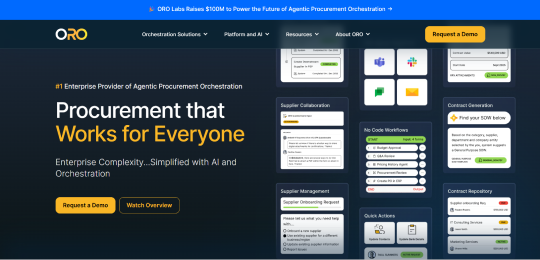
ORO Labs is an AI-enabled procurement orchestration platform designed to sit between business users, procurement teams, and existing ERP or procurement systems. Rather than replacing core systems, ORO acts as a unifying layer that standardizes intake, workflows, data, and integrations across the entire procurement landscape.
As an AI procurement platform, ORO Labs focuses on automation, orchestration, and data normalization. It uses intelligent workflows and APIs to route requests, enforce policies, and connect multiple procurement tools, ERPs, and supplier systems into a single operating model. This makes it particularly valuable for organizations with fragmented procurement technology stacks or multiple ERPs.
ORO Labs is best suited for large and fast-growing enterprises that want to scale procurement operations, improve governance, and increase efficiency without ripping out existing systems.
Why choose ORO Labs?
- ORO Labs unifies procurement intake and workflows across multiple systems, reducing fragmentation and manual coordination.
- Its orchestration layer improves compliance, data consistency, and visibility across complex procurement environments.
- The platform enables organizations to modernize procurement processes without replacing existing ERP or procurement solutions.
Pricing
- Contact ORO Labs for pricing. Costs depend on organization size, number of integrations, and workflow complexity.
Ratings and Reviews
- Public ratings are still limited, as ORO Labs is a relatively new platform. It is increasingly referenced in enterprise procurement transformation projects focused on orchestration and scalability.
Pros and Cons
|
Pros |
Cons |
|
Strong procurement orchestration across multiple systems |
Not a standalone end-to-end procurement suite |
|
Improves intake, compliance, and workflow automation |
Requires existing procurement or ERP systems |
|
Ideal for complex, multi-ERP environments |
Limited public reviews and ratings |
15. Fairmarkit
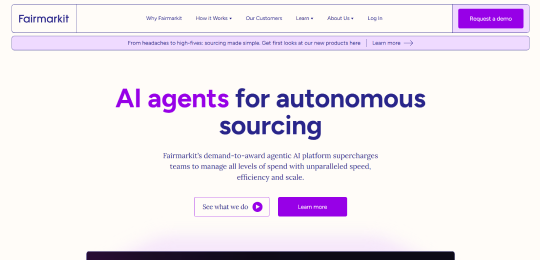
Fairmarkit is an AI-powered sourcing and supplier discovery platform focused on automating RFQ processes and improving competition in sourcing events. The platform is designed to help procurement teams quickly identify qualified suppliers, collect quotes, and compare offers using data-driven insights rather than manual effort.
As an AI procurement platform, Fairmarkit applies artificial intelligence to supplier discovery, quote analysis, and sourcing optimization. It automatically matches sourcing requirements with suitable suppliers, encourages competitive bidding, and helps procurement teams achieve better pricing and transparency. Fairmarkit is particularly strong in tail spend and mid-value sourcing, where manual processes often slow down procurement and reduce efficiency.
Fairmarkit is commonly used by mid-sized and large organizations that want to scale sourcing activities, reduce cycle times, and increase supplier participation without increasing procurement workload.
Why choose Fairmarkit?
- Fairmarkit automates supplier discovery and RFQ processes, reducing manual sourcing effort.
- Its AI-driven matching and quote comparison improve competition and sourcing outcomes.
- The platform is especially effective for managing tail spend and increasing sourcing efficiency at scale.
Pricing
- Contact Fairmarkit for pricing. Costs depend on sourcing volume, organization size, and deployment scope.
Ratings and Reviews
- G2: 4.6/5 (70+ reviews)
- Capterra: 4.7/5 (40+ reviews)
Pros and Cons
|
Pros |
Cons |
|
Strong AI-driven supplier discovery and RFQ automation |
Not a full end-to-end procurement suite |
|
Reduces sourcing cycle time and manual effort |
Focused mainly on sourcing and tail spend |
|
Improves supplier competition and pricing outcomes |
Requires integration with core procurement or ERP systems |
Advantages and Disadvantages of Using AI Procurement Platforms
Conclusion
Procurement platforms are no longer emerging technologies. In 2026, procurement platforms powered by AI represent a core part of modern procurement operations, especially for mid-sized and large organizations managing complex sourcing, supplier networks, and spend structures.
The procurement platforms covered in this article show how artificial intelligence enhances procurement beyond manual processing and reactive decision-making. By automating workflows, improving data quality, and delivering real-time insights, these platforms help procurement teams operate more efficiently while supporting goals such as cost optimization, risk management, and supplier performance improvement.
However, choosing the right procurement platform is not only about features or rankings. Organizations should carefully assess their procurement maturity, existing ERP landscape, data readiness, and internal capabilities. Some companies may benefit from full end-to-end procurement platforms, while others may achieve better results by combining AI-powered procurement platforms with existing systems.
Frequentlyasked questions
What is a procurement platform?
A procurement platform is a digital solution that helps organizations manage sourcing, purchasing, supplier relationships, and spend in one centralized system.
Modern procurement platforms are powered by AI, using artificial intelligence, machine learning, and automation to optimize workflows, analyze spend data, evaluate suppliers, identify risks, and support better procurement decisions across the entire procurement lifecycle.
Can procurement platforms integrate with ERP systems?
Yes. Most modern procurement platforms are designed to integrate with ERP systems such as SAP, Oracle, and NetSuite.
Some procurement platforms operate as full source-to-pay suites, while others act as orchestration or intake layers that sit on top of existing ERP environments and connect multiple systems
What should organizations consider before choosing a procurement platform?
Organizations should evaluate their procurement maturity, existing technology stack, data quality, and key procurement challenges.
It is important to define clear goals, such as spend visibility, sourcing efficiency, compliance, or supplier risk management, before selecting a procurement platform powered by AI.
About the author
My name is Marijn Overvest, I’m the founder of Procurement Tactics. I have a deep passion for procurement, and I’ve upskilled over 200 procurement teams from all over the world. When I’m not working, I love running and cycling.