


Written by Marijn Overvest | Reviewed by Sjoerd Goedhart | Fact Checked by Ruud Emonds | Our editorial policy
Aviation Parts Sourcing: Definition, Process + Examples
- Aviation parts sourcing ensures that aircraft get the right spare parts at the right time to stay airworthy and safe.
- Modern aviation sourcing relies on digital platforms, predictive analytics, and strong supplier relationships to reduce delays and prevent costly downtime.
- When done right, aviation sourcing is not just about buying parts but about keeping aircraft flying safely, efficiently, and compliantly.
What is Aviation Parts Sourcing?
Aviation parts sourcing is the process of identifying, purchasing, and managing spare aircraft parts needed for maintenance, repair, and operations (MRO). It includes everything from finding certified suppliers and verifying part traceability to ensuring fast, compliant delivery to maintenance facilities.
Since safety and compliance are important in aviation, sourcing focuses on more than price and availability. Every part, from landing gear bolts to engine sensors, must be genuine, certified, and traceable to its maker. Procurement teams need to verify part numbers, airworthiness certificates, and regulatory approvals before buying.
Today, sourcing is faster and more data-driven. Airlines, MROs, and distributors use digital tools and online platforms to compare suppliers, check stock instantly, and automate purchasing. This reduces paperwork and helps prevent aircraft from being grounded due to missing or delayed parts.
The Aviation Parts Sourcing Process
Sourcing aviation parts must be fast, reliable, and compliant with strict technical, safety, and regulatory standards. Below are seven steps that ensure the process is structured, efficient, and fully aligned with aviation industry requirements.
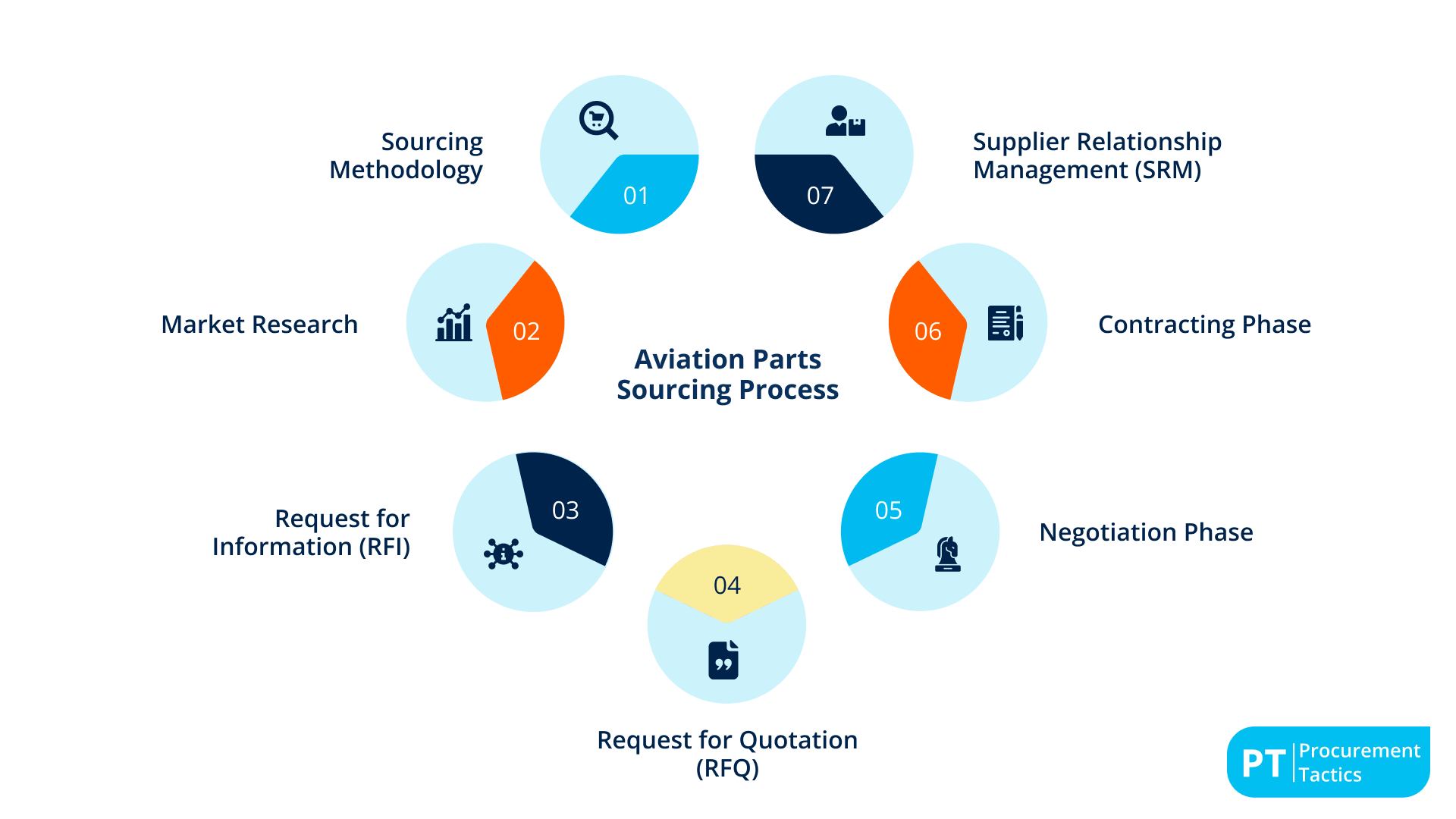
1. Sourcing Methodology
Before searching for specific aircraft parts, organizations must define a clear sourcing framework.
In aviation, this means identifying which systems or components are covered (for example, engines, avionics, or airframe parts), securing management and maintenance support, and forming a cross-functional team that includes engineers, logisticians, and procurement officers.
This “roadmap” ensures that everyone understands the objectives, whether that’s minimizing ground time, improving flight safety, or optimizing spare-parts inventory.
2. Market Research
Market research in aviation sourcing involves analyzing suppliers, their certifications, lead times, logistics capabilities, and existing inventory for critical components.
For instance, when sourcing a helicopter component, procurement must check if the supplier holds EASA or FAA certification, can guarantee fast delivery, and provides full traceability documentation.
Thorough research helps avoid long aircraft downtimes and counterfeit risks.
3. Request for Information (RFI)
At this stage, buyers send RFIs to potential suppliers to gather detailed information about their capacity, available stock, certifications, logistics options, and pricing.
Internally, maintenance and operations teams confirm technical specifications and acceptable lead times. Based on RFI responses, procurement can shortlist suppliers that meet both technical and logistical requirements.
4. Request for Quotation (RFQ)
Once qualified suppliers are identified, the procurement team sends an RFQ for specific parts. The request should include pricing, delivery terms, minimum stock levels, response times, and warranty conditions.
In aviation, price matters, but safety and delivery speed are even more important. For example, a supplier offering a lower price but no rapid delivery option could cause aircraft grounding, resulting in far higher costs.
5. Negotiation Phase
Negotiation in aviation sourcing isn’t only about price reduction. It also covers delivery schedules, logistics support, certification, warranty, part exchange options, and storage.
For example: “If we agree to a 24-month contract, can you guarantee 48-hour delivery for urgent orders?” Successful negotiation balances cost, safety, and flexibility.

6. Contracting Phase
Once terms are agreed upon, every detail must be clearly stated in the contract.
Aviation contracts must include part numbers, serial tracking, delivery timelines, replacement conditions, stock management procedures, logistics details (freight, customs), and certification requirements.
Using digital Contract Lifecycle Management (CLM) systems helps track obligations, generate reports, and ensure full compliance and traceability.
7. Supplier Relationship Management (SRM)
The process doesn’t stop after signing a contract. It actually starts there. SRM involves continuous monitoring through delivery checks, quality inspections, logistics reports, and performance reviews, such as on-time delivery rates or warranty claims.
Building long-term partnerships with trusted suppliers ensures consistent access to certified parts, quick responses to urgent needs, and fewer disruptions in operations.
Examples of Aviation Parts Sourcing
Aviation parts sourcing (or buying airplane parts) is often very complicated. It deals with very strict safety rules, suppliers from all over the world, and a need for fast, on-time delivery.
However, some organizations have mastered this process. They do this by combining technology, a smart strategy, and working closely with their suppliers.
Here are three examples of how industry leaders are doing their aviation sourcing parts.
1. Southwest Airlines: Integrated Parts Sourcing and Maintenance Strategy
What they do:
Southwest Airlines, one of the largest low-cost carriers in the U.S., manages a massive fleet that requires thousands of spare parts daily. To avoid costly Aircraft-on-Ground (AOG) events, the company developed an integrated procurement and maintenance strategy that connects sourcing, logistics, and engineering teams in real time.
How it works:
Southwest uses a centralized e-procurement platform to track every aircraft component from order to installation. The system links maintenance data with supplier performance metrics, allowing the team to predict which parts will be needed next and order them proactively.
They also maintain regional distribution centers with critical spare parts and use just-in-time delivery for less frequently used components. Through long-term agreements with OEMs and certified repair vendors, Southwest ensures access to genuine, traceable parts within strict time windows.
Why it’s effective:
- Predictive analytics reduces AOG incidents by forecasting part needs ahead of time.
- Real-time data sharing between procurement and maintenance speeds up repairs.
- Strategic supplier partnerships guarantee continuous availability and compliance.
Southwest’s model shows how combining technology, planning, and strong supplier relationships keeps aircraft flying safely while controlling costs. It’s a practical example of sourcing and maintaining aviation parts as one connected, data-driven process.
2. Lufthansa Technik: Predictive Maintenance and Data-Driven Sourcing
What they do:
Lufthansa Technik is known for its advanced use of data in procurement and maintenance. The company uses predictive maintenance systems that monitor aircraft components and automatically signal when parts should be ordered or replaced.
How it works:
Their procurement team combines real-time aircraft health monitoring with automated sourcing triggers. When data shows that a part is nearing its maintenance threshold, the system automatically identifies approved suppliers and launches an RFQ.
Why it’s effective:
- Reduces Aircraft-on-Ground (AOG) incidents by predicting part failures early.
- Improves supplier coordination and on-time delivery.
- Minimizes excess inventory through precise, data-based planning.
Integrating maintenance data directly with procurement systems turns buying decisions into proactive, risk-managed actions, not last-minute reactions.
3. Delta TechOps: Strategic Supplier Partnerships and Repair Programs
What they do:
Delta TechOps, the maintenance division of Delta Air Lines, manages both in-house repairs and third-party MRO services for other airlines. Their procurement model focuses on long-term partnerships and circular supply chain principles.
How it works:
Instead of constantly purchasing new parts, Delta TechOps emphasizes component repair, overhaul, and exchange programs with trusted suppliers. They maintain detailed lifecycle records for every part and use data analytics to evaluate supplier performance.
Why it’s effective:
- Reduces procurement costs and environmental impact.
- Builds resilience through multi-supplier repair networks.
- Strengthens long-term supplier relationships built on transparency and shared performance data.
6 Major Challenges in Aviation Parts Sourcing & How to Address Them
Sourcing aircraft parts may seem simple, as if it’s just about buying the right part and installing it. In reality, it is one of the most complex and high-risk areas of procurement.
Strict regulations, long lead times, and unexpected supply chain issues make it a constant balancing act between cost, compliance, and operational safety.
Here are the 6 major challenges in aviation parts sourcing and how procurement teams can address them.
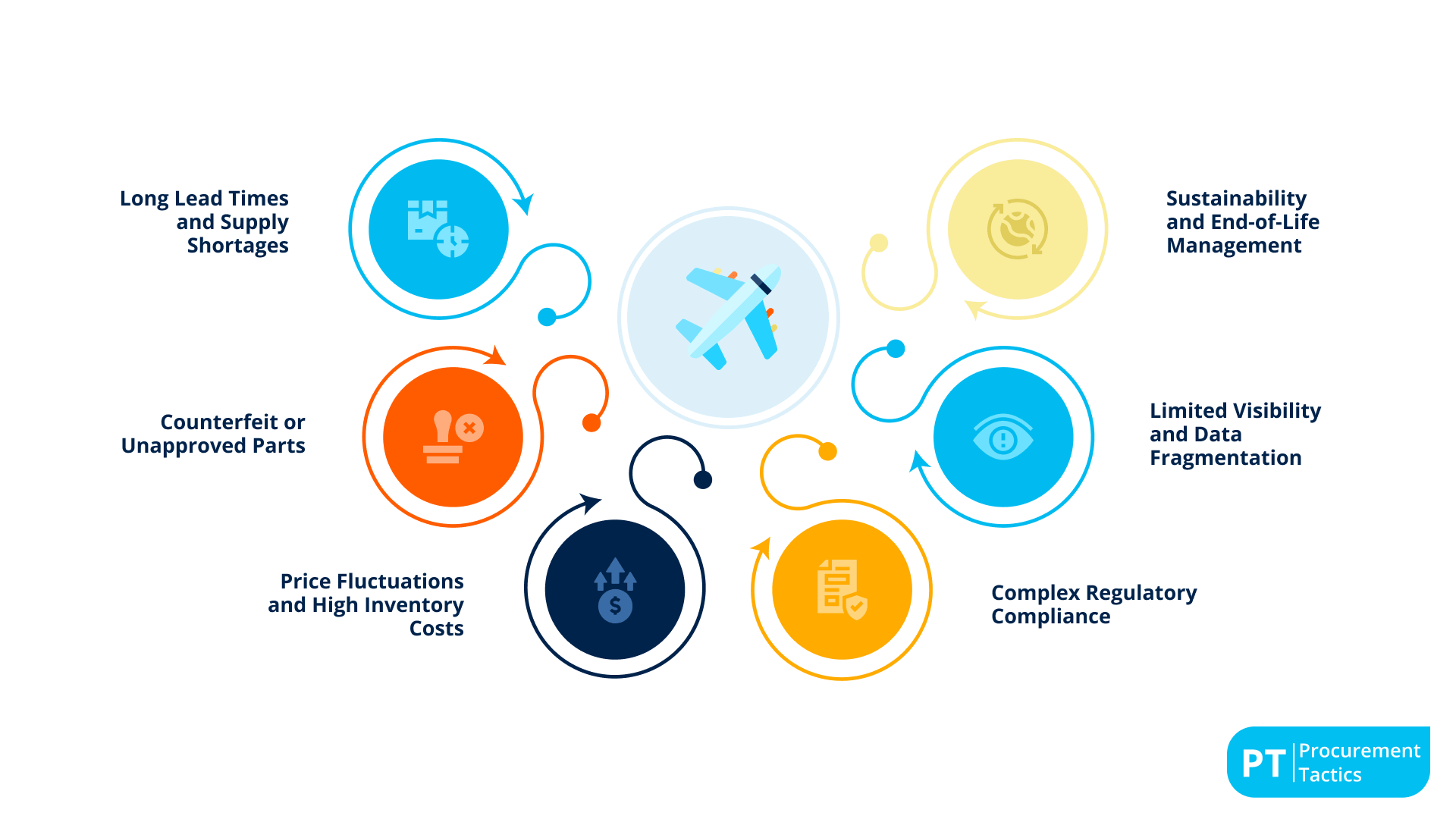
1. Long Lead Times and Supply Shortages
The challenge:
Aircraft parts are highly specialized and often produced by a limited number of certified manufacturers. Delays in production, export restrictions, or sudden demand spikes can quickly lead to shortages. When a critical component is unavailable, aircraft can remain grounded for days, causing financial and operational losses.
The solution:
Diversify your supplier base and avoid relying on a single source. Build long-term relationships with multiple approved vendors and include alternative part numbers in contracts when possible. Maintain safety stock for critical components and use predictive analytics to forecast demand based on flight schedules and maintenance data.
2. Counterfeit or Unapproved Parts
The challenge:
The aviation industry faces ongoing risks from counterfeit, unapproved, or poorly documented parts entering the market. Even one faulty or uncertified component can compromise flight safety and lead to regulatory penalties.
The solution:
Source only from FAA or EASA-certified suppliers and demand full traceability, including Form 8130-3 or EASA Form 1 certificates. Implement serialization and barcode tracking for all components. Use digital verification tools and approved databases to confirm supplier authenticity before purchase.
3. Price Fluctuations and High Inventory Costs
The challenge:
Aviation parts can be expensive, and their prices fluctuate based on market demand, manufacturer lead times, and material availability. Keeping large inventories to prevent delays ties up significant capital, while low inventory levels risk downtime.
The solution:
Use a mix of consignment stock and just-in-time (JIT) delivery agreements with trusted suppliers. Negotiate long-term contracts with fixed or indexed pricing to protect against volatility. Digital procurement platforms can help track spend trends and identify cost-saving opportunities through volume bundling and part standardization.
4. Complex Regulatory Compliance
The challenge:
Every part in an aircraft must meet strict airworthiness regulations. Documentation errors, missing certificates, or non-compliance with export laws can result in delays or fines. The compliance process itself can be time-consuming and prone to human error.
The solution:
Integrate regulatory compliance into every sourcing step. Use automated systems to verify supplier certifications and maintain digital archives of inspection records, batch numbers, and shipping documents. Train procurement staff regularly on aviation standards such as FAA AC 00-56, EASA Part 145, and ISO 9001.
5. Limited Visibility and Data Fragmentation
The challenge:
Many maintenance and procurement teams still use disconnected systems for tracking orders, stock levels, and supplier performance. This lack of visibility makes it hard to predict part availability, manage logistics, or respond quickly to issues.
The solution:
Adopt centralized, cloud-based procurement and inventory management platforms. Real-time dashboards can provide visibility into order status, shipment tracking, and supplier KPIs. Integration between MRO, ERP, and logistics systems ensures data consistency and faster decision-making.
6. Sustainability and End-of-Life Management
The challenge:
As the aviation industry focuses more on sustainability, sourcing environmentally responsible parts is becoming a key priority. However, balancing environmental goals with strict safety standards can be difficult, especially for legacy aircraft.
The solution:
Prioritize suppliers that follow green manufacturing practices, use recyclable materials, and minimize waste. Explore component repair, overhaul, and exchange programs to extend part lifecycles. Including sustainability KPIs in supplier contracts encourages long-term environmental responsibility without compromising airworthiness.
Modern Trends and Digital Transformation in Aviation Parts Procurement
The aviation industry is undergoing a major digital shift. What used to be a slow, paper-heavy, and reactive procurement process is now being transformed by technology, enabling airlines, MROs, and parts distributors to work faster, smarter, and with greater transparency.
Below are some of the most important trends shaping modern aviation parts procurement today, with real-life examples of how they are applied and what benefits emerged.
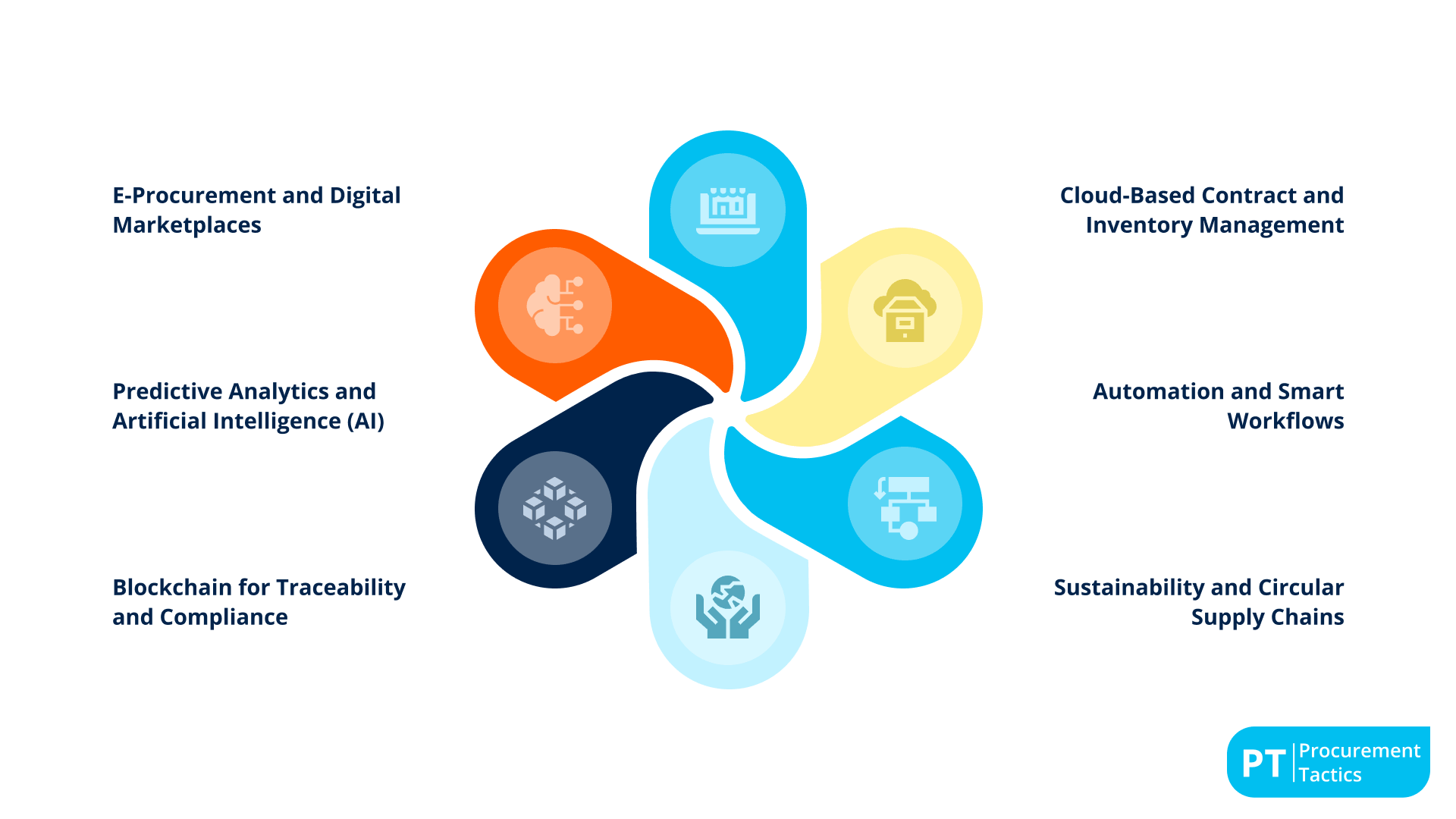
1. E-Procurement and Digital Marketplaces
What this looks like in practice:
Satair (a subsidiary of Airbus) created a digital marketplace called Satair Market, where airlines and MROs can browse certified parts from OEMs and approved 3rd-party suppliers, place orders online, and track shipments in one platform.
How they applied it:
Benefits achieved:
Satair reported a major uplift in online orders, faster quote generation, and improved the lead time for procurement. Specifically, they saw a 58% increase in yearly revenue and a 51% increase in orders after digital transformation.
This means airlines and parts buyers can respond more quickly to urgent needs, reduce ground time, and have better visibility into supplier availability.
How they applied it:
The system analyzes large volumes of data to forecast when parts will reach their service limit and automatically trigger procurement actions or part-replacement orders before failure. This moves from reactive to proactive sourcing.
Benefits achieved:
The operator reported improved spare-parts inventory management, reduced flight delays/cancellations due to part unavailability, and better utilization of fleet assets.
For example, predictive analytics in aviation showed inventory reductions, fewer stockouts, and improved reliability.
So procurement teams can avoid rush purchases, lower emergency costs, and maintain higher aircraft availability.
3. Blockchain for Traceability and Compliance
What this looks like in practice:
Honeywell Aerospace launched an online marketplace called GoDirect Trade for used and serviceable aircraft parts, supported by blockchain technology that records every part’s lifecycle.
How they applied it:
The platform allows buyers to view photos, specifications, service history, and certificates for every part, while the blockchain ledger guarantees a permanent, tamper-proof record of provenance and usage.
Benefits achieved:
Using blockchain improved transparency across the entire parts market, minimizing uncertainty and reducing the risk of counterfeit or unapproved components.
It also made transactions faster and documentation more reliable, helping Honeywell strengthen compliance with aviation safety standards.
Finally, the system increased part availability and procurement efficiency, as the digital platform significantly shortened the time needed for verification and approval.
4. Cloud-Based Contract and Inventory Management
What this looks like in practice:
Satair worked with Google Cloud (and partner Atos) to move its IT infrastructure to a cloud platform, enabling real-time collaboration, automated quote-generation, and faster procurement workflows.
How they applied it:
They leveraged cloud native tools to automate RFQ fulfilment, streamline quoting, integrate ERP systems and supplier data, and enable access across geographies.
Benefits achieved:
The system improved responsiveness (quote generation in minutes vs hours), increased the agility of procurement teams, and supported global coordination of inventory and orders. This directly helps reduce lead times and enhance operational flexibility.
5. Automation and Smart Workflows
What this looks like in practice:
FlySafair introduced automation in its procurement and maintenance support workflows by deploying robotic process automation (RPA) to handle repetitive tasks across its back-office and technical operations.
How they applied it:
The airline began by mapping manual processes such as parts requisition, quote generation, invoice matching, and technician scheduling.
They then layered RPA “robots” over existing systems (even legacy ones) to manage tasks such as populating data fields, routing approvals, sending reminders, and updating order statuses. They ensured strong governance and documentation of each automated process.
Benefits achieved:
The result was faster turnaround for procurement requests and parts orders, lower manual error rates in documentation, and improved efficiency of the maintenance-procurement loop.
The airline noted that automation allowed teams to focus more on strategic sourcing and less on transactional work, reducing cost and improving response under urgent maintenance needs.
6. Sustainability and Circular Supply Chains
What they do:
Qantas Airways, in collaboration with the Aviation Circularity Consortium (ACC), has developed a circular economy model that gives new life to aircraft reaching the end of their operational lifespan. Instead of scrapping retired planes, Qantas reuses, refurbishes, and repurposes valuable materials and components for continued use across its supply chain.
How they applied it:
The airline dismantles retired aircraft to recover high-value parts such as engines, landing gear, and avionics.
These components are then refurbished and re-certified as Used Serviceable Material (USM), while recyclable metals and materials are processed for reuse.
Qantas also ensures that all recovered parts meet airworthiness standards before reintegrating them into its maintenance and procurement systems.
Benefits achieved:
This initiative significantly reduces the cost of sourcing new components by extending the lifecycle of existing parts. It enhances supply chain resilience by creating an alternative, sustainable source of parts that can mitigate shortages.
Additionally, the program lowers waste and environmental impact, improving Qantas’s overall sustainability performance and strengthening its ESG profile. Finally, it demonstrates that sustainability and profitability can coexist within aviation procurement, setting an example for the industry.
Digital transformation is redefining aviation parts sourcing, making it faster, safer, and more connected.
By adopting e-procurement platforms, AI predictive tools, blockchain traceability, cloud systems, automation, and circular-economy practices, organisations can reduce aircraft downtime, improve compliance, stabilise costs, and build more resilient supply chains.
Ultimately, these innovations help the aviation industry deliver what matters most: reliable aircraft, safe passengers, and optimized operational performance.
Conclusion
Aviation parts sourcing has evolved far beyond traditional purchasing; it is now a strategic discipline that keeps fleets safe, efficient, and future-ready. Each sourcing decision affects not just cost, but also flight reliability, passenger safety, and compliance with global standards.
By combining data-driven insights, automation, and sustainability, procurement teams can anticipate needs before disruptions occur, verify quality instantly, and strengthen resilience across the entire supply chain. Modern tools like e-procurement platforms, predictive analytics, blockchain, and cloud systems enable faster, smarter, and more transparent decisions.
The examples of Southwest Airlines, Lufthansa Technik, FlySafair, Honeywell, and Qantas show that success in aviation sourcing depends on innovation, collaboration, and accountability. These organizations prove that when technology and long-term partnerships work together, procurement becomes not just a support function, but a core driver of safety, sustainability, and operational excellence in aviation.
Frequentlyasked questions
What is aviation parts sourcing?
Aviation parts sourcing is the process of finding, purchasing, and managing certified aircraft components needed for maintenance and operations. It ensures that every part, from sensors to engines, meets safety, quality, and regulatory standards.
Why is aviation parts sourcing so complex?
Every part must be certified, traceable, and approved by aviation authorities such as the FAA or EASA. Procurement teams must also manage long lead times, strict documentation requirements, and fast-changing global supply chains while keeping aircraft operational and compliant.
What are the main challenges in aviation parts sourcing?
The biggest challenges include long lead times, supply shortages, counterfeit parts, high inventory costs, and complex regulatory compliance. Managing these effectively requires data visibility, supplier diversification, and close coordination between procurement, logistics, and maintenance teams.
About the author
My name is Marijn Overvest, I’m the founder of Procurement Tactics. I have a deep passion for procurement, and I’ve upskilled over 200 procurement teams from all over the world. When I’m not working, I love running and cycling.

Procurement Roles Overview
Click on a role to learn more