

Written by Marijn Overvest | Reviewed by Sjoerd Goedhart | Fact Checked by Ruud Emonds | Our editorial policy
Procurement Technology — Definition + Examples
- Procurement technology refers to the digital systems, tools, and platforms that support every stage of the procurement process, from planning and sourcing to contract management, supplier evaluation, and payment.
- Procurement technology is an ecosystem, not a tool. It connects e-sourcing, contracts, suppliers, analytics, and payments into a single workflow.
- The future of procurement lies in data, integration, and agility, turning digital tools into strategic enablers of transparency, efficiency, and resilience.
What is Procurement Technology?
Procurement technology refers to the digital systems, tools, and platforms that support every stage of the procurement process, from planning and sourcing to contract management, supplier evaluation, and payment.
In simple terms, it’s how organizations use technology to buy smarter. These systems help automate repetitive tasks, ensure compliance, and provide real-time data that supports strategic decisions.
There’s a clear distinction between a tool and a technology. A tool can be as simple as a spreadsheet or a single-purpose app. Procurement technology, however, represents a connected ecosystem, an integrated set of solutions that streamline workflows, improve visibility, and link all procurement activities under one digital roof.
Modern procurement technology combines several layers:
- E-procurement tools for managing purchase orders, invoices, and approvals.
- E-sourcing platforms for competitive bidding, tenders, and auctions.
- Contract management systems that control document versions and compliance deadlines.
- Spend analytics dashboards that track and analyze organizational spending.
- Supplier management systems that evaluate performance and risk.
- AI and automation engines that detect trends, flag irregularities, or predict future needs.
4 Examples of Modern Procurement Technology in Action
Procurement technology is no longer theoretical; it’s reshaping how leading organizations operate every day. Across industries, companies are adopting digital platforms to improve visibility, strengthen supplier relationships, and align procurement with strategic goals. The following examples illustrate how technology drives real results in practice.
1. Unilever – Unified Procurement Through SAP Ariba
As one of the world’s largest consumer goods companies, Unilever manages thousands of suppliers and millions of transactions across 190 countries. To standardize processes and gain full visibility over its global spend, the company implemented SAP Ariba, an end-to-end source-to-pay platform.
What they did: Unilever centralized its purchasing, supplier onboarding, and contract management within Ariba’s digital ecosystem. This allowed procurement teams across regions to collaborate on the same platform and access unified suppliers and spend data.
How it works: Automated workflows replaced manual approvals, while AI-driven analytics identified savings opportunities and supplier risks. Integration with sustainability modules allowed the company to track environmental performance across its supply base.
Why it’s effective: Unilever reduced cycle times, improved compliance, and strengthened sustainability oversight, proving that technology can support both cost efficiency and corporate responsibility.
2. Bühler Group – Digital Procurement with JAGGAER
Bühler Group, a Swiss industrial technology leader, faced the challenge of coordinating procurement across 140 sites worldwide. The company adopted JAGGAER’s procurement suite to simplify complex sourcing and supplier management operations.
What they did: Bühler digitized supplier registration, bidding, and evaluation through a single global platform. The system now manages everything from strategic sourcing to invoice reconciliation.
How it works: Supplier data and performance metrics are consolidated into real-time dashboards, while machine learning tools predict delivery delays and price fluctuations. Automated alerts notify buyers when risk indicators rise.
Why it’s effective: The JAGGAER system improved transparency, cut administrative workload, and strengthened supplier collaboration, allowing Bühler to move from transactional purchasing to a more predictive, strategic model.
3. Electra EV Charging – Agile Procurement with Precoro
For fast-growing startups, agility and cost control are vital. French-based Electra, an electric vehicle charging company, replaced spreadsheets and emails with Precoro, a lightweight, cloud-based procurement platform.
What they did: The platform standardized purchase requests, approvals, and budget tracking across departments. With automated approval flows and digital documentation, managers gained instant insight into project-level spending.
How it works: Precoro’s analytics module highlights overspending risks and compares supplier quotes, helping teams make data-driven purchasing decisions without bureaucratic delays.
Why it’s effective: Electra reduced administrative time by 40% and improved budget discipline, all while maintaining the speed required for startup growth. The case shows how even smaller organizations can achieve big results through accessible digital tools.

4. NHS Supply Chain (UK) – Centralized, Value-Based Procurement
The UK’s National Health Service (NHS) operates one of the largest public procurement systems in the world. Through the NHS Supply Chain platform, it digitized tendering, supplier evaluation, and contract management for more than 200 trusts and 7,000 suppliers.
What they did: The NHS redefined procurement from a cost-driven activity to a value-based, data-enabled function. The platform integrates patient outcome metrics, sustainability indicators, and lifecycle costing into supplier selection.
How it works: Automated data collection and transparent dashboards track supplier performance and carbon footprint in real time. Suppliers are incentivized for innovation and ethical compliance.
Why it’s effective: Centralization increased efficiency, reduced administrative duplication, and improved traceability across billions in annual procurement spend. The NHS now uses procurement technology not only to save money, but to deliver better healthcare outcomes.
From multinationals to public institutions and startups, these examples prove a consistent pattern: procurement technology works best when paired with clear goals, reliable data, and committed leadership. When systems connect people, suppliers, and analytics, procurement stops being an administrative process and becomes a driver of transformation, sustainability, and value creation.
6 Categories of Procurement Technology
Procurement technology today covers a wide range of digital solutions designed to improve how organizations plan, source, manage suppliers, and analyze spending. Rather than a single platform, it’s an interconnected landscape of tools that together create visibility, speed, and control across the entire procurement cycle.
The modern technology ecosystem can be divided into six main categories, each supporting a different part of the process but sharing one goal: making procurement more strategic and data-driven.
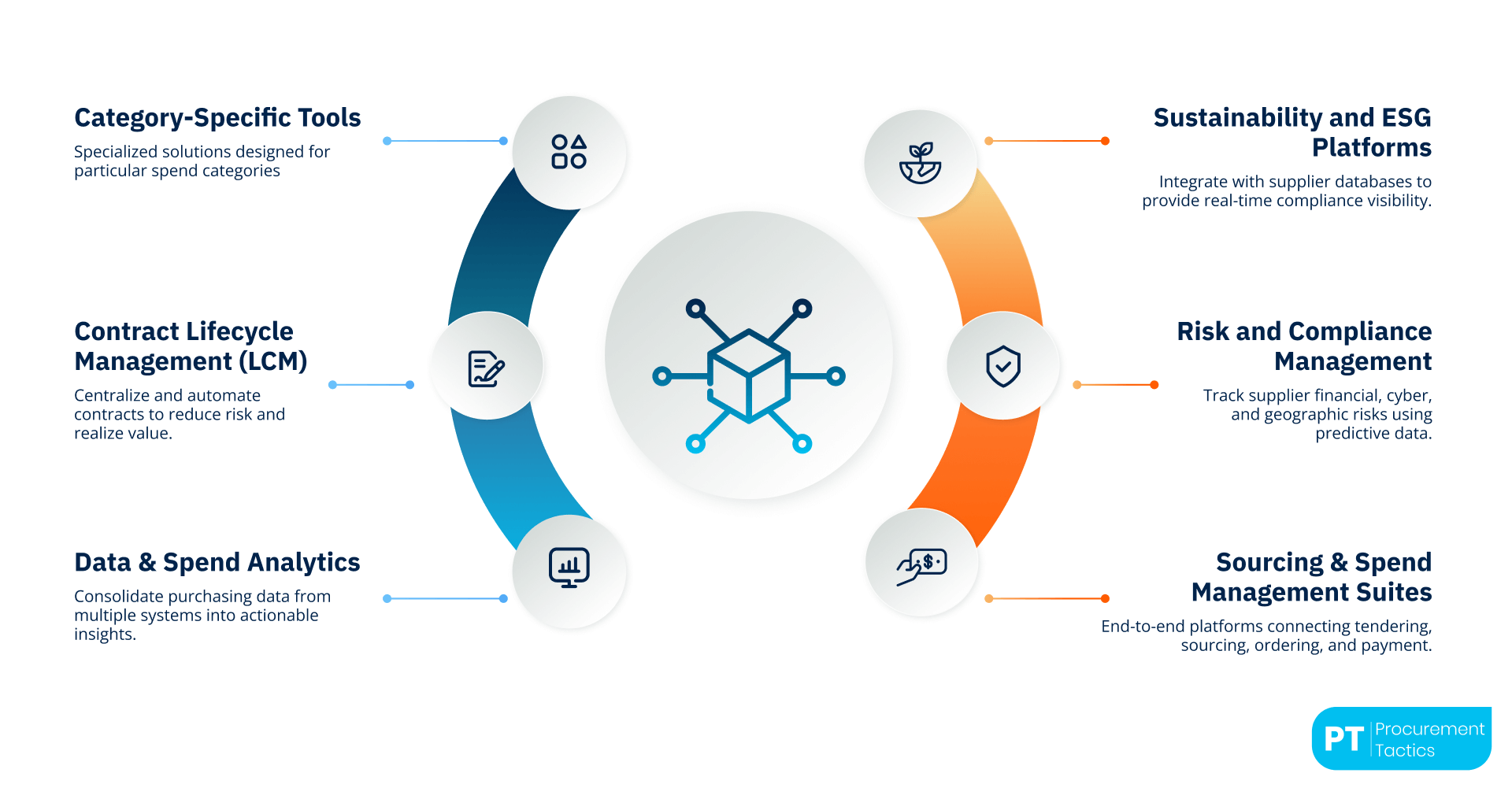
1. Category-Specific Tools
These are specialized solutions designed for particular spend categories, such as IT hardware, logistics, or marketing services. Unlike generic systems, category-specific tools reflect the nuances of each market.
For instance, IT procurement tools might track software licenses and renewals, while logistics platforms focus on route optimization and carrier performance. Their main advantage is precision: they handle complex requirements, supplier certifications, and compliance issues that are unique to that category.
However, using too many standalone tools can lead to fragmentation, so integration with the main procurement platform remains essential.
2. Contract Lifecycle Management (CLM)
Contract management is at the heart of procurement governance. CLM platforms automate every step, from drafting and negotiation to execution, renewal, and compliance tracking.
They store all agreements in a centralized, searchable database and automatically flag key dates such as expirations or audit deadlines. According to GEP, CLM tools reduce legal risk, improve collaboration between legal and procurement teams, and ensure that negotiated savings are actually realized.
By linking contracts to supplier performance data, organizations gain a clear view of obligations, penalties, and potential risks before they escalate.
3. Data and Spend Analytics
Data is the backbone of any procurement technology strategy. Spend analytics platforms collect and consolidate purchasing data from multiple sources, ERP systems, finance tools, and supplier databases, and transform it into actionable insights.
These systems allow procurement leaders to answer questions like: What are we buying? From whom? At what price? How consistent are we across business units? Advanced analytics and AI can classify unstructured spend data, detect maverick buying, and suggest opportunities for consolidation or renegotiation.
Without reliable data, digital procurement cannot deliver its full value — which is why analytics is often the first step in any technology transformation.
4. Sustainability and ESG Platforms
Sustainability has become a defining factor in procurement technology. ESG (Environmental, Social, and Governance) platforms help organizations monitor and report supplier sustainability metrics, such as carbon emissions, labor standards, and waste management.
These systems integrate with supplier databases and certification bodies, offering real-time visibility into compliance with environmental and ethical standards. According to Procurement Magazine, such tools support the transition toward responsible sourcing and help organizations meet regulatory requirements and investor expectations.
In the future, ESG data will be as central to procurement dashboards as cost or delivery metrics.
5. Risk and Compliance Management
Procurement teams face growing exposure to geopolitical risks, supply disruptions, and ethical concerns. Risk management platforms provide the intelligence needed to anticipate and respond.
They track supplier financial stability, cyber vulnerabilities, and location-based risks, using data from external sources and predictive models. Automated alerts enable early intervention, for example, identifying a supplier located in a conflict zone or one with pending legal issues.
Compliance management functions further ensure that every transaction follows internal policies, legal regulations, and industry standards. By combining risk and compliance modules, procurement technology helps organizations strengthen resilience and protect their reputations.
6. Sourcing and Spend Management Suites
At the top layer are integrated sourcing suites, comprehensive platforms that connect tendering, e-auctions, supplier onboarding, ordering, invoicing, and payment processes.
These solutions can be “full-suite”, covering the entire source-to-pay cycle, or “best-of-breed”, where organizations combine specialized tools for each function. The best approach depends on company size and complexity.
Large corporations may prefer unified platforms for standardization and control, while smaller firms benefit from modular flexibility. What matters most is interoperability: the ability of each component to share data seamlessly and give users a single version of truth across sourcing, contracts, and suppliers.
Modern procurement technology doesn’t stop at automation. Its real purpose is to connect people, processes, and data into one transparent ecosystem. When analytics inform sourcing, contracts guide compliance, and ESG data shapes supplier choices, procurement becomes a driver of both efficiency and long-term value.
3 Trends Shaping the Future of Procurement Technology
Here are the three trends defining how procurement technology will develop in the coming years.
1. Artificial Intelligence and Machine Learning
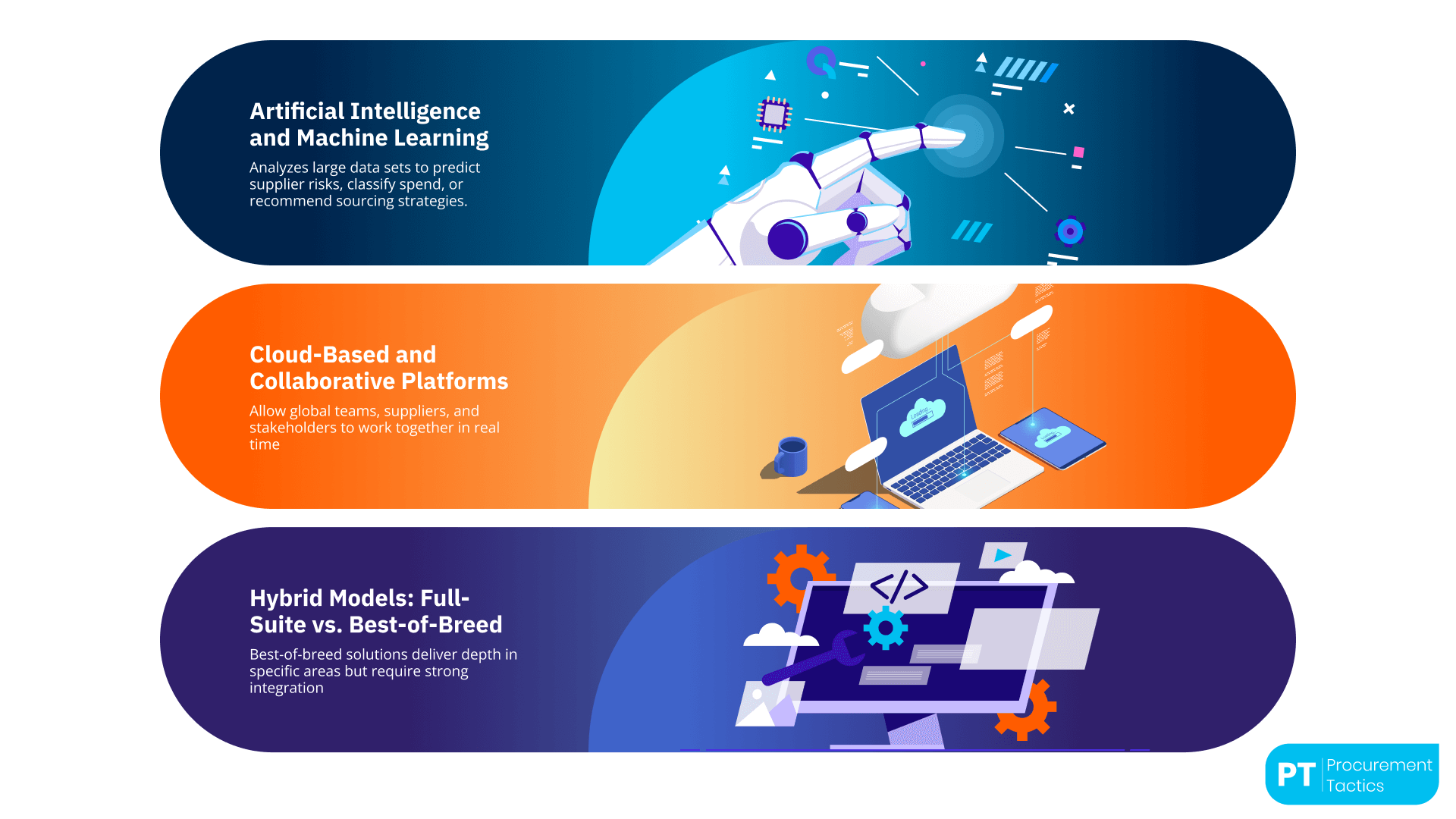
AI and machine learning are redefining how procurement teams make decisions. These technologies analyze large data sets to predict supplier risks, classify spend, or recommend sourcing strategies.
Instead of manually reviewing thousands of transactions, AI systems can identify patterns, such as price fluctuations, delivery delays, or ESG violations, and suggest corrective action. This shift allows procurement professionals to move from data gathering to value creation, focusing on strategic negotiation and supplier collaboration.
In practice, AI can automatically draft RFQs, evaluate proposals, or even simulate negotiation outcomes based on historical data. The result is faster decision-making, fewer errors, and a stronger competitive edge.
2. Cloud-Based and Collaborative Platforms
The rise of cloud computing has made procurement technology more accessible and collaborative. Cloud-based platforms allow global teams, suppliers, and stakeholders to work together in real time, removing the traditional silos between departments.
Updates are automatic, integration is easier, and data is accessible from anywhere, essential for organizations operating across multiple markets. Cloud solutions also reduce IT costs, improve scalability, and enable faster adoption of new modules or AI features.
In short, cloud technology turns procurement into a dynamic, borderless function rather than a static back-office process.
3. Hybrid Models: Full-Suite vs Best-of-Breed
Organizations are increasingly moving away from choosing between “one-size-fits-all” platforms and specialized solutions. Instead, they build hybrid ecosystems. A full-suite system offers end-to-end visibility but may lack flexibility.
Best-of-breed solutions deliver depth in specific areas but require strong integration. The winning model combines both: a core digital backbone with plug-and-play specialized tools. This “stack approach” lets companies adapt technology to their maturity level, processes, and budget.
The key is interoperability, ensuring data flows smoothly across all tools, creating one version of truth for sourcing, contracts, and spend analysis.
Approach to Selecting and Implementing Procurement Technology
Implementing procurement technology is not just an IT project; it’s a transformation of how an organization works, decides, and collaborates. The best tools can fail if the goals, data, or people are not ready for change. Successful adoption, therefore, requires a structured, strategic approach.
Procurement technology only creates real value when it’s aligned with people, processes, and data. By setting clear goals, mapping workflows, and investing in change management, organizations turn digital tools into long-term enablers of efficiency, transparency, and innovation.
Conclusion
Procurement technology is no longer optional; it’s the foundation of modern, strategic procurement. From global corporations to local enterprises, digital tools are helping teams move from manual work and fragmented data to integrated, insight-driven operations.
The next decade of procurement will be defined by how well organizations can connect technology with people and purpose. Tools alone do not create transformation. It takes clear strategy, quality data, and a culture that values transparency, collaboration, and continuous learning.
Whether through AI-driven analytics, ESG dashboards, or cloud-based sourcing systems, procurement technology is turning the function into a business partner that drives resilience and sustainable growth. Those who embrace digital transformation today will be the ones setting standards tomorrow, not just following them.
Frequentlyasked questions
What is procurement technology?
Procurement technology refers to the digital tools and platforms that automate and connect procurement activities, from sourcing and contracting to payment and supplier management. These systems improve efficiency, visibility, and compliance across the organization.
What are the main types of procurement technology?
The main categories include e-sourcing tools, contract lifecycle management (CLM) platforms, spend analytics, risk and compliance systems, sustainability (ESG) dashboards, and end-to-end source-to-pay suites. Many organizations now use hybrid ecosystems that combine full-suite and specialized “best-of-breed” solutions.
Why does procurement technology matter?
Because it turns procurement from a transactional back-office function into a strategic value creator. Technology enables faster decisions, better risk control, sustainable sourcing, and data-driven transparency, helping organizations become more resilient, ethical, and competitive.
About the author
My name is Marijn Overvest, I’m the founder of Procurement Tactics. I have a deep passion for procurement, and I’ve upskilled over 200 procurement teams from all over the world. When I’m not working, I love running and cycling.

Procurement Roles Overview
Click on a role to learn more